

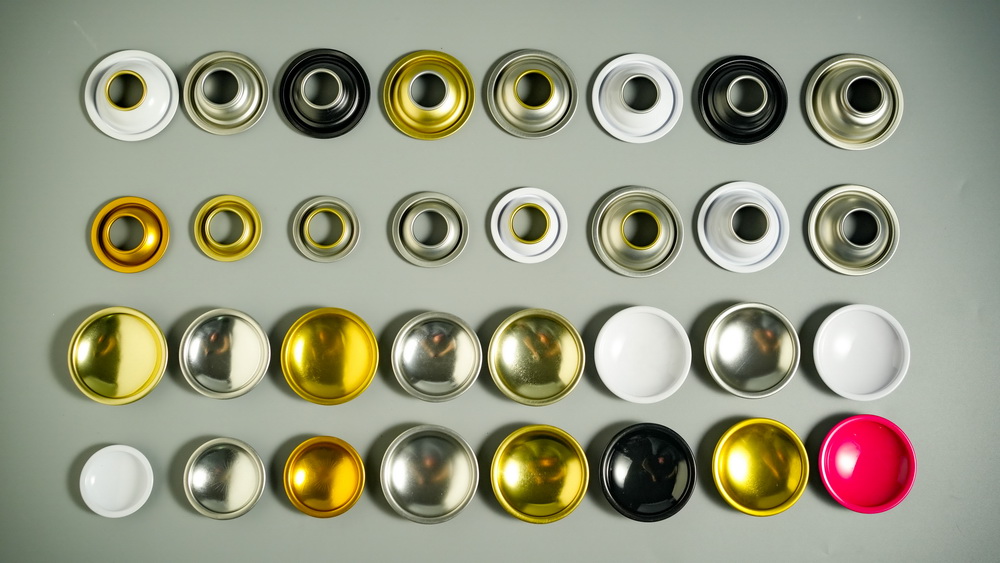
Tinplate aerosol cans are not just simple packaging containers, but precision pressure vessels bearing internal pressure at all times, and the design of the bottom structure directly determines the upper safety limit of the can body. As the core structural form of aerosol can bottoms, Cone & Dome reshapes the logic of pressure distribution from a mechanical perspective, and is also the technical core that SAILON always adheres to in custom Cone & Dome bottom design for tinplate aerosol cans. Many people overlook the millimeter-level radian difference of the bottom cover, but they do not know that this is the key to the safety and durability of high-pressure aerosol products.
Pressure transmission in a closed container always follows Pascal’s Law. The pressure generated by propellants such as propane and butane inside the aerosol can acts evenly on every metal surface of the can body, can top and can bottom. The can body is supported by the crimped structure, and the can top is reinforced by the valve assembly. Only the bottom is a dual-stress area that directly contacts external forces and bears internal top pressure at the same time, which is why the Cone & Dome structure needs to focus on solving the problem of stress concentration.
Stress concentration is like a “breakthrough” found by pressure, and this phenomenon is particularly obvious at the edge seams of flat bottoms. The flat bottom structure is subjected to plane force, the internal pressure acts vertically on the bottom surface and cannot be dispersed to the surroundings, and all tension will gather at the crimped position where the bottom connects to the can body. Long-term pressure bearing or slight collision may easily cause local bulging, gap leakage, and even can body rupture in extreme cases. This is the core reason why flat bottoms can only be used for low-pressure non-aerosol containers and cannot adapt to high-pressure aerosol products.
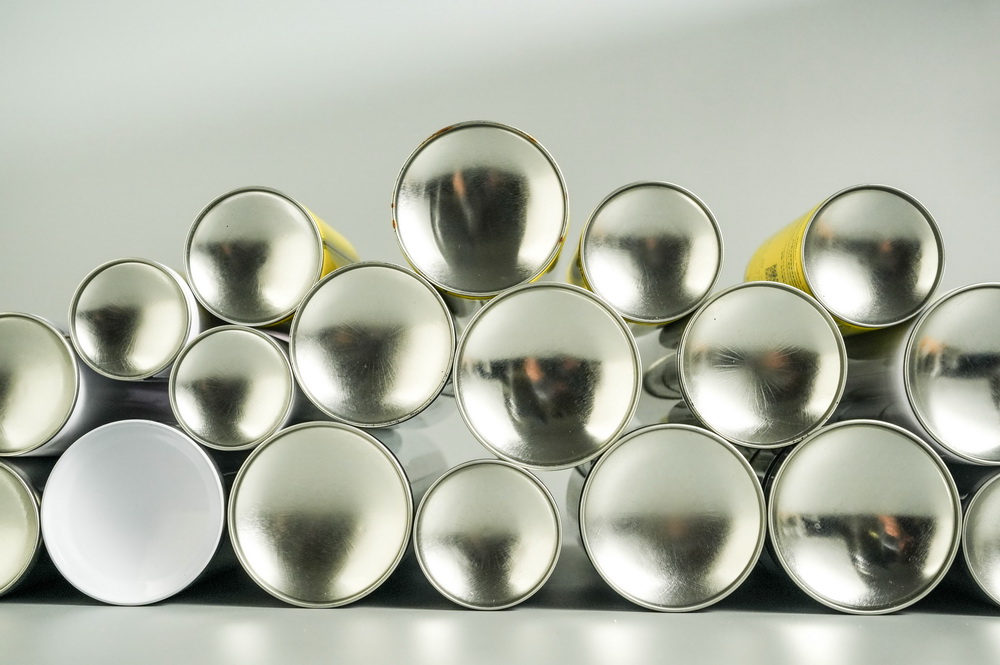
In contrast, the Cone & Dome concave bottom has its own arched mechanical advantage. It can convert the vertical internal top pressure into hoop stress diffused along the curved surface, turning the pressure from concentrated points into evenly distributed stress surfaces. This design is consistent with the head principle of large pressure vessels. With the radian design of Cone & Dome, a thin tinplate material can withstand pressure several times that of a flat bottom structure, truly achieving optimized pressure distribution of Cone & Dome bottoms.
Our SAILON laboratory completed the latest structural mechanics test in 2026 for the 65mm diameter tinplate aerosol cans commonly used in the industry, and the data clearly shows the performance gap between the two bottom covers:
| Bottom Structure Type | Initial Deformation Pressure (MPa) | Ultimate Burst Pressure (MPa) | Stress Concentration Factor | Applicable Product Type | Service Life (Years) |
|---|---|---|---|---|---|
| Flat Bottom | 0.75-1.15 | 1.45-1.95 | 2.3 | Low-pressure non-aerosol containers | 1-2 |
| Cone & Dome Concave Bottom | 2.45-2.95 | 3.75-4.45 | 0.8 | High-pressure aerosol propellant products | 3-5 |
It can be seen intuitively from the data that the initial deformation pressure of the Cone & Dome concave bottom is increased by more than 2 times, the ultimate burst pressure reaches about 2.5 times that of the flat bottom, and the stress concentration factor is greatly reduced, fundamentally avoiding the safety risks of can body deformation and explosion, and the service life is also significantly extended. Based on years of customization experience, we have sorted out several of the most frequently asked questions by customers and answered them in plain language to help everyone better understand the core value of Cone & Dome bottom covers.
Frequently Asked Questions (FAQ)
Cone & DomeQ1: Will the cost of customizing concave bottoms be much higher than that of flat bottoms?
In fact, there will not be a big gap. Many customers worry about this issue when consulting for the first time. In fact, the additional cost of Cone & Dome bottom customization is mainly concentrated on the initial mold debugging. By optimizing the stamping process and purchasing mold consumables in bulk, SAILON has minimized this part of the cost. Moreover, in the long run, the Cone & Dome concave bottom can reduce the rejection rate caused by can body deformation and leakage, and also extend the service life of the product, which can help customers reduce comprehensive costs, especially for customers who need long-term batch customization.
Cone & DomeQ2: What is the applicable pressure range of the concave bottom? Can it be used for all ordinary high-pressure aerosol products?
Combined with our test data and industry standards, the applicable pressure range of the Cone & Dome concave bottom is 0.8-4.5MPa, which basically covers the needs of all high-pressure aerosol products on the market——whether it is daily chemical sprays using propellants such as propane and butane, or industrial high-pressure aerosol cans, it can be adapted. However, it should be noted that for tinplate aerosol cans of different diameters and thicknesses, the curvature of Cone & Dome needs to be adjusted accordingly. SAILON will customize an exclusive curvature scheme according to the pressure parameters of the customer’s products to ensure the most uniform pressure distribution.
Cone & DomeQ3: Does the size of the radian of the concave bottom affect the pressure dispersion effect? How to determine the optimal radian?
The impact is very significant. If the radian is too small, the pressure cannot be fully dispersed, and there is little difference from the flat bottom. If the radian is too large, it will affect the stability of the can body placement and may also increase the difficulty of stamping. In precision Cone & Dome bottom processing at SAILON, we will control the curvature of Cone & Dome in the optimal range of 0.82-0.88mm through three-dimensional mechanical simulation, combined with the pressure parameters and can diameter of the customer’s products, which not only ensures the pressure dispersion effect, but also ensures the stable placement of the can body, balancing safety and practicality.
Cone & DomeQ4: Can products that already use flat bottoms be directly replaced with concave bottoms? Do I need to adjust the can body structure?
In most cases, it can be replaced directly without major adjustments to the can body structure. We have encountered many customers who have had deformation problems with flat bottoms before and want to replace them with Cone & Dome concave bottoms. SAILON will customize a matching Cone & Dome concave bottom according to the diameter and crimp size of the customer’s existing can body to ensure perfect connection with the can body, without modifying the production mold of the can body, and minimizing the replacement cost for the customer. However, if the thickness of the can body itself is too thin (less than 0.2mm), we will recommend appropriately increasing the thickness of the can body, combined with the Cone & Dome concave bottom, to achieve the best safety effect.
Cone & DomeQ5: During transportation and stacking, will the concave bottom be more easily damaged than the flat bottom?
On the contrary, the impact resistance and stacking stability of theCone & Dome concave bottom are better than those of the flat bottom. Because the curved structure of the concave bottom can disperse the impact force during transportation, reduce local stress, and the Cone & Dome concave bottom edge designed by us has a reinforced support ring, which is evenly stressed during stacking and not easy to be squeezed and deformed. We have done tests. Under the same conditions, the number of stacking layers of the Cone & Dome concave bottom is 3-4 layers more than that of the flat bottom, and the damage rate during transportation is reduced by more than 80%.
Many customers will wonder if the radian and thickness of the Cone & Dome concave bottom will affect the placement stability of the can body? This is also a key detail optimized in SAILON precision Cone & Dome bottom processing. We will not blindly deepen the radian, but control the curvature of Cone & Dome in the optimal range of 0.82-0.88mm through three-dimensional mechanical simulation, which not only ensures the pressure dispersion effect, but also forms a stable support ring at the bottom edge. It is more stable when placed than a flat bottom, and is not easy to tip over during stacked transportation.
To maximize the mechanical value of the Cone & Dome structure, the accuracy of the manufacturing process is far more important than the material thickness. SAILON has established a full-process quality control standard for stress dispersion design of Cone & Dome structure:
- Select secondary cold-rolled tinplate substrates with a stable yield strength of 285-335MPa to ensure no radian rebound after stamping, and at the same time improve the fatigue resistance of the Cone & Dome bottom cover, avoiding aging and deformation under long-term pressure.
- Adopt high-precision multi-stage stamping dies to complete Cone & Dome forming at one time, avoiding uneven thickness caused by secondary processing, ensuring consistent pressure dispersion effect of every curved surface, and eliminating local stress concentration.
- Detect the curvature and wall thickness of the bottom cover one by one through three-dimensional optical scanning, with a tolerance controlled within ±0.0015mm, ensuring that every Cone & Dome bottom cover meets the design standards without any dimensional deviation.
- Complete 100% static pressure testing of finished products to simulate the long-term pressure-bearing state of the product, ensuring that every custom aerosol can meets high-pressure use standards, and no additional testing is required by the customer after delivery.
In the field of tinplate aerosol can customization, bottom design is never an irrelevant detail, but a core technology related to product safety. SAILON has been deeply engaged in custom Cone & Dome bottom design for tinplate aerosol cans for many years. From structural mechanics analysis to the implementation of production technology, we always put pressure distribution and can body safety first, and build a solid safety line for every high-pressure aerosol product with precise Cone & Dome structural design. Whether it is a conventional Cone & Dome bottom cover or a custom model with special pressure requirements, we can provide a one-stop solution that balances safety, cost and practicality.