

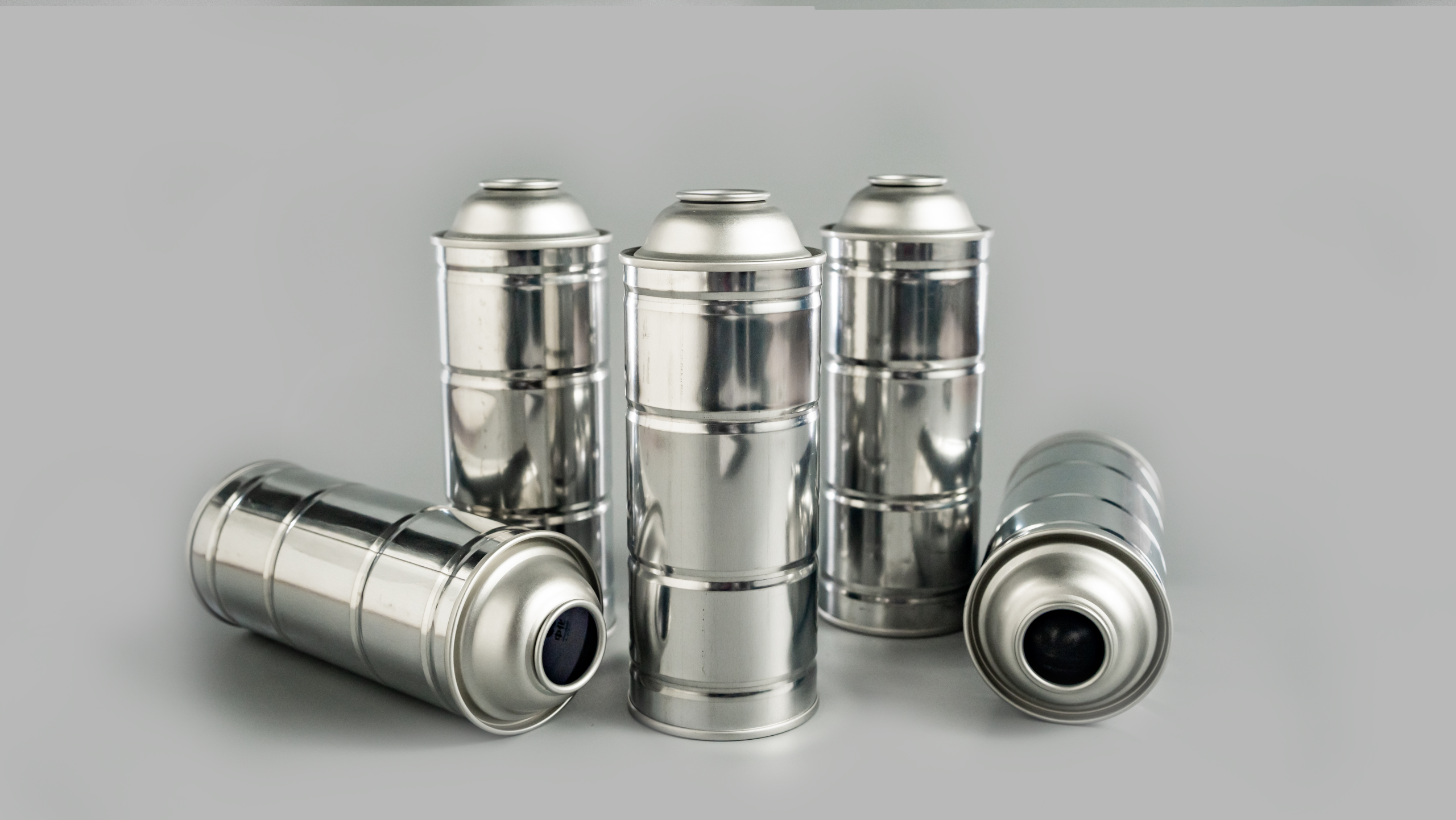
With the continuous upgrading of the packaging circular economy, spray products for daily chemical cleaning, fragrance care and car maintenance are re-evaluating the long-term value of container materials. Aerosol tin can has gradually become a core choice for many brands due to its stable material properties and mature recycling system. Most brands easily fall into the misunderstanding of “only focusing on procurement costs” when selecting materials, but ignore the life-cycle loss, environmental compliance and usage safety of containers. The gap between the two is far more than the surface material difference.
Analysis of Real Recycling Rate: The Essential Gap Between Infinite Circulation and Downcycling
The core value of material recycling lies in whether the original performance can be retained after circulation, which is the most critical watershed between aerosol tin cans and plastic spray bottles. Its difference directly affects the sustainability of the supply chain and long-term cost control.
- Aerosol tin can has a natural closed-loop circulation capacity. A single recycling and smelting will not damage the metal molecular structure, and there is no obvious attenuation in hardness, sealing and compression resistance after repeated reshaping. It is a truly “infinite circulation” material that can be reused in spray packaging many times.
- Most plastic spray bottles are made of PET and HDPE materials. Each recycling and remanufacturing will damage the toughness of the molecular chain, which will inevitably lead to material brittleness, decreased sealing and other problems. They can only be downgraded to make low-end plastic products, and cannot be reused for food-grade and industrial-grade spray packaging, forming a one-way link of “one-time use – recycling and downgrading – final disposal”.
- The efficiency difference in the recycling and sorting link further enlarges the gap: the magnetic sorting equipment in the recycling station can accurately screen the tinplate cans, with a sorting recognition rate stably above 98%; mixed plastics have complex categories and confusing material labels, making it difficult to avoid errors in manual and mechanical sorting, with a sorting efficiency of less than 60%, resulting in the loss of a large number of recyclable resources.
According to the 2026 statistics from the Global Packaging Industry Association, the comprehensive stable recycling rate of aerosol tin cans reaches 79.2%, among which the recycling rate in Europe exceeds 92% due to the improved sorting system; the comprehensive recycling rate of conventional daily chemical plastic spray bottles is only 19.8%, and more than 80% of waste plastics cannot enter the formal recycling link, and are ultimately disposed of by landfilling or incineration, causing resource waste and environmental burden.
Full Life Cycle Carbon Footprint (LCA) Actual Measurement Comparison
The carbon emission of a spray container needs to cover the whole life cycle. Combined with the ISO 14040/14044 Life Cycle Assessment (LCA) standard, the carbon consumption difference between the two materials is significant from raw material extraction, processing and manufacturing, logistics and transportation, long-term warehousing to disposal, which directly affects the brand’s environmental compliance and green image.
| Comparison Dimension | Aerosol Tin Can | Plastic Spray Bottle | Practical Application and Supply Chain Impact |
|---|---|---|---|
| Raw Material and Manufacturing Energy Consumption | High recycling rate, decreasing smelting energy consumption year by year, and controllable pollutant emissions | Complex petrochemical extraction process, high basic carbon emissions, and high pollution in processing links | Under large-scale customization, the long-term carbon emission advantage of metal packaging continues to expand, which is in line with the requirements of green supply chain |
| Logistics and Warehousing Loss | High-strength and extrusion-resistant tank body, no need for thickened buffer accessories, and stable stacking without deformation | Soft and fragile material, requiring bubble film and carton reinforcement, increasing packaging consumables | In the case of bulk inventory, the auxiliary materials of plastic packaging additionally increase carbon consumption and warehousing costs, and improve the supply chain loss rate |
| Weather Resistance and Aging | Equipped with professional anti-rust coating, resistant to moisture, salt spray and oxidation, with slow aging speed | Prone to yellowing, brittleness and cracking under long-term light or high temperature, with decreased sealing performance | For long-term inventory products, metal containers can greatly reduce the scrap rate and reduce the supply chain replenishment cost |
| Disposal and Degradation Path | Waste metal can be fully recycled at a high price, natural oxidation without toxic residues, and high recycling value | Incineration releases toxic gases, natural degradation takes hundreds of years, and it is easy to cause soil and water pollution | Metal packaging is more in line with the global EPR (Extended Producer Responsibility) policy, reducing the brand’s compliance risks |
It is worth noting that driven by the iteration of recycled metal processing technology, the production carbon emission of rust-proof aerosol packaging cans has decreased by 35% compared with 5 years ago, and its full-life cycle carbon footprint is only 42% of that of plastic spray bottles, becoming an important starting point for brands to achieve the goals of “carbon peaking and carbon neutrality”.
High-Pressure Usage Safety: The Indispensable Material Red Line for Aerosol Containers
Aerosol products contain propellants, volatile solvents and functional stock solutions. The sealed and high-pressure storage environment has strict requirements on the barrier property and structural strength of the container. The difference in safety performance between the two materials is directly related to the product circulation safety and brand reputation.
In terms of barrier performance, plastic materials themselves have a certain permeability. When storing highly corrosive liquids such as fragrance essential oils, automotive brake cleaners and industrial degreasers for a long time, it is easy to have internal wall penetration, component volatilization and deterioration, affecting product efficacy and use safety; while the food-grade coated aerosol can treated with professional internal coating technology has a dense inner coating that can completely block chemical erosion, eliminate leakage and deterioration hazards, and meet the safety standards of food-grade and industrial-grade spray products.
In terms of high-pressure structural stability, in accordance with the BAMA (British Aerosol Manufacturers’ Association) specifications and 15-bar pressure resistance standard, the compressive strength of tinplate material is 8-10 times that of PET plastic, which can stably bear the working pressure of 0.6-1.2MPa inside the aerosol. Even in extreme scenarios such as high-temperature warehousing in summer and bumpy long-distance transportation, it can maintain structural stability, greatly reducing the probability of product damage and safety leakage; while plastic bottles are prone to expansion, deformation, liquid leakage and other problems in high-pressure and high-temperature environments, which is one of the main causes of product recalls in the industry.
Frequently Asked Questions (FAQ)
1. Can aerosol tin cans be recycled normally?
Yes, they can be recycled normally. To recycle aerosol tin cans, you only need to meet three simple conditions: 1. Completely empty the contents of the can; 2. Press the nozzle to release the residual air pressure; 3. Remove the plastic nozzle and actuator on the top. The processed empty metal can can be directly put into the recyclable trash can and enter the closed-loop recycling process.
2. Why do industrial and automotive maintenance sprays prefer tinplate cans?
The core reason is safety and adaptability. Most of these products contain strong solvents and flammable propellants, which have high requirements on the compression resistance, corrosion resistance and barrier property of the container, and need to comply with BAMA specifications and 15-bar pressure resistance standards; plastic materials cannot resist chemical corrosion and high-pressure impact, and are prone to leakage hazards. Tinplate with professional anti-corrosion coating can adapt to complex working conditions and long-term storage, making it a reliable choice for industrial spray packaging.
3. Is the comprehensive cost of aerosol tin cans higher than that of plastic bottles?
The comprehensive cost is rather lower. In terms of single product procurement pricing, plastic bottles have certain advantages, but from the perspective of the whole supply chain: aerosol tin cans can reduce transportation loss and inventory scrap rate, do not need to bear the environmental compliance rectification cost of plastic packaging, and can improve the brand’s green image; in the case of mass customization, the scale advantage of metal packaging can further balance the budget, and the long-term use cost performance is more prominent.
4. Can the weather resistance of aerosol tin cans adapt to multi-scene warehousing?
Yes, it can adapt. The aerosol tin can equipped with professional anti-rust coating can withstand complex environments such as moisture, salt spray and high temperature, with slow aging speed. In coastal areas, high-temperature warehousing and other scenarios, it can still maintain structural integrity and sealing performance, greatly reducing the scrap loss of long-term inventory and adapting to the global multi-regional supply chain layout.
Enterprise-Level Implementation Solution: SAILON’s Customization Advantages
For brands with large-scale and personalized spray packaging needs, professional customization services can further amplify the advantages of aerosol tin cans. SAILON has been deeply engaged in the aerosol tin can customization field for many years, and provides full-process enterprise-level solutions relying on mature R&D and production capabilities.
According to the product attributes of different industries, SAILON can customize aerosol tin cans with different tank thicknesses, anti-corrosion internal coatings, color printing and sealing structures, strictly following ISO 14040/14044 LCA standards and BAMA 15-bar pressure resistance specifications, balancing appearance design, use safety and environmental performance, and adapting to the landing use of various products such as daily chemicals, beauty, automotive maintenance, household cleaning and industrial supplies.
From the optimization of tank structure, the adaptation of internal coating, to the appearance printing process and anti-rust treatment, SAILON can accurately match the brand’s supply chain needs, help brands reduce the whole-life cycle cost, comply with global environmental compliance policies, and achieve the dual improvement of product competitiveness and green image.