

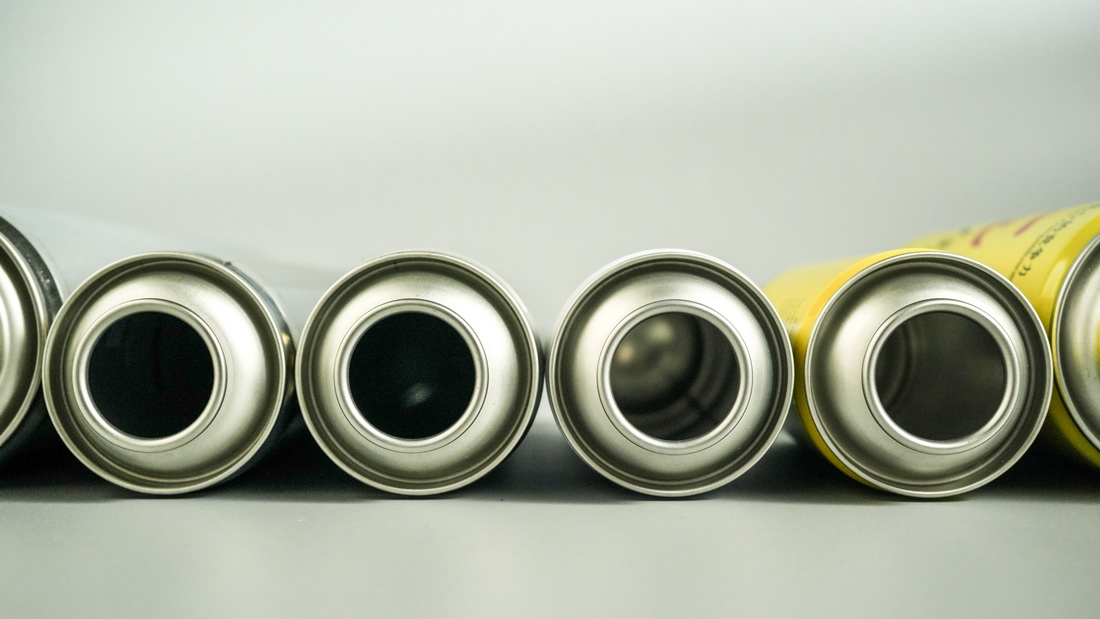
Excessive aerosol can neck ovality is a core hidden cause of shelf-life leakage and soaring seam leakage rate, as well as a frequent pain point in quality control for high-speed can production lines. With years of experience in custom tinplate aerosol can production and quality management, SAILON has found that most gasket sealing failure issues of aerosol cans stem from can mouth out-of-roundness and radial dimension deviation caused by necking deformation, rather than seaming equipment or sealing accessories. Many manufacturers invest heavily in optimizing back-end filling and sealing processes, yet ignore the source control of front-end necking deformation, ultimately leading to mass defective products and frequent after-sales complaints.
1. Core Definition: What is Can Neck Ovality
Aerosol can neck ovality (also known as can mouth roundness or can mouth out-of-roundness in the industry) refers to the radial dimensional deviation between the maximum and minimum inner diameters of the can mouth after necking forming. The universal industry safety threshold is 0.2mm.
In the tank forming process, the necking procedure requires radial extrusion and shaping of the can mouth. The inherent elastic springback of tinplate materials, coupled with minor variables such as slight mold wear, equipment transmission gaps, and uneven raw material thickness, will easily cause asymmetric deformation. This invisible millimeter-level deviation does not affect the appearance of the tank, but directly damages the fitting accuracy between tinplate aerosol can lid and can mouth, laying hidden dangers for subsequent sealing failure.
2. Failure Mechanism: Chain Seal Failures Caused by Excessive Ovality
Excessive can mouth ovality directly breaks the stress balance of valve cup seaming, serving as the root cause of aerosol can slow leakage. The standardized seaming process requires uniform stress on the entire can mouth circumference to achieve equal-thickness lamination of double-layer metals, while can mouth out-of-roundness leads to extreme states of local over-extrusion and local hollow fitting during seaming.
This uneven lamination structure cannot be detected by conventional water bath leakage testing in the short term, but forms long-term sealing hidden dangers. During the 3-6 months shelf storage period, the rubber sealing gasket will gradually relax and age under unbalanced local stress, resulting in shelf-life leakage and chronic pressure relief of originally qualified cans.
According to mass production data, after the stability of can mouth ovality is out of control, the production line seam leakage rate will surge from the standard 0.3% to 3%. It not only greatly increases the cost of manual re-inspection and defective rework, but also frequent production line shutdown debugging disrupts the mass production rhythm of high-speed aerosol can production lines and seriously reduces overall production efficiency.
3. Core Limitations of Traditional Inspection Methods for High-Precision Mass Production
The traditional inspection methods adopted by most can factories can only achieve extensive quality screening, which cannot meet the high-precision and full-time management requirements of tank forming quality control, resulting in frequent missed and false detections.
- Contact inner diameter micrometer: It only supports fixed-time sampling inspection. Facing high-speed production lines above 150 cans per minute, the sampling frequency of 1 can every 10 minutes cannot cover random necking deformation in mass production, with an extremely high risk of batch missed detection, only suitable for laboratory sampling verification.
- Mechanical go-no-go gauge: It judges qualification by physical dimensions. Long-term use causes gauge wear and false judgment; moreover, it cannot distinguish can mouth radial deviation from tiny edge burrs, only capable of basic dimensional screening with low accuracy.
- Manual visual inspection: It can only identify severe visible deformation, completely ineffective for sub-millimeter oval deviation within 0.2mm, and can only serve as an auxiliary inspection method instead of core quality control.
Due to the shortcomings of traditional detection, the industry has reached a consensus: only the full online inspection mode can completely solve the problem of missed detection of can mouth deformation and realize the quality closed loop of aerosol can factory inspection.
4. Comprehensive Performance Comparison of Three Inspection Methods
The table below intuitively compares the core differences between traditional detection and infrared laser detection from multiple dimensions such as accuracy, efficiency, risk and adaptation scenarios, serving as a core basis for production line quality control equipment selection:
| Inspection Method | Adaptable Line Speed | Measurement Accuracy | Full Inspection Coverage | Anti-Interference Ability | Specification Switching Efficiency | Missed Detection Risk | Application Scenarios |
|---|---|---|---|---|---|---|---|
| Contact Inner Diameter Micrometer | ≤120 cans/min | ±0.05mm | Partial Sampling | Weak | Time-consuming Manual Debugging | High | Laboratory precision sampling, batch review inspection |
| Mechanical Go-No-Go Gauge | ≤180 cans/min | ±0.10mm | Manual Screening | Average | Fitting Replacement Required | Medium | Basic dimensional screening for low-speed small-batch production lines |
| Infrared Laser Online Inspection | 150-350 cans/min | ±0.01mm | 100% Full Inspection | Strong | 30s One-Click Switching | Extremely Low | Full inspection for high-speed mass production lines, quality control of high-precision customized cans |
5. Core Solution: Infrared Laser Non-Contact Roundness Measurement Online Control Technology
Infrared laser non-contact roundness measurement is currently the optimal technical solution to eliminate excessive can mouth ovality and intercept deformed parts on high-speed production lines. It can complete can mouth dimension screening with non-contact, high-precision and uninterrupted operation, adapting to the mass production needs of all specifications of tinplate aerosol cans.
The entire inspection system has standardized and automatic operation logic, compatible with various high-speed can production lines:
- Data Collection: More than 4 groups of infrared laser sensors are evenly arranged around the can mouth, with a high sampling frequency of 500Hz, collecting multiple sets of circumferential inner diameter data per can to fully cover can mouth dimension information.
- Intelligent Operation: Adopting the least squares circle fitting algorithm, it real-timely calculates the difference between the maximum and minimum inner diameters of the can mouth, accurately outputting the aerosol can neck ovality value and eliminating data deviation.
- Automatic Rejection: The system presets an early warning threshold of 0.25mm. When 2 consecutive cans are detected unqualified, it immediately triggers sound and light alarm, and automatically diverts deformed cans to the waste channel without manual intervention.
6. Key Engineering Implementation Details: Solve Four Major On-Site Interference Problems
Based on years of mass production experience in custom tinplate aerosol cans, SAILON has comprehensively optimized the laser inspection system for complex production line working conditions, completely solving on-site implementation difficulties:
- Oil and Dust Interference Optimization: Oil film and micro dust remaining on the can mouth during production interfere with laser reflection accuracy. The equipment is equipped with a pulse compressed air purging device to clean the optical inspection window regularly and ensure measurement stability.
- Production Vibration Deviation Correction: Slight vibration generated by high-speed equipment operation offsets the measurement benchmark. The system is embedded with an intelligent reference circle calibration module, which automatically corrects benchmark coordinates every 1000 cans produced to avoid data drift.
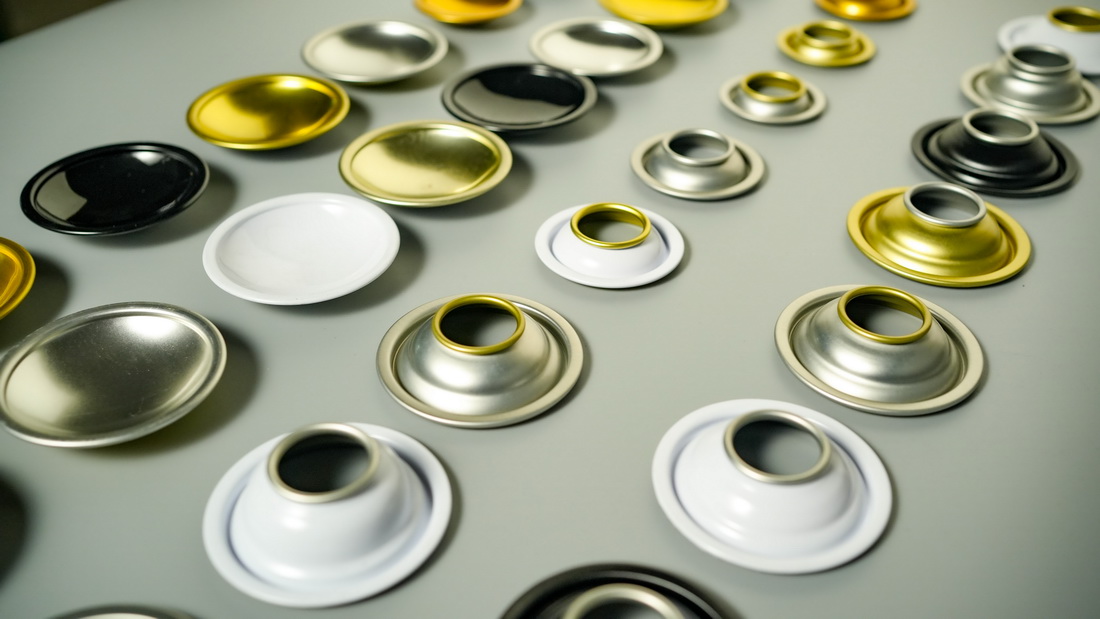
- Multi-Specification Quick Switching: Built-in process formulas for mainstream 52mm, 57mm and 63mm can mouths, compatible with the supporting production of full-specification tinplate aerosol can lids. Model switching only requires 30-second one-click reset without delaying mass production progress.
- All-Weather Stable Operation: The equipment adapts to temperature and humidity fluctuations in the workshop, with no consumable loss, and can complete full online inspection 24 hours uninterrupted, meeting the needs of large-scale mass production.
7. Value of Data Closed Loop: From Passive Error Detection to Active Process Optimization
The core value of the infrared laser inspection system is not only to intercept defective products, but also to realize the full-process data closed loop of tank forming quality control, reducing the deformation failure rate from the source.
The system real-timely stores the ovality detection data of each tank and automatically generates SPC quality monitoring curves. It can accurately capture the gradual upward trend of data, predict the wear and aging of necking molds in advance, and remind operation and maintenance personnel of preventive maintenance, avoiding batch necking deformation defects from the source. At the same time, SAILON integrates inspection data with terminal filling feedback to reversely fine-tune necking process parameters, customize exclusive control standards for different product scenarios, and continuously optimize seam leakage rate and shelf-life leakage problems.
Verified by a large number of customer on-site tests, after adopting this inspection solution, the after-sales complaint rate of aerosol can sealing defects on the production line is reduced by more than 85%, re-inspection and shutdown losses are greatly reduced, and mass production stability is significantly improved.
8. FAQ
Q1: Why can tiny can mouth oval deviation cause slow leakage of aerosol cans in the later stage?
A: Excessive aerosol can neck ovality directly causes uneven lamination and unbalanced stress in the seaming of tinplate aerosol can lids. Hidden defects cannot be detected by short-term water bath leakage testing. However, during 3-6 months of shelf storage, the rubber sealing gasket will relax and age due to continuous local stress, forming a chronic pressure relief and leakage channel, which is the main cause of brand after-sales leakage complaints.
Q2: Will infrared laser inspection damage the coating on the tinplate can surface?
A: Absolutely not. This technology adopts non-contact roundness measurement without any mechanical contact with the tank body during the whole process. It will not scratch the tinplate tin plating layer and printing coating, with zero damage and zero pollution, and does not affect the appearance and anti-corrosion performance of the tank.
Q3: Is the inspection equipment suitable for small-batch and multi-specification customized aerosol can production lines?
A: Highly suitable. The equipment supports one-click switching of mainstream can mouth dimensions from 52mm to 63mm with a 30-second fast model change. It meets not only the full online inspection needs of large-scale high-speed mass production, but also the quality control standards of small-batch customized production, with strong versatility.
Q4: How to reduce excessive can mouth ovality from the source in daily production?
A: Follow the standardized closed-loop management process for optimization: regular calibration of mold coaxiality → batch detection of tinplate raw material thickness → real-time feedback of laser inspection data → precise fine-tuning of necking process parameters. Combined with SAILON’s exclusive process optimization scheme, it can effectively reduce can mouth out-of-roundness defects caused by equipment gaps, material fluctuations and mold wear, and control deformation problems from the source.
Q5: Can the quality data of the laser inspection system support refined traceability and review?
A: It supports high-precision granularity traceability. The system automatically stores complete data of each batch and each tank, which can accurately trace core information such as single-tank detection time, real-time can mouth radial deviation value and automatic rejection status. It also supports one-click export of batch reports, facilitating process review, quality audit and standardized production management for factories.
SAILON has been deeply engaged in the field of custom tinplate aerosol cans for many years. We always prioritize front-end precise control over post-defect remediation. Relying on mature infrared laser non-contact roundness measurement technology, we accurately control aerosol can neck ovality, completely solve industry pain points such as gasket sealing failure and shelf-life leakage caused by necking deformation, and safeguard the sealing quality and mass production stability of every aerosol can.