

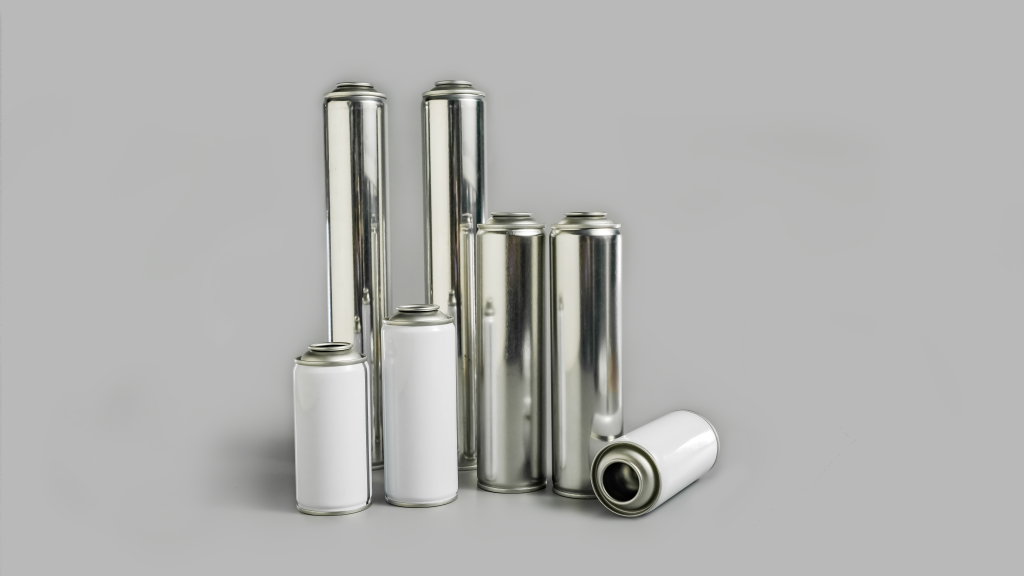
Most injection molding and die-casting enterprises face a hidden universal pain point. The common use of industrial release agent aerosol cans quietly increases production losses and reduces overall capacity. After investigating many small and medium-sized processing factories, we found that most workshops have to stop production to clean molds twice per shift, with each cleaning lasting 45 minutes, resulting in a cumulative production time loss of over 200 hours every year. Who would have thought that release agents, originally designed to assist demolding and improve product quality, have become the core cause of mold contamination, frequent cleaning and reduced production capacity due to residual scale?
1. Release Agent Residual Scale: The Hidden Production Loss Black Hole in Workshops
Under long-term batch production conditions, molds are prone to form a stubborn dark brown scale on the surface, which is the main cause of frequent mold dirt and sharp rise in product defective rate in most factories. In fact, this kind of scale is not a simple raw material stain, but a cured impurity formed by continuous carbonization and accumulation of silicone oil, paraffin wax, stearate and other components in release agents under high-temperature mold operating conditions.
When these tiny scales adhere to the gaps of the mold cavity, they will directly disrupt the heat dissipation rhythm of the mold and cause uneven local cooling. Consequently, scratches, bubbles, uneven depressions and other defects appear on the product surface. To ensure finished product quality, workers have to disassemble, clean and polish molds repeatedly. Frequent disassembly and cleaning not only delay production progress but also wear the mold surface directly, greatly shortening the mold service life and creating a vicious cycle.
Most people only focus on the quality of release agents themselves but ignore the superimposed problems caused by wall hanging residues of ordinary tinplate industrial release agent aerosol cans. Our actual tests show that conventional aerosol cans without special treatment have rough inner walls that easily adsorb active ingredients of release agents, and the residual sprayed materials are 30% higher than the industry standard. This is the key reason why many factories still suffer from scale accumulation after repeated cleaning.
2. Core Technical Reasons Why Conventional Aerosol Cans Aggravate Mold Residue Contamination
Why do the same release agents bring completely different residue contamination results with different cans? Perhaps many production managers ignore the impact of tank structure on spraying effects, and the core problems are concentrated in three aspects:
First, there are defects in the microscopic structure of the base material. The surface roughness Ra value of ordinary tinplate cans is 0.3-0.5μm, and dense microscopic concave-convex surfaces form fixed anchor points for release agent molecules, making materials firmly adhere to the tank wall and unable to be completely sprayed out. Second, conventional coatings have poor adaptability. Traditional epoxy phenolic coatings easily adsorb polar release agent components and are difficult to desorb and drain completely. Finally, the spraying pressure is unstable. Pressure fluctuations during the operation of conventional cans cause release agents to repeatedly scour and concentrate on the tank wall, further aggravating wall hanging residues and finally adhering to the mold surface with the spraying operation.
3. SAILON Low-Residue Aerosol Cans: Custom Solutions to Solve Mold Scale Contamination
Aiming at the mold contamination problem caused by wall hanging residues of release agent aerosol cans, SAILON has been deeply engaged in the customization of tinplate aerosol cans for many years. For the working conditions of die-casting and injection molding industries, we have developed low-residue and anti-adhesion aerosol cans adapted to various industrial release agents, reducing material residues and mold scale from the source with three core technologies to completely optimize the spraying effect:
| Core Technology | Specific Process Optimization | Core Performance Parameters | Practical Production Effect |
|---|---|---|---|
| Inner Coating Modification Process | Fluorocarbon and silicone graft modified coating treatment | Tank surface energy below 20mN/m | Release agent droplets roll off in spherical shape, greatly reducing wall hanging adsorption on tank walls |
| Inner Wall Super Mirror Polishing | Dual precision mechanical and electrolytic polishing process | Inner wall roughness Ra≤0.1μm | Eliminate microscopic anchor points and fundamentally prevent residual adhesion physically |
| Optimized Special Valve Structure | Extended suction tube with vortex groove exclusive design | Tank bottom material residue rate<1% | Avoid release agent stagnation in dead corners and greatly improve material emptying rate |
Actual test data verifies the optimization effect: for the same industrial release agent, the residue rate of ordinary tinplate cans is as high as 18%, while the residue rate of SAILON customized low-residue release agent aerosol cans is controlled within 5%. According to the actual feedback of many large die-casting factories, after replacing customized cans, the frequency of mold cleaning is greatly reduced, from 3 times of daily shutdown cleaning to once a week, and production continuity is significantly improved.
4. Industry Frequently Asked Questions (FAQ)
To help more factories solve the problems of mold release agent residual contamination and low efficiency caused by frequent cleaning, we have sorted out high-frequency industry questions to intuitively answer core concerns:
Q1: Will low-residue industrial release agent aerosol cans reduce the demolding effect?
A1: Absolutely not. On the contrary, with reduced tank residues, the sprayed release agent has more uniform concentration and finer atomization, without local material accumulation or uneven spraying. The stable spraying effect not only ensures efficient demolding but also improves the surface finish of products and reduces defective products.
Q2: Are customized low-residue tinplate aerosol cans compatible with all types of industrial release agents?
A2: It has strong compatibility. SAILON supports customization of various industrial release agent aerosol cans, covering mainstream release agent formulas such as oil-based, water-based, silicon-based and non-silicon-based. We provide free sample testing services, and customize the inner wall coating and tank process according to the characteristics of customers’ release agents to ensure adaptation effects.
Q3: Can replacing customized aerosol cans effectively reduce mold maintenance costs?
A3: The optimization effect is obvious in most production scenarios. No material residues and uniform spraying fundamentally reduce mold scale generation, greatly cutting down cleaning agent consumption, manual cleaning time and mold wear loss, bringing considerable comprehensive optimization benefits for long-term production.
5. SAILON Customization Services to Help Factories Optimize Production Losses
As a professional industrial aerosol can manufacturer, SAILON can provide complete qualification test reports, including coating adhesion cross-cut tests, surface energy detection, actual residual rate test data and more, with all process parameters traceable. Meanwhile, we support personalized customization of size, technology and valve structure, adapting to full-industry production scenarios such as injection molding, die-casting and rubber molding.
Want to completely get rid of mold contamination and frequent shutdown cleaning caused by release agent residues? You can apply for SAILON low-residue release agent aerosol can samples at any time, compare production effects through actual tests, and accurately optimize production line loss problems.