

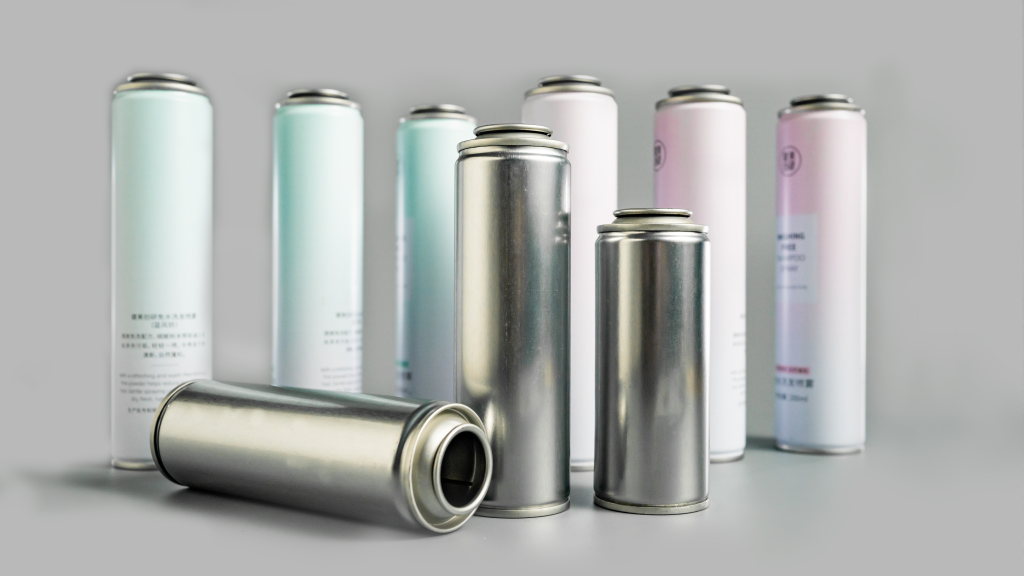
Introduction
In the mass production and processing of tinplate necked cans, the necking process is a core link that determines the forming qualification rate and sealing performance of can bodies. Many cans gradually show problems such as unstable wall thickness, tiny wrinkles and hidden cracks at the neck position after necking forming, filling and sealing. These defects rarely appear defective when products are off the production line, but most of them occur during warehousing, transportation and end use, easily leading to batch scrapping, order delays and damaged quality reputation. Especially with the rising demand for lightweight and customized special-shaped cans in recent years, the combination of ultra-thin materials and complex necking shapes has plunged many manufacturers into the dilemma of unstable forming quality.
In fact, most people only notice the surface defects of cracks and wrinkles, but ignore the root cause of the problem—it is not a single equipment or operation error, but an adaptation imbalance in multiple dimensions including material performance, mold design, forming passes and wall thickness control. With years of experience in the production of custom tinplate necked aerosol cans, the technical team of SAILON has accumulated a large number of mass production cases, proving that more than 90% of necking defects can be avoided through pre-process optimization and material selection.
1. Core Causes of Wrinkles and Cracks in Tinplate Necking Process
Necking forming is a forced stretching and extrusion shaping process for tinplate, and the metal material has an extremely low fault tolerance rate for deformation. Any parameter deviation will directly cause forming defects. Combined with the latest measured can processing data in 2026, we sort out the high-frequency fault causes into three core dimensions, covering material, process and raw material accuracy:
1.1 Insufficient Substrate Elongation Exceeding Forming Deformation Limit
Double-reduced (DR) tinplate is a common base material for can production, featuring high hardness and strong extrusion resistance, which meets the basic pressure resistance requirements of cans. However, this material has an obvious shortcoming of extremely poor ductility, with the measured breaking elongation of conventional DR materials ranging only from 2.2% to 3.3%. In the thin-wall tinplate necking forming process, the plate needs to undergo multiple deformations of bending, shrinking and stretching. The ultra-low elongation cannot adapt to the necking process with large radian and deep stroke, and hidden cracks will appear at the R-angle transition of the can mouth once the deformation range exceeds the limit.
Many manufacturers uniformly adopt ultra-thin DR materials to produce all types of cans to control raw material costs, regardless of shallow or deep necking and special-shaped structures, which is the main cause of frequent batch defects.
1.2 Unreasonable Forming Passes Leading to Residual Stress Accumulation
The number of forming passes directly determines the uniformity of metal deformation. The traditional production mode mostly adopts the 3-pass necking process to pursue rapid mass production, with a large deformation range in a single forming process. The tinplate cannot release stress gradually, and a large amount of residual stress accumulates in the necking transition area.
Can compressing forming procedures really improve production efficiency? The answer is obviously no. Residual stress continues to release after can forming. After subsequent filling pressure, temperature difference change and transportation vibration, wrinkles and cracks gradually appear at the flat necking position, which instead greatly increases the defective rate and raises implicit costs of rework and scrapping.
1.3 Raw Material Wall Thickness Fluctuation Causing Local Stress Concentration
The initial wall thickness accuracy of tinplate sheets is a detail easily ignored by most manufacturers. If the wall thickness tolerance of batch incoming sheets exceeds the industry standard range of ±0.012mm, the wall thickness reduction degree of can bodies will be completely unbalanced after rolling and shaping by necking molds.
For cans with uneven wall thickness, stress will continuously concentrate at the thinnest bending angle of the neck, which explains why some products are intact while others have wrinkles and cracks in the same batch.
2. Comparison of Mainstream Necking Processes and Material Selection
Aiming at the production pain points of special-shaped tinplate necked cans and deep necking cans, we have compared the forming effects of traditional processes and multi-stage progressive necking processes through thousands of mass production tests, and sorted out standardized selection schemes combined with the performance advantages of different materials to adapt to can production with diverse customization needs:
| Forming Process | Applicable Sheet Thickness | Preferred Tinplate Material | Average Wall Thickness Reduction Rate | Mass Production Defect Rate | Applicable Can Scenarios |
|---|---|---|---|---|---|
| Traditional 3-pass Necking Process | ≤0.17mm | DR Double-reduced Tinplate | 22.68% | 3.11% | Conventional shallow necking, standard round aerosol cans with simple shapes and small deformation range |
| 6-8 Pass Progressive Necking Process | 0.15-0.28mm | T4-CA Tempered Single-reduced Tinplate | 11.27% | 0.47% | Deep necking tinplate cans, special-shaped neck closing cans, thin-wall lightweight customized cans with complex deformation and high precision requirements |
The measured data clearly shows the prominent advantages of the multi-stage progressive necking process. By splitting the single large deformation into tiny shaping in each procedure, and matching with annealing procedures to restore sheet ductility midway, the metal stress can be released to the greatest extent. The 8.6% elongation rate of T4-CA tempered tinplate is much higher than that of ordinary DR materials, perfectly adapting to all kinds of high-difficulty customized necking requirements.
At present, SAILON adopts FEA finite element simulation technology in advance to simulate the stress distribution and wall thickness change of cans during the whole necking process before mold opening and mass production, accurately predicting crack and wrinkle risk points and avoiding mass production defects from the design source.
3. Core Optimization Points for Tinplate Necked Can Production
Combined with mass production practical experience, stable quality control of tinplate necked cans does not require complex equipment transformation. It only needs to implement the following refined management points:
- Match materials on demand and avoid one-size-fits-all selection: DR materials can be used for standard cans to control costs, while high-ductility T4-CA tinplate is preferred for deep necking, special-shaped and ultra-thin customized cans
- Optimize the transition structure of molds, appropriately enlarge the R-angle radian, reduce the stretching force at the moment of necking, and lower the probability of local stress concentration
- Strictly control incoming material accuracy, screen sheets with excessive wall thickness deviation before warehousing, and eliminate forming defects caused by wall thickness fluctuation from the raw material end
- Adjust forming passes according to can complexity, adopt more than 6-pass progressive necking for complex cans, and optimize material toughness with annealing procedures
4. Frequently Asked Questions from Customers
In the docking and production of various custom tinplate necked aerosol cans, we have sorted out the most concerned core questions of customers and given accurate answers based on mass production practical experience:
[Material Q] Q1: Is full replacement with T4-CA material mandatory for mass production of ultra-thin necked cans?
A: Complete replacement is not required. For standard cans with shallow necking and simple structures, DR double-reduced sheets can still be used after optimizing mold fillet parameters and fine-tuning forming speed, which can effectively control production costs. T4-CA materials with high ductility are the only fundamental solution to reduce defective rates for customized cans with deep necking, special-shaped closing and large radian deformation.
[Process Q] Q2: Can FEA simulation completely replace trial mold procedures?
A: It cannot be completely replaced. FEA simulation can eliminate more than 70% of design and process loopholes in advance and avoid most structural defects. However, mass production is affected by variables such as equipment working conditions, ambient temperature and humidity, and material batch differences. Small-batch trial production is still a necessary link to verify process stability.
[Quality Control Q] Q3: Can excessive wall thickness fluctuation at the neck be repaired and rectified in the later stage?
A: It is basically impossible for later repair. Necking forming belongs to irreversible plastic deformation of metal. Wall thickness deviation and stress accumulation are all generated in one-time forming. Later polishing and shaping will only aggravate can damage. The only effective solution is pre-process optimization and accurate material selection.
Conclusion
After all, the problems of cracks, wrinkles and unstable wall thickness of tinplate necked cans are never caused by a single process, but a systematic project integrating material performance, mold design, forming technology and quality control management. With the continuous improvement of market requirements for lightweight, customization and high precision of cans, the extensive traditional production process can no longer meet the needs of high-quality mass production.
SAILON focuses on the customized production of various special-shaped tinplate necked cans and deep necking aerosol cans, with mature solutions for FEA simulation prediction, multi-stage necking process commissioning and material adaptation. If you have needs for can customization and process optimization, feel free to send your can design drawings and production requirements. We will provide you with a free exclusive necking formability analysis report to accurately avoid mass production defects and ensure the forming quality and stability of each batch of products.