

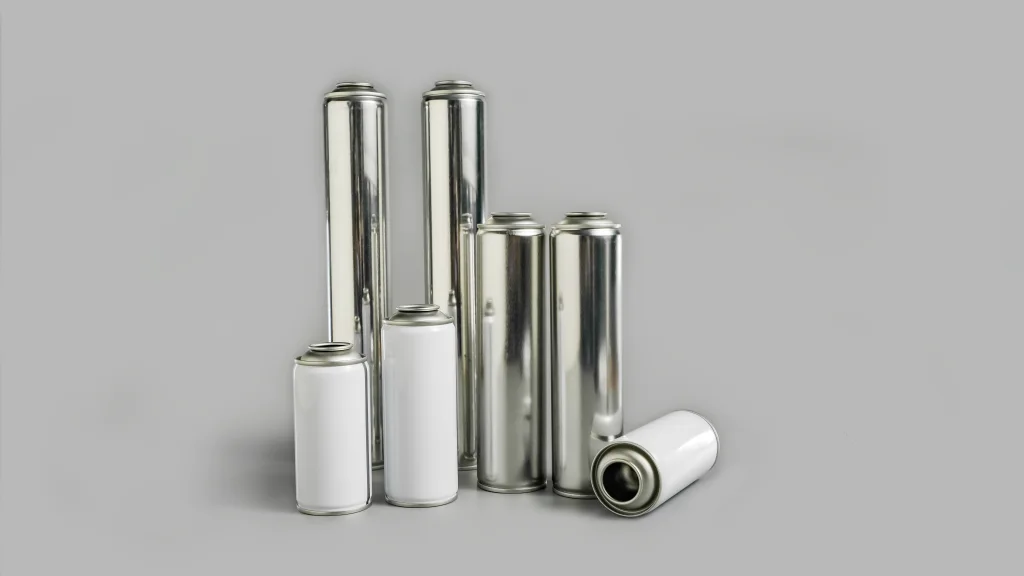
When managing global chemical supply chains, choosing the right aerosol tin can specification determines the safety of your inventory during summer transport. High temperatures inside shipping containers regularly exceed 55°C, causing volatile media to expand rapidly. To ensure complete refrigerant packaging safety, procurement managers must look past standard packaging and invest in verified high pressure aerosol can designs that mitigate thermal stress. Choosing a qualified tinplate aerosol can manufacturer ensures compliance with rigorous international transport regulations, protecting your products from catastrophic structural failures, costly inventory leakage, and liability during transit.
The Dynamics of Thermal Expansion in Industrial Cargo Logistics
During peak summer months, the microclimate within unventilated freight containers and port warehouses behaves like a thermal trap. Standard ambient forecasts fail to account for the radiant heat absorbed by steel container walls, which drives internal temperatures far above 55°C. For industrial fillers of liquefied gases, fluorocarbons, and high-volatility solvent sprays, this environment alters the physical state of the chemical payload.
As temperature scales linearly, the liquid phase of compressed gases expands, diminishing the headspace vapor volume inside the container. This causes an exponential spike in saturated vapor pressure. If the structural integrity of the metal packaging lacks sufficient metallurgical redundancy, the internal forces quickly overwhelm the material’s yield strength. For procurement departments handling bulk chemical contracts, understanding the relationship between ambient heat and inner pressure limits is vital to preventing large-scale product rejection and supply chain disruption.
The Three Structural Failure Phases of Tinplate Under Thermal Stress
The breakdown of a 3-piece aerosol tin can under extreme heat is a predictable mechanical sequence. By analyzing these three distinct phases, quality control teams can implement early warning protocols during receipt inspections and storage audits.
Phase 1: Sub-Critical Pressure Accumulation
- Material Status: Elastic deformation zone.
- Internal Metrics: Pressure rises from baseline values up toward 1.20 MPa.
- Physical Behavior: The container exhibits no visible external alteration. However, the internal strain constantly erodes the engineering safety factor. At this point, the micro-seams along the top and bottom double-ends experience elevated shear stress, transforming the batch into a latent logistics risk.
Phase 2: Plastic Deformation and Bottom Dome Reversal
- Material Status: Reaching the aerosol can deformation threshold.
- Internal Metrics: Pressure plateaus between 1.20 MPa and 1.50 MPa, matching the typical thermal profile of R134a at 55°C.
- Physical Behavior: The concave bottom profile of the container undergoes permanent geometric distortion, buckling outward into a convex shape. This dome reversal increases the total volume of the container slightly, offering a brief pressure release, but completely ruins the structural equilibrium of the metal. This visible distortion is the final actionable warning sign before structural failure.
Phase 3: Metallurgical Rupture and Fracturing
- Material Status: Ultimate tensile strength failure.
- Internal Metrics: Pressure exceeds the rated aerosol can burst pressure limit.
- Physical Behavior: The container suffers catastrophic geometric failure. The fracture almost always initiates at the heat-affected zone of the longitudinal high-frequency resistance weld seam or along the chine of the top double seam. The rapid decompression causes a violent release of the chemical payload, creating immediate fire, environmental, and asset hazards.
Structural Metrics and Engineering Standard Comparison
To maintain absolute safety during filling and multi-modal transit, structural specifications must be matched against the thermodynamic properties of the filling medium. The table below provides a detailed mechanical baseline based on international testing frameworks:
| Engineering Specification | Thickness Profile (Body / Top / Base) | Material Temper & Hardness | Yield/Deformation Limit | Ultimate Burst Limit | 55°C Thermal Cushion | Recommended Chemical Media |
| Commercial Standard | 0.20 / 0.32 / 0.32 mm | T3 / TH520 | 1.20 MPa | 1.40 MPa | None (Deficit Risk) | Low-pressure solvents, light lubricants, aerosol paints. |
| DOT-2P Specification | 0.23 / 0.35 / 0.35 mm | T4 / TH550 | 1.40 MPa | 1.65 MPa | Marginal (<5% Cushion) | Standard technical aerosols, industrial cleaners, R12. |
| DOT-2Q aerosol can | 0.25 / 0.40 / 0.40 mm | T5 / TH580 / DR8 | 1.65 MPa | 1.85 MPa | Optimal (>20% Redundancy) | R134a, R404A, heavy industrial blowing agents. |
The thermodynamic profile of high-pressure fluorocarbons requires strict adherence to these limits. For example, R134a generates an internal pressure of 1.49 MPa at 55°C. Using a standard commercial container with a deformation limit of 1.20 MPa makes failure inevitable. Implementing a heavy-duty DOT-2Q aerosol can architecture provides the required structural cushion to absorb these thermal spikes without risking structural compromise.
Manufacturing Controls and Engineering Quality Requirements
Managing a safe chemical packaging program requires strict quality control protocols at the manufacturing source. When evaluating options for bulk aerosol can procurement, engineering teams must prioritize the following technical benchmarks:
- Verified Hydrostatic Testing: Suppliers must provide certified hydrostatic burst curves rather than generic nominal statements. The data must prove a clear gap between the initial yield deformation point and the ultimate bursting limit.
- High-Frequency Weld Monitoring: The longitudinal seam must be joined using automated high-frequency resistance welding with continuous electronic weld-current monitoring. This minimizes variations in the heat-affected zone, which is the primary point of failure during thermal expansion.
- Precise Double-Seaming Metrics: The integration of the top and bottom components requires strict alignment of real seam thickness, countersink depth, and seam overlap percentage. These parameters prevent micro-leakage when the container expands under seasonal heat.
For enterprises looking to upgrade their structural specifications, SAILON provides specialized manufacturing configurations. By adjusting steel chemistry, processing high-temper tinplate, and utilizing advanced testing methods, SAILON aligns every production run with international transport criteria, ensuring dependable performance for industrial aerosol can wholesale clients worldwide.
Technical Questions and Structural Answers
Q1: Why does R134a require a specialized container during summer shipping?
A1: At an elevated temperature of 55°C, the saturated vapor pressure of R134a rises to 1.49 MPa. A standard commercial container begins permanent plastic deformation at 1.20 MPa. Using standard packaging leads directly to bottom dome buckling and valve failure. Maintaining refrigerant aerosol can filling safety requires a heavy-duty container designed to withstand these higher pressures.
Q2: What is the mechanical function of an overpressure safety release structure?
A2: An overpressure mechanism consists of engineered scores or vents stamped into the bottom dome profile. If internal pressures reach hazardous levels due to extreme external heat, these scores are designed to open predictably. This allows the controlled release of vapor rather than a sudden structural rupture, protecting nearby equipment and personnel from fragmentation hazards.
Q3: How do sheet thickness and steel temper affect structural performance under load?
A3: Sheet thickness determines the total cross-sectional area available to resist internal stress, while steel temper defines the yield strength of the material. Increasing the body profile to 0.25 mm and using higher tempers allows the container to withstand severe pressures without exceeding its elastic limits, which is a standard requirement for high-volatility industrial gases.
Q4: What quality documentation should be audited before approving a supplier?
A4: Quality audits should review non-destructive weld testing logs, 100% online automated leak detection records (such as high-precision water-bath or helium mass spectrometry), and batch-specific regulatory compliance certificates. These documents ensure that the structural integrity of the containers remains consistent across large manufacturing volumes.