

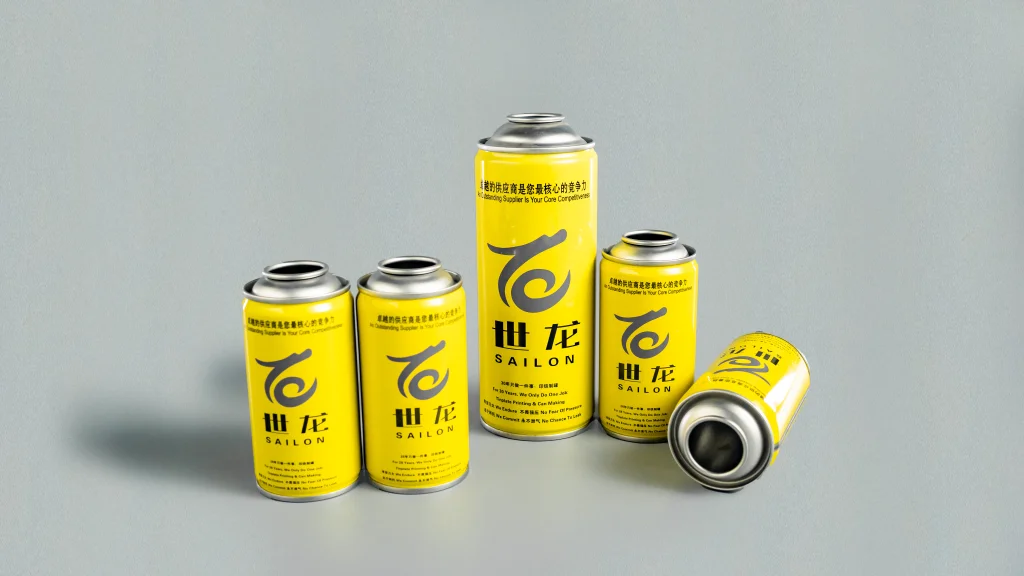
45mm tinplate aerosol can neck collapse ranks among the most common and disruptive defects on automatic filling lines. Most production teams face repeated necking deformation, seal failure and finished product rejection during crimping and valve insertion. Simple machine adjustments rarely solve the issue permanently. The real problem comes from mismatched crimping pressure calibration, insufficient can structural strength and improper tinplate temper grades. As a professional custom aerosol can manufacturer, SAILON solves these field failures with tested material standards and optimized forming processes.
Most factory engineers notice 45mm slim cans collapse far more often than standard 65mm cans. The tall, narrow body creates a high aspect ratio structure with weak sidewall support. Vertical pressing force concentrates heavily on the thin neck transition zone during crimping. The can collapses instantly once the impact load exceeds its Vertical Crushing Strength (VCS), which directly causes aerosol valve insertion failure.
Slim 45mm aerosol cans tolerate far less parameter error than regular cans. Small mistakes in material selection, mold alignment or air pressure settings create large-scale quality issues. Sustainable solutions require coordinated upgrades for materials, molding techniques and machine parameters.
Common Root Causes of 45mm Can Neck Collapse
- Excessive pressing stroke: Operators often extend crimp depth for tighter seals. Overstroke overruns thin tinplate load limits and crushes can necks during high-speed production.
- Misaligned tooling fixtures: Long-term operation shifts jaw and base plate positions. Uneven single-side pressure creates irreversible neck deformation even with standard pressure values.
- Unqualified tinplate temper: Low-grade T2 and T3 steel lacks tensile strength for slim can production. Factories use TH570 tinplate temper grade for standard runs and DR8 double-reduced steel for high-pressure applications.
- Single-stage necking stress buildup: One-pass neck forming traps massive internal metal stress. Later valve pressing releases this stress and triggers gradual neck collapse during continuous production.
2026 Updated 45mm Aerosol Can Material & Crimping Parameter Chart
This data comes from SAILON’s on-site production tests. Engineers use these exact specifications for fast material selection and accurate machine calibration.
| Can Specification | Tinplate Grade | SAILON Tested VCS | Standard Crimping Pressure | Production Application |
|---|---|---|---|---|
| Standard 45mm Double-Neck Can | T4 / TH570 | > 1.2kN | 0.4–0.5MPa | Daily chemicals, insecticides, general cleaners high-speed filling |
| Reinforced 45mm High-Pressure Can | DR8 Double-Reduced | > 1.5kN | 0.5–0.6MPa | Industrial spray paint, high-pressure aerosol formulas |
| Economy 45mm Basic Can | T2 / T3 | < 0.8kN (high collapse risk) | < 0.35MPa | Low-speed filling, low-seal-demand products |
SAILON Full-Scale Optimization to Eliminate Neck Deformation
Fine-tuning machines only fixes surface defects. Manufacturers stabilize low can neck collapse reject rates through material upgrading, mold improvement and standardized field operation.
SAILON adopts TH570 high-tensile tinplate for all standard 45mm slim cans. Our team tests every material batch for vertical compression resistance. This quality control guarantees stable VCS performance and prevents structural deformation during filling and transit.
We replace traditional single-pass stamping with 8-stage progressive necking technology. Gradual metal forming releases internal stress step by step. The optimized double-necking structure balances pressing force and eliminates concentrated stress points.
Our technical team delivers clear SOP adjustment guidelines for all cooperative factories. Precise jaw calibration, stroke limitation and stable air pressure settings drastically cut aerosol valve insertion failure and unplanned line downtime.
Frequently Asked Field Questions
Q: Does adjusting crimp jaw width fix 45mm neck collapse?
A: No. Jaw width controls seal coverage, not vertical pressure resistance. Reliable fixes include reducing pressing stroke or upgrading to SAILON high-strength 45mm custom cans.
Q: What VCS standard suits high-speed automatic filling lines?
A: Lines running over 100 cans per minute require minimum 1.2kN vertical crushing strength. High-pressure formulas and long-distance shipping scenarios need 1.5kN DR8 reinforced cans.
Q: Do single-can and batch collapse issues share the same cause?
A: No. Random single-can deformation comes from minor tooling misalignment. Large-batch collapse stems from substandard tinplate materials and flawed necking processes.
Q: What extra benefits come with double-neck structure?
A: Double-neck forming tightens valve fitting and stops slow air leakage during long storage. It also strengthens radial can durability and reduces collision deformation during stacking and transportation.