

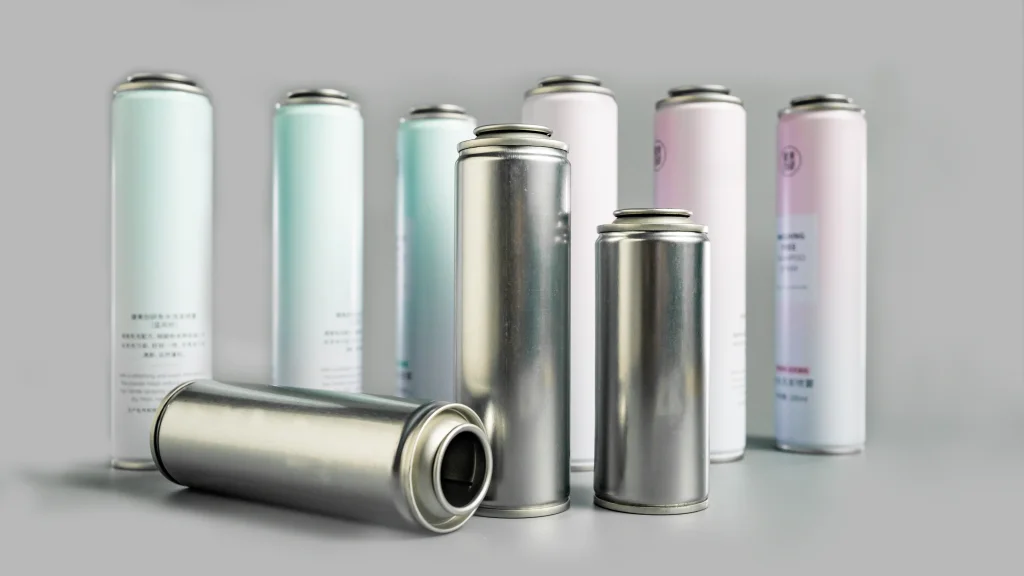
Every July and August, when ocean containers land at ports in Dubai, Texas, or Rotterdam, our customer service inbox receives urgent distress calls:
“SAILON team, our aerosol cans burst inside the container during transit! The bottom ends buckled out, solvent leaked everywhere, and the buyer rejected the entire shipment. We are facing a massive claim!”
Inside a sealed steel shipping container during summer, internal temperatures easily reach 60°C to 70°C (140°F–158°F). Fast-drying solvents and high-pressure propellants expand rapidly inside the packaging. Many brand owners assume that increasing steel thickness from 0.28mm to 0.32mm will solve the problem. The result? Skyrocketing costs, added freight weight, and cans that still burst upon arrival.
Sourcing reliable summer shipping explosion-proof tinplate brake cleaner cans isn’t about blindly piling on steel thickness—it’s about smart structural engineering and burst pressure redundancy.
The Summer Shipping Trap: Why Lab Tests Fail at Sea
Many chemical fillers conduct standard 50°C (122°F) hot water bath testing in the lab and assume everything is safe. Yet, shipments still fail in transit. Why? Because lab tests miss the real-world combination: Extreme Ambient Heat + Continuous Ship Vibration + Stress Concentration.
- Vapor Pressure Spikes: As container temperatures rise from 25°C to 60°C, internal pressure in high-pressure tinplate brake cleaner aerosol cans jumps by 50% to 70%.
- The Flat-Bottom Stress Trap: Standard dome ends concentrate pressure along the bottom rim. Under continuous stress, the tinplate undergoes plastic deformation, causing sudden “dome reversal.” The shockwave from dome reversal frequently tears open the side seam.
Smart Engineering: +35% Pressure Resistance for Just 2% Cost
Blindly thickening steel increases purchasing costs by 12%–15% while adding dead weight to your freight. The truly cost-effective solution combines structural design optimization with high-frequency welding:
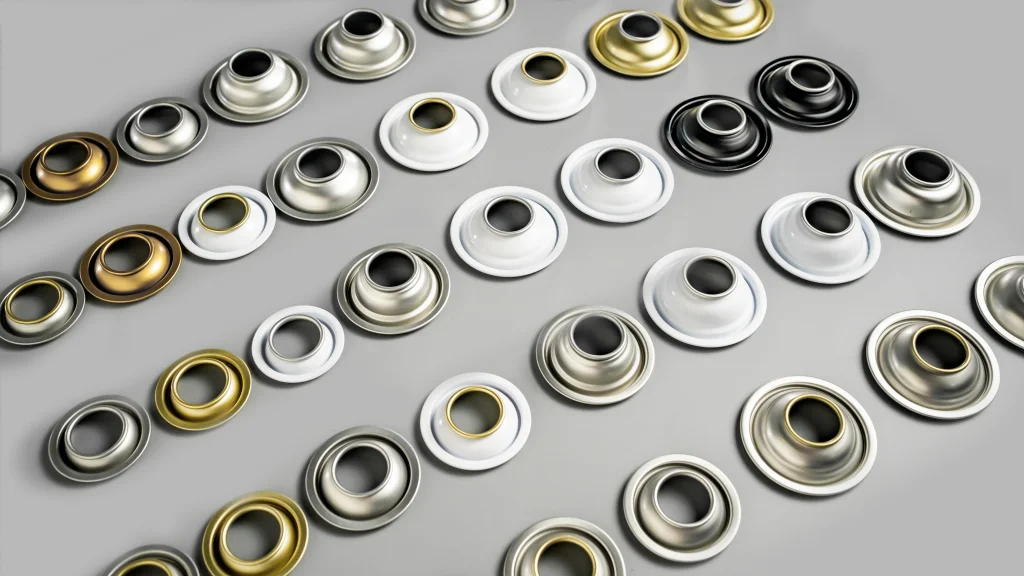
- 70mm Buckle Bottom Tinplate Brake Cleaner Cans: The buckle structure incorporates engineered physical reinforcing ribs along the bottom rim. When intense internal pressure strikes, it redirects downward vertical thrust into outward hoop stress, drastically delaying deformation.
- Meeting Strict Pressure Standards: Standard bottom ends burst at around 1.1 to 1.2 MPa, failing to meet safety margins required by modern tinplate brake cleaner can pressure standards. With SAILON’s Buckle-Type 70mm high-pressure ends, burst pressure stably reaches > 1.4 MPa up to 1.8 MPa, giving your summer freight a massive safety buffer.
- Reinforced Seam Welding & Solvent-Resistant Coating: To handle aggressive solvents in brake cleaners, side seams are reinforced with high-frequency spot welding and paired with specialized solvent-resistant liquid stripe coating to prevent micro-leakage under high heat and pressure.
| Feature / Solution | Standard Tinplate Can | Thickened Tinplate Can | SAILON Buckle-Type 70mm High-Pressure Can | Direct Business Benefit |
| Bottom End Design | Standard Flat / Concave End | Standard Concave (Thicker Steel) | Buckle-Type High-Pressure Structure | Eliminates dome reversal risk |
| Burst Pressure Rating | 1.1 – 1.2 MPa | 1.2 – 1.3 MPa | > 1.4 – 1.8 MPa | > 35% Increase in Safety Margin |
| Purchasing Cost | Baseline | +12% to +15% Cost | ~ 2% Cost Increase | Maximum ROI & Raw Material Savings |
| Summer Loss Rate | 3% – 5% High Risk | 1% – 2% Residual Risk | Zero Burst Incidents | Protects cargo value & brand trust |
Practical Sourcing FAQ
Q1: How can I set up a real-world testing protocol for summer freight?
Don’t rely solely on a 50°C static water bath. When performing tinplate brake cleaner can burst pressure testing, we recommend a 55°C (131°F) constant temperature test for 4 hours combined with a vibration table simulation. Measure bottom dome deformation afterwards; if deformation is under 0.5mm with zero buckling, your cans are ocean-ready.
Q2: Do we need to modify our filling lines or crimping chucks to use 70mm Buckle-Type High-Pressure Ends?
Not at all. SAILON’s 70mm buckle-type ends are engineered strictly to international standard dimensions. They are 100% compatible with standard crimping chucks and filling machinery, requiring zero tooling investment.
Q3: Will aggressive solvents in brake cleaners degrade the internal coating?
We provide tailored coating compatibility solutions. As a trusted tinplate brake cleaner aerosol can supplier, SAILON utilizes specialized solvent-resistant organosol internal lacquers and seam stripe coatings, preventing chemical reactions even when storing aggressive solvents like acetone, heptane, or toluene blends.
Summer cross-border logistics leave no room for error. A single bursting container costs far more than lost inventory—it damages hard-earned trust with overseas distributors.
As a specialized tinplate aerosol can manufacturer, SAILON offers complimentary burst-pressure evaluations, chemical compatibility testing, and custom high-pressure packaging solutions. If you are preparing your next export order, reach out to the SAILON engineering team today to request free test samples or technical specifications. We are ready to help you build a reliable, zero-burst packaging plan for your summer shipments.