

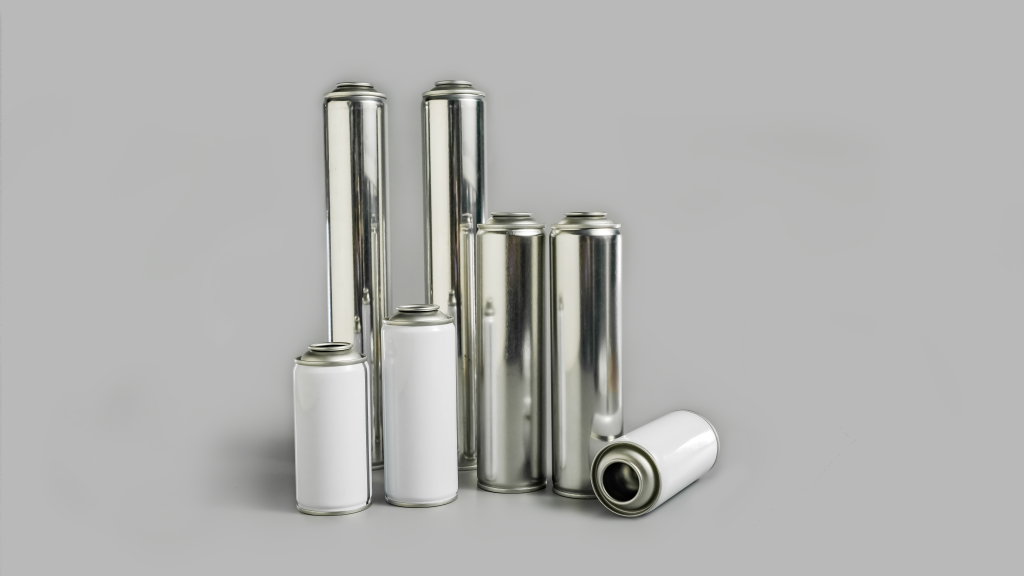
When packaging industrial degreasers for automotive, aerospace, or heavy machinery maintenance, chemical formulators and brand owners face unique packaging challenges. Industrial degreasers often contain aggressive solvents combined with high propellant pressure systems for heavy-duty spraying.
For B2B procurement managers and packaging engineers, picking the wrong aerosol can lead to dented cans in transit, internal corrosion, seam leakage, or even catastrophic pressure bursts. When it comes to solvent-based industrial degreaser packaging, how do tinplate cans stack up against monobloc aluminum cans in terms of total landed cost, structural integrity, and chemical compatibility?
Cost & BOM Breakdown: Avoid the Hidden Expense Trap
Evaluating aerosol packaging purely on unit quotes often masks hidden supply chain costs.
- Unit Purchasing Cost: Tinplate cans are manufactured via a high-speed 3-piece process using tin-coated sheet steel, offering a 20% to 35% unit price advantage over aluminum cans for standard sizes like 500ml.
- Scalability & MOQ: Three-piece tinplate manufacturing lines offer exceptional marginal cost benefits for large batches, shorter lead times, and lower Minimum Order Quantity thresholds.
- Freight Savings: Tinplate cans feature superior axial column strength, allowing you to optimize secondary packaging specifications while reducing transit damage rates compared to softer aluminum walls.
Physical & Structural Performance in Harsh Environments
Industrial workshops are demanding environments where dropped tools, rough handling, and high ambient temperatures are everyday realities.
- Pressure Resistance: Tinplate cans feature high tensile strength capable of withstanding strict deformation pressures up to 15 Bar and burst pressures exceeding 18 Bar.
- Impact Resistance: While aluminum can walls deform easily and risk cracking internal lacquers, the steel core of tinplate cans offers superior impact and puncture resistance.
- Large Volume Scalability: Tinplate cans seamlessly scale to 500ml, 600ml, 650ml, and 750ml sizes without astronomical cost jumps, unlike aluminum alternatives.
Chemical Compatibility: Solvent Corrosion Prevention
Solvents like D-Limonene, acetone, or methylene chloride can aggressively attack internal metal substrates if unprotected.
- Dual Corrosion Defense: Tinplate cans provide an active protective layer where the tin coating serves as a sacrifice barrier, further enhanced by epoxy-phenolic lacquer linings.
- Seam Integrity: Verify that your tinplate cans manufacturer utilizes high-frequency electrical resistance welding along with internal side-stripe powder or liquid coating to eliminate leakage risks.
Decision Matrix: Tinplate vs. Aluminum Aerosol Cans
| Evaluation Dimension | Tinplate Aerosol Can (3-Piece) | Monobloc Aluminum Can | B2B Procurement Recommendation |
| Unit Purchase Cost | High Cost-Efficiency (20%-35% Lower) | Higher Cost | Select tinplate cans for budget optimization |
| Pressure Resistance | Superior (Easily handles 15/18 Bar) | Moderate (Cost spikes with thickness) | Select tinplate cans for high-pressure propellants |
| Impact Resistance | Excellent (Rigid steel substrate) | Vulnerable (Dents easily) | Select tinplate cans for rough workshop conditions |
| Volume Availability | Large Sizes (500ml – 750ml Sweet Spot) | Small to Medium Sizes (50ml – 400ml) | Select tinplate cans for heavy industrial usage |
| Chemical Protection | Tin Coating + Epoxy-Phenolic Lacquer | Dedicated Internal Coating | Both require formulation compatibility testing |
| Ideal Application | Industrial degreasers, auto care, cleaners | Personal care, cosmetics, pharmaceuticals | Select tinplate cans for industrial chemical markets |
B2B Procurement FAQs
- Will aggressive degreaser solvents cause leaks along the side seam of a 3-piece tinplate can? Experienced tinplate cans manufacturers like SAILON utilize automated high-frequency resistance welding and internal side-stripe coating to completely insulate the welded seam from chemical contact.
- Why are 500ml+ large capacity aerosol cans rarely produced in aluminum? Increasing height and diameter in aluminum extrusion requires exponentially thicker walls, causing costs to skyrocket, whereas tinplate cans adjust height effortlessly by trimming body sheets.
- How can I verify a tinplate cans supplier‘s quality control before placing a bulk order? Inspect 100% online automated leak detection, uniformity of internal side-stripe lacquer application, and international burst-pressure safety test reports.
Conclusion
When balancing unit cost, structural durability, high-pressure safety, and large-capacity requirements, tinplate cans are the undisputed best choice for industrial degreasers. As a premier tinplate cans manufacturer, SAILON operates automated production lines dedicated to supplying global B2B clients with robust packaging solutions ranging from 100ml to 750ml. Contact the SAILON engineering team today to request free sample cans and schedule a professional formulation compatibility test.