

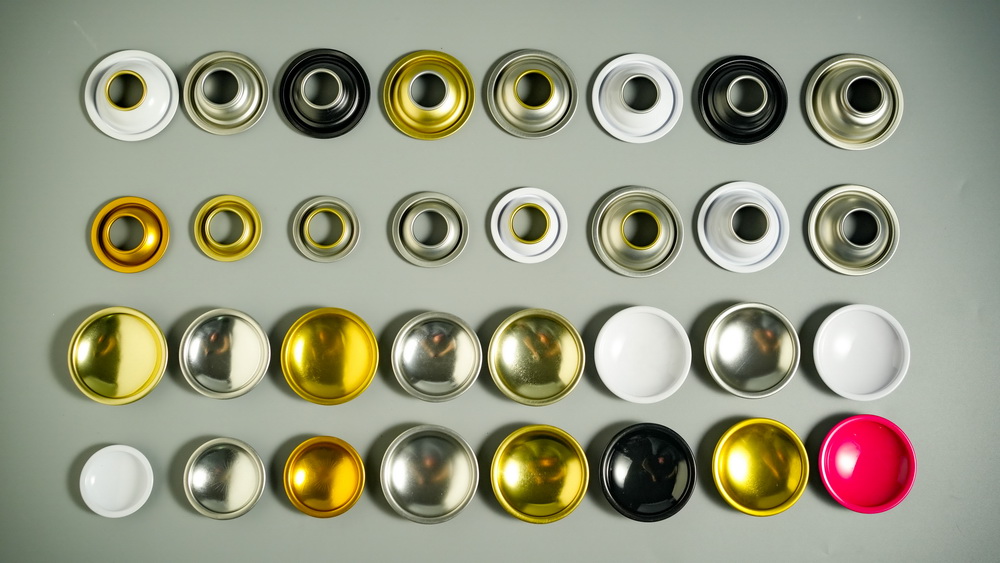
In the aerosol manufacturing and supply chain sector, nothing is more frustrating than receiving bulk customer complaints about “bottom perforation and leakage in spray paints, carburetor cleaners, and adhesive removers.” For brand owners and filling plants, a single batch of returns, warehouse bursts, or marine hazardous material incidents caused by solvent penetration or internal corrosion will not only result in heavy financial losses but also destroy market reputation. Many procurement and packaging engineers focus solely on unit price and appearance during initial selection, ignoring the deep physical and chemical reactions behind solvent-based aerosols. As a source manufacturer specializing in high-end aerosol cans, SAILON combines years of practical experience to deeply analyze the 5 common pitfalls regarding corrosion resistance and pressure resistance in tinplate aerosol cans, helping your products avoid risks and optimize costs.
1. Pitfall 1: Mismatched Internal Coating and Solvent Formula
Many filling plants blindly choose general plain or clear lacquer to save costs when facing strong solvents such as esters, ketones, aromatic hydrocarbons, and strong polar organic solvents. As a result, less than 3 months after filling and storage, the solvent slowly erodes the lacquer coating, exposing the tinplate substrate and causing severe localized electrochemical corrosion, ultimately leading to bottom perforation and leakage.
For strong solvent formulas like spray paints and carburetor cleaners, you must explicitly specify chemical-resistant epoxy-Phenolic lacquer or a double-coating process. During the prototyping stage, compatibility tests between the tinplate aerosol can and the contents must be conducted at 54℃ accelerated high temperature to ensure no blistering, peeling, or discoloration of the coating.
2. Pitfall 2: Flawed Welding Seam Protection
The straight welding seam of a three-piece can is the weakest link for corrosion resistance. If the can-maker exercises poor process control during seam drying and powder or liquid stripe coating, uneven coating thickness or invisible micro-pores will allow solvents to seep in, triggering severe crevice corrosion and pitting leaks.
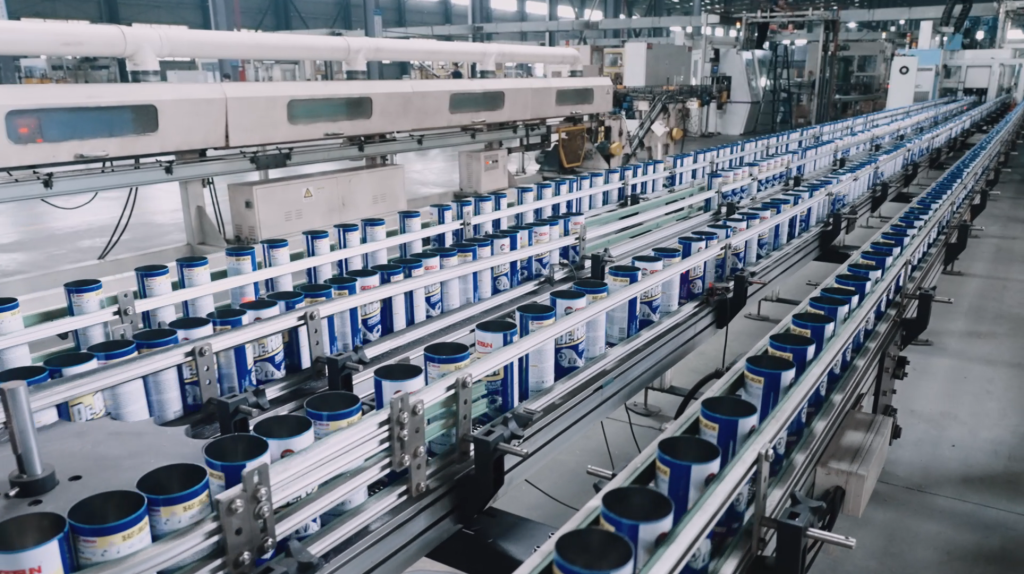
SAILON adopts a high-precision electromagnetic induction drying and automated powder spray coating system, combined with 100% online weld seam continuity laser and high-pressure leak detection, ensuring a dense and defect-free protective film on the weld seam area of every tinplate aerosol can.
3. Pitfall 3: Ignoring Tropical and Marine High-Temperature Thermal Limits
Procurement personnel often consider only normal temperature internal pressure during selection, neglecting extreme temperatures up to 60℃ to 65℃ inside shipping containers during overseas exports or summer maritime transport. High temperatures cause the saturated vapor pressure inside the can to surge, leading to bottom buckling or even crimped seal leakage.
Solvent-based aerosol exports must strictly comply with DOT-2P, DOT-2Q, or UN international standards, selecting high-strength tinplate substrates with sufficient safety margins for deformation and bursting pressure. SAILON recommends that export-grade tinplate aerosol cans have a deformation pressure of no less than 1.2 MPa and a bursting pressure of no less than 1.4 MPa.
4. Pitfall 4: Capping and Crimping Failure Due to Out-of-Tolerance Can Neck Dimensions
Inaccurate 1-inch opening dimensions, excessive out-of-roundness, or unstable curl thickness at the neck cause uneven crimping pressure during the filling plant’s sealing process, leaving micro-gaps. After months of shelf storage, propellants experience slow leakage.
Strictly inspect outer diameter, inner diameter, and curl thickness tolerances within a standard of plus or minus 0.05 mm, while matching high-rebound, solvent-resistant nitrile rubber or butyl rubber gaskets based on the solvent type.
5. Pitfall 5: Using Low-Quality Raw Tinplate Material with Low Tin Coating Weight
To lower unit prices, low-quality substrates with sub-standard tin coating weights are selected. In southern plum rain seasons or high-humidity maritime storage environments, the outer walls, bottom curls, or bottom lid edges of the can are prone to widespread rusting, seriously damaging product appearance and shelf life.
Comparison Table: Low-End Cans vs. SAILON High-End Custom Aerosol Cans
| Performance Dimension | Traditional Low-End Cans | SAILON High-End Custom Aerosol Cans |
| Substrate & Tin Weight | Insufficient tin weight, prone to moisture rusting | High-quality tinplate complying with international standards, strong rust protection |
| Internal Coating | Ordinary single-layer lacquer, easily dissolved by ketones/esters | Epoxy-phenolic lacquer double-coating, resistant to strong solvent corrosion and perforation |
| Seam Protection | Uneven coating repair, prone to micro-pores and pitting | Automatic powder stripe coating with 100% online high-pressure inspection |
| Pressure & Anti-Deformation | Normal temperature standard, prone to bottom bulging in marine heat | Compliant with DOT-2P/UN standards, high burst pressure design for extreme marine transport |
6. Procurement and Quality Control Checklist
To completely eliminate customer complaints regarding leakage and corrosion in solvent-based aerosols, procurement and R&D engineers should implement the following 3 golden tests before mass ordering:
- Compatibility Test: Store finished cans in a 54℃ constant temperature box for over 14 days to check internal coating peeling and metal leaching.
- Hot Water Bath Test: 100% online water bath heating on the production line with water temperatures no lower than 50℃ to strictly detect spray paint can leakage and valve micro-leaks.
- Drop and Pressure Test: Simulate drop and stacking limits during transportation to ensure structural integrity.
Frequently Asked Questions (FAQ)
- Q1: Why do spray paint cans easily experience bottom bulging or perforation a few months after filling?
- A: This is usually because the internal lacquer is dissolved by strong solvents, exposing the substrate and causing electrochemical corrosion (Addressing Pitfall 1), or high-temperature marine transport was not accounted for, causing internal pressure to exceed limits (Addressing Pitfall 3). Switching to epoxy-phenolic lacquer and recalculating pressure ratings is recommended.
- Q2: How to prevent external wall rusting of solvent-based aerosols during storage and shipping?
- A: External rusting mainly stems from sub-standard tin coating weights or poor substrate rust resistance (Addressing Pitfall 5). Choosing high-tin-weight tinplate meeting international standards and securing bottom curl protection solves this issue.
- Q3: What guarantees does SAILON provide for airtightness control in tinplate aerosol cans?
- A: SAILON strictly controls the 1-inch neck opening tolerance within plus or minus 0.05 mm, matches solvent-resistant specialized gaskets, and utilizes 100% online weld seam testing and water bath testing to ensure aerosol valve crimping remains flawless.
Conclusion: Partner with SAILON to Eliminate Leakage Complaints in Solvent-Based Aerosols
Packaging anti-corrosion and pressure resistance for solvent-based aerosols is a systematic engineering challenge. From substrate material and internal coating to weld seam protection and neck crimping, any loss of control in a single detail can quickly transform into a massive brand trust crisis. Rather than handling reactive customer complaints after product failure, it is far wiser to select reliable, high-quality containers right at the initial sourcing stage.
As a professional high-end tinplate aerosol can manufacturer, SAILON is dedicated to providing you with aerosol packaging solutions that feature exceptional corrosion resistance, multi-layer epoxy-phenolic coatings, 100% rigorous online testing, and high safety margins for pressure resistance. If you are looking for a reliable long-term partner to completely eliminate leaks, rust, and deformation issues, feel free to contact SAILON for custom samples and expert technical support.