

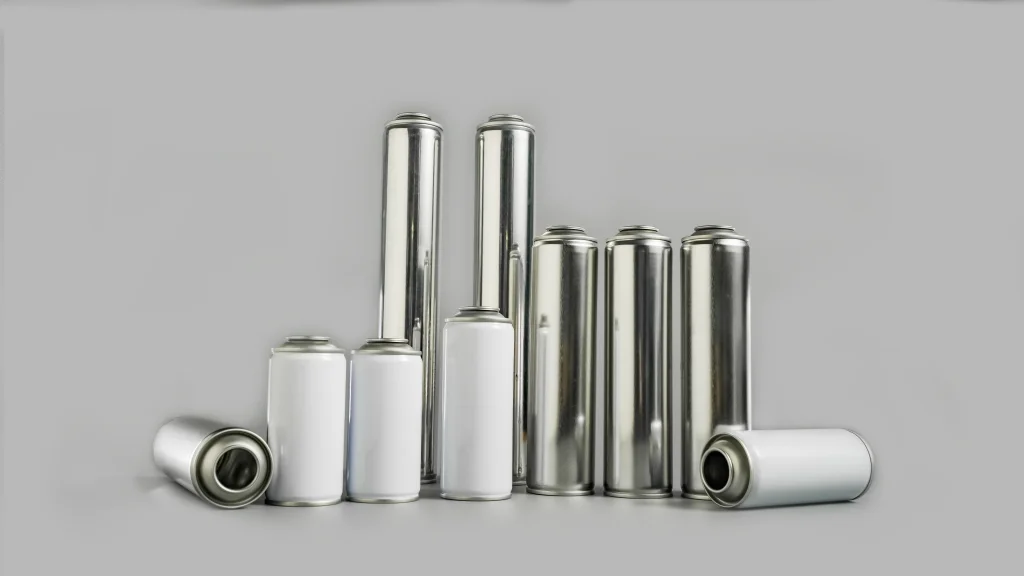
In the competitive automotive care industry, packaging is safety, and packaging is user experience. Products like carburetor cleaners, brake cleaners, and rust-preventative penetration lubricants contain highly volatile solvents and high-pressure propellants. These harsh formulas place extreme demands on the pressure resistance and chemical anti-corrosion performance of the packaging.
Common packaging nightmares—such as can bulging in hot summer shipping or inner coating peeling caused by strong solvents (which clogs the spray nozzle)—can destroy a brand’s reputation and lead to costly product recalls.
This guide explores the essential customization specs for Automotive Aerosol Tin Cans, designed specifically for B2B buyers, packaging engineers, and automotive chemical manufacturers.
💡 3 Major Automotive Aerosol Pain Points vs. Solutions
| Core Pain Point PNG | Root Cause | Customized Spec Solution PNG |
| 1. Summer Heat Bulging / Bursting | Container or truck temperatures exceed 60°C, causing propane/butane propellant pressure to surge rapidly | Upgrade dome/concave tinplate thickness to 0.28–0.32 mm; rated for Deformation Pressure ≥ 1.35–1.50 MPa, Burst Pressure ≥ 1.80 MPa |
| 2. Strong Solvent Coating Stripping | Acetone and xylene solvents dissolve low-grade interior coatings, clogging the aerosol valve | Specify High-Temperature Cross-Linked Epoxy Phenolic Lining (acetone immersion tested) or Plain Unlined Aerosol Cans |
| 3. Hard-to-Reach Engine & Chassis Areas | Conventional cans vent propellant gas instead of liquid chemical when tilted beyond 45° | Equip with 360° All-Angle Inverted Valve (gravity ball mechanism) + Straw-Locking Actuator |
🛠️ Core Customization Pillars for Automotive Aerosol Tin Cans
1. Pressure Safety: 1.8MPa Burst Protection
Automotive cleaners frequently use liquefied gases such as propane and butane as propellants. Inside shipping containers or delivery trucks during summer, ambient temperatures can easily exceed 60°C (140°F), causing internal pressure to surge rapidly.
- The Pitfall: Standard aerosol tin cans have a deformation pressure of only 1.2MPa, leading to dome bulging or seams splitting.
- Custom Spec: Demand heavy-duty prime tinplate with top dome and bottom concave thicknesses ranging from 0.28 mm to 0.32 mm.
- Target Rating: Deformation Pressure ≥ 1.35 – 1.50 MPa, Burst Pressure ≥ 1.80 MPa.
2. Chemical Resistance: Solvent-Proof Epoxy Phenolic Linings
Brake cleaners and carburetor cleaners are loaded with harsh polar solvents like acetone, toluene, and xylene. Standard internal lacquers dissolve instantly when exposed to acetone, flaking off and clogging the aerosol valve stem.
- The Pitfall: Never use generic single-layer inner lacquers for solvent-heavy formulations.
- Custom Spec:
- For Water/Alcohol Formulations: Specify high-temperature cross-linked double-coated Epoxy Phenolic Lined Aerosol Tin Cans. They must pass a strict 24-hour acetone immersion stripping test.
- For Water-Free Solvent Formulations: Choose Plain Unlined Aerosol Tin Cans, entirely removing the risk of coating degradation.
3. Spray Performance: 360° Inverted Valves & Straw-Locking Actuators
Engine bays and undercarriages present cramped, difficult working angles. When tilted upside down, conventional aerosol cans vent propellants instead of liquid chemicals, leaving half the product unusable.
- Accessories Spec:
- 360° Inverted Valve (All-Angle Spray): Built with an internal stainless steel ball mechanism that switches liquid passages, allowing continuous spraying at any angle or completely upside down.
- Straw-Locking Actuator: Features a recessed locking mechanism that prevents long extension straws from popping off under high burst pressure.
📊 Specification Matrix: Standard vs. Automotive Aerosol Tin Can
| Specification Feature | Standard Aerosol Tin Can | Automotive Cleaner Aerosol Tin Can | B2B Procurement Advantage |
| Dome/Bottom Thickness | 0.23 – 0.25 mm | 0.28 – 0.32 mm (Reinforced) | Maximum structural integrity |
| Deformation Pressure | ≥ 1.20 MPa | ≥ 1.35 – 1.50 MPa | Eliminates hot weather bulging |
| Burst Pressure Rating | ≥ 1.40 MPa | ≥ 1.80 MPa | Essential safety margin for dangerous goods |
| Internal Coating | Single-layer general lacquer | Epoxy Phenolic Lined / Plain Unlined | Resistance to acetone & xylene |
| Valve Type | Standard upright valve | 360° Inverted Valve (Gravity ball mechanism) | Easy reach into tight engine gaps |
| Actuator Design | Standard button nozzle | Straw-Locking Actuator (Anti-detachment) | Prevents straw pop-off under high pressure |
❓ B2B FAQ: Automotive Aerosol Tin Cans
Q1: How can I ensure my aerosol tin cans won’t burst during summer ocean container shipping?
Answer: Always request third-party pressure test reports from your aerosol tin can supplier. Ensure the cans meet a minimum deformation pressure of 1.5 MPa and a burst pressure of 1.8 MPa, backed by top/bottom tinplate thickness of 0.28–0.32 mm.
Q2: Should I select an epoxy phenolic lined aerosol tin can or a plain unlined aerosol can for high-acetone brake cleaner?
Answer: If your formula is 100% water-free chemical solvent, a Plain Unlined Aerosol Tin Can offers the best value and zero risk of lining flaking. If your formula contains water or alcohol traces, you MUST use a double-layer Epoxy Phenolic Lined Aerosol Tin Can and perform a 30-day accelerated stability test.
Q3: What are the minimum order quantities (MOQ) and customization options for wholesale empty aerosol tin cans?
Answer: Standard sizes (such as Diameters 65mm and 73mm) usually have flexible MOQs starting at 10,000–20,000 pieces for custom 6-color lithographic printing. Plain unlined cans with standard high-pressure tops can often be supplied from existing stock with lower MOQs.