

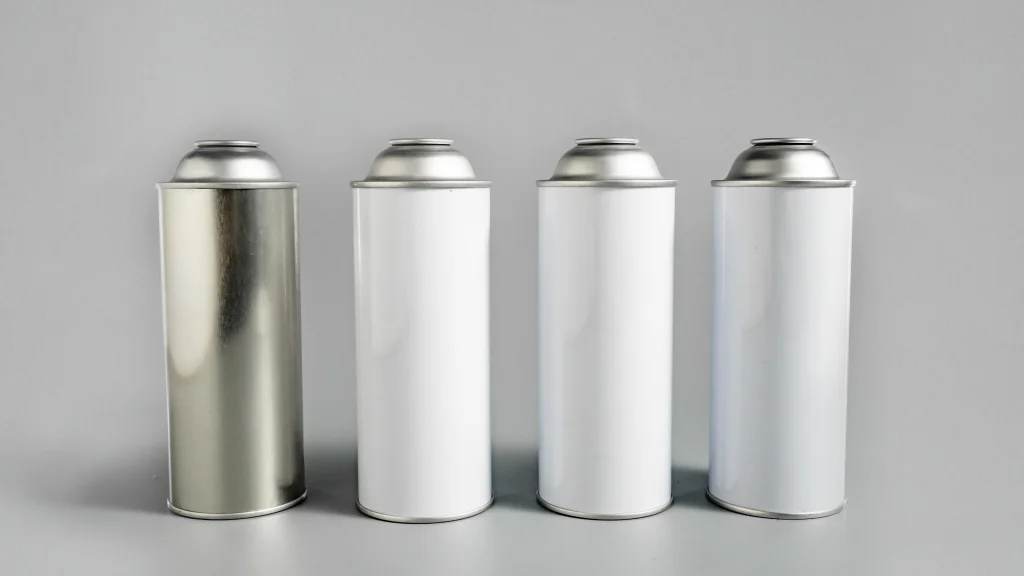
When sourcing aerosol tinplate packaging, many procurement teams jump straight to selecting tank capacity. However, can diameter is often far more critical than height. It governs not only liquid fill volume, but also filling line stability, shipping container density, end-user grip comfort, and shelf presentation.
In tinplate aerosol packaging, 52mm and 65mm are the two dominant industrial standards worldwide. Which one fits your formula best? This practical guide breaks down technical specs, key applications, and procurement logic.
1. Quick Comparison: 52mm vs 65mm at a Glance
| Feature / Metric | 52mm Diameter Tinplate Can | 65mm Diameter Tinplate Can |
| Typical Capacity Range | 150ml- 400ml | 400ml – 750 ml |
| Profile & Aesthetics | Slim, elegant, easy to manipulate | Sturdy, high-volume, heavy-duty industrial look |
| Ergonomics & Handling | Superior single-hand grip; ideal for precision | Firm two-handed/extended grip for large area spray |
| Logistics Density | Higher unit count per carton/pallet | Higher liquid volume per container; lower cost/ml |
| Typical Can Structure | Necked-in / Straight Wall | Predominantly Necked-in |
| Primary Markets | Car detail, precision electronics, disinfectants | Heavy auto repair, industrial coatings, lubricants |
2. 52mm Aerosol Cans: Precision, Portability & Handheld Ergonomics
Thanks to its slim profile and easy single-handed hold, the 52mm diameter is the top choice for detailed maintenance and household chemical products.
Key Application Scenarios:
- Precision Electronics & Automotive Detailing: Electronic contact cleaners, lock lubricants, pin-point anti-seize sprays. Fitted with long straw nozzles, operators can maneuver in tight spots effortless.
- Cabin Care & Spot Treatments: Interior odor eliminators, air conditioner sanitizer foams, leather care sprays (200ml – 350ml).
- Household & Insecticides: Mosquito repellents, bug sprays, and room fresheners used frequently at home.
Why Product Managers Choose 52mm:
- Reduced Hand Fatigue: The 52mm diameter fits natural hand contours, drastically reducing strain during repetitive spraying.
- Premium Shelf Aspect Ratio: At smaller volumes (200 ml – 300ml), 52mm maintains a tall, elegant ratio that elevates brand perception.
3. 65mm Aerosol Cans: High Capacity, High Pressure & Industrial Efficiency
The 65mm diameter is the workhorse for industrial workshops and heavy automotive care. When your product demands big volume, wide coverage, and fast dispensing, 65mm is unbeatable.
Key Application Scenarios:
- Heavy Auto Cleaners: Carburetor cleaners, brake disc cleaners, tar removers. These high-consumption products usually demand 450 ml – 600 ml fills.
- Industrial & Construction Coatings: Undercoating sprays, spray paints, mold release agents, anti-spatter sprays. Requires high-flow valves and pressure-resistant domes.
- High-Volume Lubricants: Industrial-grade anti-rust sprays (WD-40 style bulk refills).
Why Procurement Teams Choose 65mm:
- Cost Efficiency Per Milliliter: Filling 500ml in a 65mm can requires less total tinplate than using an excessively tall 52mm can, lowering overall unit packaging cost.
- Pressure Safety & Line Stability: 65mm cans feature heavy-gauge reinforced top and bottom domes engineered to handle higher propellant pressures safely during high-discharge operations.
4. 3-Step Decision Guide for B2B Buyers
- Check Fill Volume (V):
- Target Volume V≤350 ml→Choose 52 mm.
- Target Volume V≥450 ml→Choose 65 mm.
- Identify Target User & Application:
- Need pinpoint accuracy, light single-handed operation, sleek design → Choose 52mm.
- Need wide-area coverage, high flow rate, heavy workshop use→ Choose 65mm.
- Verify Filling Line Tooling:
- Check your filler’s star wheel and crimping head specifications. Changing diameters requires swapping star wheels and pucks on the line.
5. Frequently Asked Questions (FAQ)
Q1: Are pressure rating standards different between 52mm and 65mm cans?
Answer: Deformation and burst pressure ratings depend on propellant formula, plate thickness, and dome engineering. While 52mm naturally handles pressure easily due to smaller surface area, 65mm cans use reinforced bottom domes and thicker tinplate to fully meet strict DOT-2P/2Q and FEA safety standards.
Q2: For a 400ml product, which size is more cost-effective?
Answer: $400\text{ ml}$ is right on the boundary. A 52mm can looks taller on shelf but requires extra stability handling on high-speed filling lines. A 65mm can sits shorter and wider, offering better pallet stability and reduced ocean freight costs. If shipping cost is key, 65mm usually wins.
Q3: Should I choose Necked-in or Straight Wall cans?
Answer: 65mm cans are mostly necked-in (narrowed top and bottom) for safe stacking and scratch protection during transit. 52mm offers both options—straight wall provides continuous graphic wrap, while necked-in offers better stackability.
Partnering with SAILON
As a professional manufacturer of metal aerosol packaging, SAILON specializes in high-precision 52mm and 65mm tinplate aerosol cans. Equipped with automated high-speed production lines and advanced lithographic printing equipment, we deliver customized aerosol packaging solutions ranging from 150 ml to 750 ml. Whether you require heavy-duty industrial cans or refined consumer packaging, the SAILON engineering team ensures strict international quality compliance to support your global brand growth.
When sourcing aerosol tinplate packaging, many procurement teams jump straight to selecting tank capacity. However, can diameter is often far more critical than height. It governs not only liquid fill volume, but also filling line stability, shipping container density, end-user grip comfort, and shelf presentation.
In tinplate aerosol packaging, 52mm and 65mm are the two dominant industrial standards worldwide. Which one fits your formula best? This practical guide breaks down technical specs, key applications, and procurement logic.