

The Nightmare of Aerosol Paint Brands: From Customer Complaints to Recalls
In the aerosol industry, spray paint products are often the biggest headache for procurement and quality control teams. To achieve better coverage and atomization, many brand owners increase the propellant ratio or utilize aggressive organic solvents. Shortly after launching, bad reviews start rolling in: cans deforming or bursting during summer transport, or nozzles completely clogging up after a few months on the shelf.
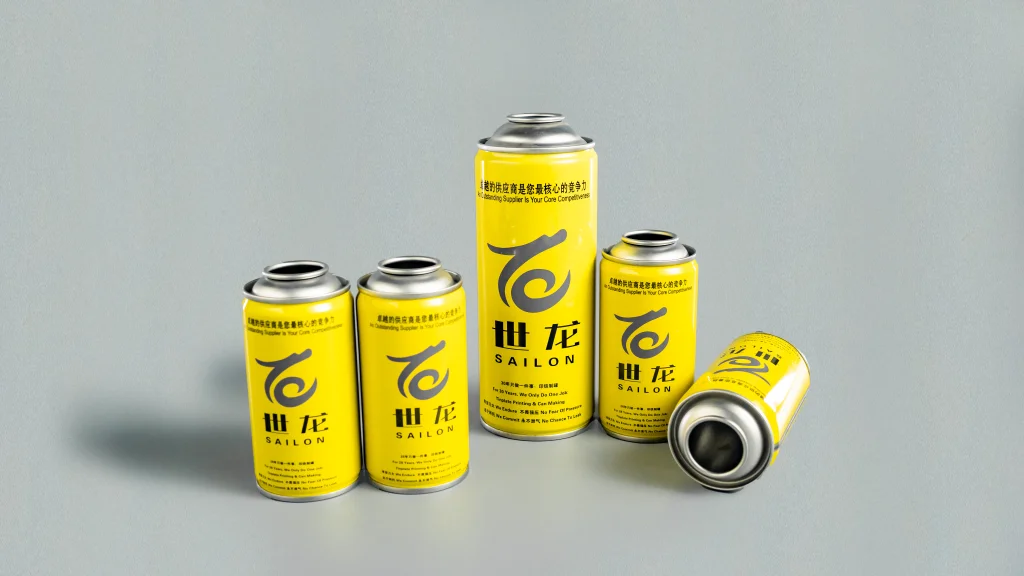
These failures stem from a fundamental mismatch between the liquid formulation and the packaging container. Choosing the wrong Spray Paint Aerosol Tin Can not only ruins your brand reputation but also creates serious logistical hazards. If you want to eliminate risks during Aerosol Packaging Procurement, you must evaluate three core metrics.
Metric 1: Deformation and Burst Pressure Ratings
Most explosion incidents with spray paints occur because the container cannot handle pressure spikes. Spray paints contain liquefied gases like dimethyl ether (DME), propane, or butane, which expand exponentially as temperatures rise.
When evaluating a High-Pressure Aerosol Tin Can, never rely solely on verbal promises. Always verify physical lab test data:
- Deformation Pressure Rating: A premium High-Pressure Aerosol Tin Can should resist deformation at pressures up to 1.2 MPa to 1.5 MPa or higher, ensuring the top and bottom concaves stay intact during hot shipping conditions.
- Burst Pressure Limit: The ultimate safety margin lies in the burst pressure, which should exceed 1.8 MPa or 2.0 MPa.
- Seam Welding and Clinching Technology: Analyzing the primary Aerosol Tin Can Bursting Reasons shows that precise wire-welding and triple-seaming techniques prevent micro-cracks along the side seam under extreme inner pressure.
Metric 2: Inner Coating Endurance against Aggressive Solvents
Is a clogged nozzle really just a defect of the plastic nozzle itself? In reality, solvent corrosion inside the container is usually to blame. Strong solvents like acetone, ethyl acetate, and xylene slowly strip away low-grade internal lacquers. The peeled flakes and rust particles mix into the paint formulation, quickly clogging tiny valve orifices.
When inspecting a High-Pressure Aerosol Tin Can, inner coating resistance is non-negotiable:
- Double Epoxy-Phenolic Lacquer: Cans meant for solvent-based paints require double-coated epoxy-phenolic inner linings cured at temperatures exceeding 200°C.
- Solvent Immersion Testing: Request 72-hour high-temperature solvent immersion test reports from your supplier to ensure zero blistering or flaking.
- Clean Internal Environment: Keeping the internal wall intact prevents particulate contamination, ensuring smooth actuation alongside an effective Anti-Clogging Nozzle Solution.
Metric 3: Valve Seal Compatibility and Nozzle Design
Even with a pressure-resistant container, a poorly fitted valve assembly can lead to propellant leakage, pressure drops, or dried paint build-up.
When finalizing your Aerosol Valve and Nozzle Selection, pay attention to:
- Solvent-Resistant Gaskets: Use high-grade Fluororubber or NBR gaskets to prevent chemical swelling, leakage, or stem sticking.
- Self-Cleaning Nozzle Mechanisms: Pair your formula with valves that support inverted cleaning or low-retention stems to clear residual paint after each spray.
Standard vs. High-Pressure Aerosol Tin Can Comparison
| Parameter | Standard Aerosol Tin Can | High-Pressure Aerosol Tin Can |
| Deformation Pressure | 1.0 – 1.2 MPa | 1.3 – 1.5 MPa |
| Burst Pressure | 1.4 – 1.6 MPa | 1.8 – 2.0+ MPa |
| Internal Coating | Single layer / Uncoated | Double-layer solvent-resistant epoxy-phenolic |
| Side Seam Technology | Standard resistance welding | High-frequency welding with triple clinching |
| Ideal Applications | Mild cleaners, hair sprays | Harsh solvent spray paints, industrial aerosol |
Conclusion: Securing Premium Packaging for Your Spray Paints
A reliable spray paint product requires a balanced synergy between formulation and industrial-grade packaging. Thoroughly evaluating your High-Pressure Aerosol Tin Can supplier across pressure limits, inner lacquers, and valve sealing during Aerosol Packaging Procurement is the only way to avoid costly recalls. Sailon Can specializes in manufacturing high-spec aerosol packaging, offering tailored solutions that withstand high pressure and harsh solvents.
Frequently Asked Questions (FAQ)
1. Why do spray paint cans deform during summer transportation?
Temperatures inside shipping trucks can exceed 60°C, causing the propellant inside the container to expand rapidly. If a standard container with a deformation threshold below 1.2 MPa is used, the top and bottom will dome outward. The solution is switching to a High-Pressure Aerosol Tin Can rated for 1.3-1.5 MPa deformation pressure.
2. How does internal coating flaking lead to nozzle clogging?
Strong solvents like acetone and xylene erode cheap interior linings, causing microscopic particles to peel off. These floating particles travel into the narrow valve orifices and clog the nozzle. Always specify a double-cured epoxy-phenolic inner coating.
3. How can buyers verify the pressure capabilities of an Aerosol Tin Can before mass ordering?
Ask your supplier for third-party hydrostatic burst test reports and perform random water-pressure destruction tests to confirm that deformation and burst thresholds reach at least 1.3 MPa and 1.8 MPa, respectively.