

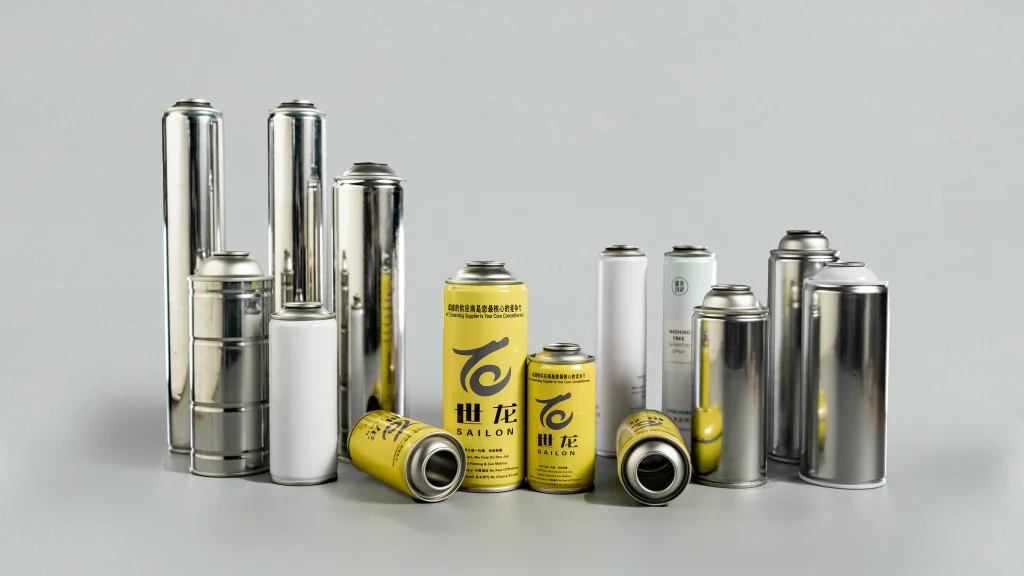
In cosmetics and personal care supply chain management, packaging cost (COGS) directly dictates profit margins and market competitiveness. Driven by cost-reduction goals, many brand owners and OEM/ODM manufacturers are turning to material substitution—transitioning from traditional aluminum aerosol cans to tinplate aerosol cans.
This simple transition often yields a 20% to 30% reduction in packaging procurement costs. However, product managers and sourcing teams frequently share a critical concern: If we switch to tinplate, will our sunscreens, hydrating mists, or hairsprays suffer from internal coating peeling, formulation degradation, or pinhole corrosion?
This article breaks down the financial logic behind tinplate aerosol cans, examines the root causes of inner coating failure, and offers an actionable selection framework to de-risk your packaging upgrade.
1. Cost Comparison: How Tinplate Cans Achieve 20%–30% Savings
Why are tinplate aerosol cans significantly more cost-effective than aluminum cans? The difference lies in raw material characteristics and high-speed manufacturing methods.
- Processing Energy & Production Speed: Aluminum aerosol cans are typically manufactured via impact extrusion, requiring high-tonnage machinery and intensive energy consumption. In contrast, tinplate cans use a three-piece structure (top, body, bottom) produced via ultra-high-speed printing, cutting, and electric resistance welding, yielding far higher output per hour.
- Integrated Supply Chain Efficiency: Manufacturers like SAILON integrate coil shearing, metal printing, coating application, and can-making within a single facility. Eliminating middleman logistics and inter-factory transport markups reduces total unit cost.
For brands with annual volumes in the millions, saving $0.05–$0.10 per can translates to hundreds of thousands of dollars directly added to the bottom line.
2. Risk Analysis: Root Causes of Inner Coating Peeling and Corrosion
Tinplate consists of a low-carbon steel base coated with a microscopic layer of tin. If the internal lacquer defense fails, moisture, salts, or polar solvents from the cosmetic formula reach the steel substrate, triggering electrochemical corrosion, product discoloration, or leakage.
Internal coating failures usually stem from three critical vulnerabilities:
(1) Mismatch Between Lacquer Type and Formulation Chemistry
Cosmetic formulations vary widely:
- Water-based / High pH Formulations (e.g., foaming cleansers, hydrating mists): Highly sensitive to moisture penetration. Single-layer standard coatings may undergo hydrolysis and flake off over time.
- Alcohol-based / Strong Solvent Formulations (e.g., hairsprays, perfume mists): Solvent molecules can swell or soften low-grade lacquers, leading to adhesion loss.
(2) Subpar Side-Stripe Coating (Weld Seam Protection)
When a three-piece tinplate can body is welded, the protective tin layer at the seam melts. A liquid or powder side-stripe coating must be re-applied to cover the exposed steel. If this side-stripe is uneven, under-cured, or contains micro-pinholes, the seam becomes a prime target for corrosion.
(3) Micro-Cracks During Can Body Forming
During necking-in, flanging, and seaming processes, the metal undergoes significant mechanical deformation. If the lacquer lacks sufficient flexibility, invisible micro-cracks can form in high-stress areas, compromising the protective barrier.
3. Decision Framework for Tinplate Inner Coating Selection
To capture cost savings without compromising quality, select your internal lacquer based strictly on formulation properties:
| Formulation Category | Representative Products | Recommended Inner Lacquer Option |
|---|---|---|
| Polar / Water-Based | Hydrating Mists, Sunscreen Lotions, Foaming Cleansers | Double-Coat Epoxy-Phenolic / Gold Lacquer |
| Alcohol / Solvent-Based | Hairsprays, Fragrance Mists, Sunscreen Sprays | High Solvent-Resistant / High-Flexibility Modified Coating |
Essential Quality Control Protocol
Before approving mass production, verify that your packaging supplier enforces the following tests:
- Cross-Cut Adhesion Test: Verifies lacquer-to-metal bonding strength after mechanical necking and shaping.
- 100% Weld Seam Current Test (Porosity Testing): Measures electrical current along the welded seam to ensure zero pinholes or exposed steel (current kept within safe micro-amp thresholds).
- High-Temperature Accelerated Stability Testing: Store filled aerosol cans at 45°C for 1 to 3 months to simulate 2 to 3 years of shelf-life performance.
4. Frequently Asked Questions (FAQ)
Q1: Is it safe to switch sensitive cosmetics (e.g., sunscreen sprays, facial mists) to tinplate aerosol cans? A: Absolutely. When matched with a proper cosmetic-grade internal lacquer, tinplate cans offer chemical stability equal to aluminum cans. Furthermore, tinplate provides superior pressure resistance and structural rigidity during transport.
Q2: How can I quickly evaluate a supplier’s coating reliability? A: Focus on their process controls: verify whether they utilize online weld-seam monitoring systems and real-time baking oven temperature curve trackers. Proper thermal curing duration and temperature are essential for complete polymer cross-linking (such as in epoxy-phenolic coatings).
If you are evaluating packaging substitution for your cosmetic aerosol lines, or currently experiencing coating compatibility issues with tinplate cans, reach out to the SAILON engineering team. We offer formulation compatibility testing, custom lacquer selection, and end-to-end cost optimization strategies tailored to your product line.