

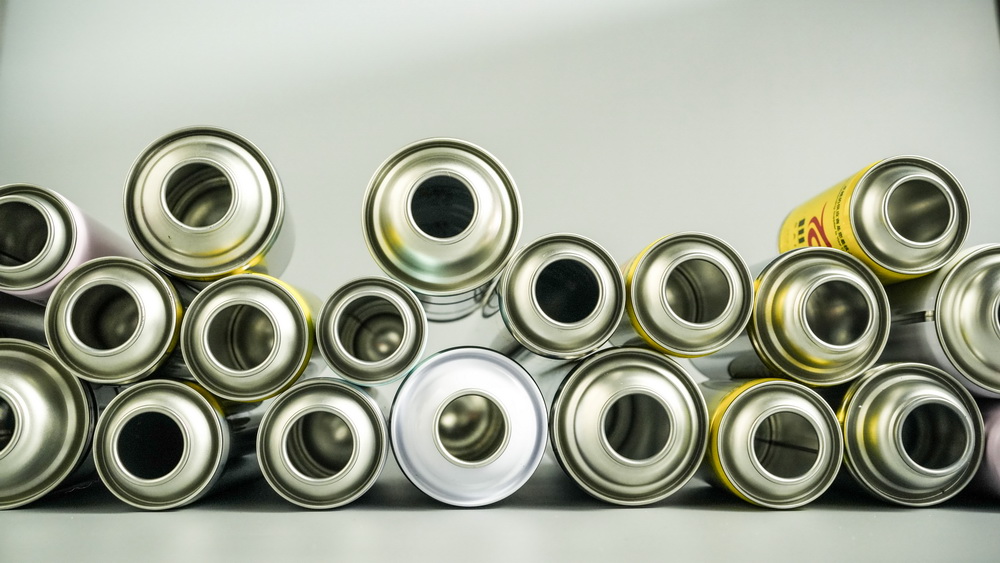
For many procurement teams, cutting the thickness of a aerosol tin can body by 0.02mm seems like a quick and easy way to lower unit costs. This practice is common across industries from car care, home care to personal care — but most buyers only see the small drop in material cost, and ignore the chain risks caused by reduced mechanical performance of the can body.
As an experienced aerosol can manufacturer with over 17 years in the industry, SAILON always emphasizes: blind thickness reduction is a short-sighted cost-cutting trap. The tiny savings on material will never cover the losses from bursting cans, shipping damage, compliance fines, or damaged brand reputation. In the long run, it only drives up your total supply chain costs.
Risk Matrix: Pros and Cons of 0.02mm Thickness Reduction
Most buyers only calculate the material cost, but ignore the hidden risk cost. The table below compares standard-thickness and 0.02mm-thinned aerosol tin cans across 4 key dimensions, and explains the real-world impacts:
| Dimension | Standard Thickness Aerosol Tin Can | 0.02mm Thinned Aerosol Can | Potential Risks & Real-World Impacts |
|---|---|---|---|
| Material Cost | Industry-standard base material cost with stable and reliable performance | 2%–4% lower tinplate cost per single can | Lower unit purchase price on the surface, but hidden quality risks increase sharply, with uncontrollable follow-up losses |
| Pressure Resistance | Meets US DOT and high-pressure test standards with qualified yield strength | Significantly reduced yield strength and anti-deformation capacity | Risk of bottom bulging, can body deformation or even bursting in high-temperature environments, such as sealed shipping containers and sun-exposed vehicles |
| Drop Impact Resistance | Good cushioning and resilience, stable seam and weld structure | Local stress concentration, much easier to crack at seams and welds | Product damage rate rises exponentially during logistics handling and shelf drops |
| Total Supply Chain Cost | Stable quality, extremely low after-sales return rate, zero compliance risks | Sharply higher risks of customer complaints, returns, brand reputation damage and compliance penalties | A bad deal: the tiny cost savings per can can never cover the losses caused by a single bursting accident |
Solutions for Two High-Risk Scenarios From SAILON
Aerosol tin cans go through filling, storage, logistics and end-use stages. Hidden dangers of blind thickness reduction usually break out in extreme scenarios. For the two most common high-risk situations in the industry, SAILON has mature and proven solutions.
Scenario 1: High-Temperature Storage and Cross-Border Logistics
Pain point: The saturated vapor pressure of aerosol propellants (such as butane and propane) rises sharply as temperature increases. Thinned can bodies and seams lack enough strength, and are prone to plastic deformation, leakage or even bursting inside sealed shipping containers in hot weather.
SAILON Solution: We never cut costs by sacrificing safe can thickness. Instead, we achieve scientific lightweighting through process optimization and material selection:
- Optimize the neck-in forming process to improve structural rigidity and distribute pressure load evenly;
- Select high-strength, high-quality tinplate base material to control material redundancy while guaranteeing pressure resistance;
- Equip all production lines with online airtightness inspection. Every aerosol tin can passes pressure tests to meet US DOT certification standards.
Scenario 2: High-Pressure Sealing Impact on High-Speed Filling Lines
Pain point: On customers’ high-speed automatic filling lines, the sealing station works under high pressure and fast rhythm. Thin-wall cans with uneven wall thickness are very likely to develop micro-cracks at the seam under the impact of sealing dies, which becomes a hidden leakage risk later.
SAILON Solution:
- Adopt high-precision stamping dies to ensure uniform wall thickness and standard roundness, fitting the tolerance requirements of high-speed filling lines;
- Provide customized sealing die matching solutions according to customers’ filling equipment parameters, eliminating sealing damage and micro-cracks caused by insufficient wall thickness from the source;
- Support the full-process online quality control system to monitor can body size and forming quality in real time, ensuring consistent quality for bulk deliveries.
The Right Way to Lightweight Aerosol Cans: Safety First, Cost Optimization Through Process
Reliable aerosol can lightweighting is never simply “thinning the metal”. Relying on 10 printing production lines and 8 high-speed aerosol can production lines, SAILON provides cost optimization solutions for customers within the compliance framework:
- Match base material thickness according to the pressure level of different contents, avoiding cost waste caused by over-design;
- Improve can body structural strength through forming process optimization, instead of the extensive method of simply increasing thickness;
- All normal pressure cans, high pressure cans and special-shaped cans strictly follow ISO9001 quality management system and US DOT certification requirements to keep the safety bottom line.
Frequently Asked Questions (FAQ)
Q1: Can you tell a 0.02mm thinner aerosol tin can by eye or by hand?
A: Almost impossible to tell by visual inspection or normal hand feel. A micrometer or professional thickness gauge is required for accurate measurement. This is exactly why many buyers fall into the trap: suppliers quietly reduce thickness, but procurement teams can hardly find it quickly upon incoming inspection.
Q2: What standards must lightweight aerosol cans meet to ensure safe use?
A: Lightweight aerosol cans must pass strict burst pressure tests, and comply with internationally recognized standards such as US DOT certification and ISO9001 quality management system. This ensures the deformation of the can body stays within the safety threshold under the designed pressure, with no risk of leakage or bursting under extreme working conditions.
Q3: Does SAILON provide custom lightweight tinplate aerosol cans?
A: Yes. We customize lightweight solutions through material matching and process optimization, based on your content properties, application scenarios and target market compliance requirements. Our product range covers neck-in and straight body cans with diameters from 45mm to 70mm. All solutions go through full tests including pressure resistance and drop test before delivery, balancing cost efficiency and safety.