

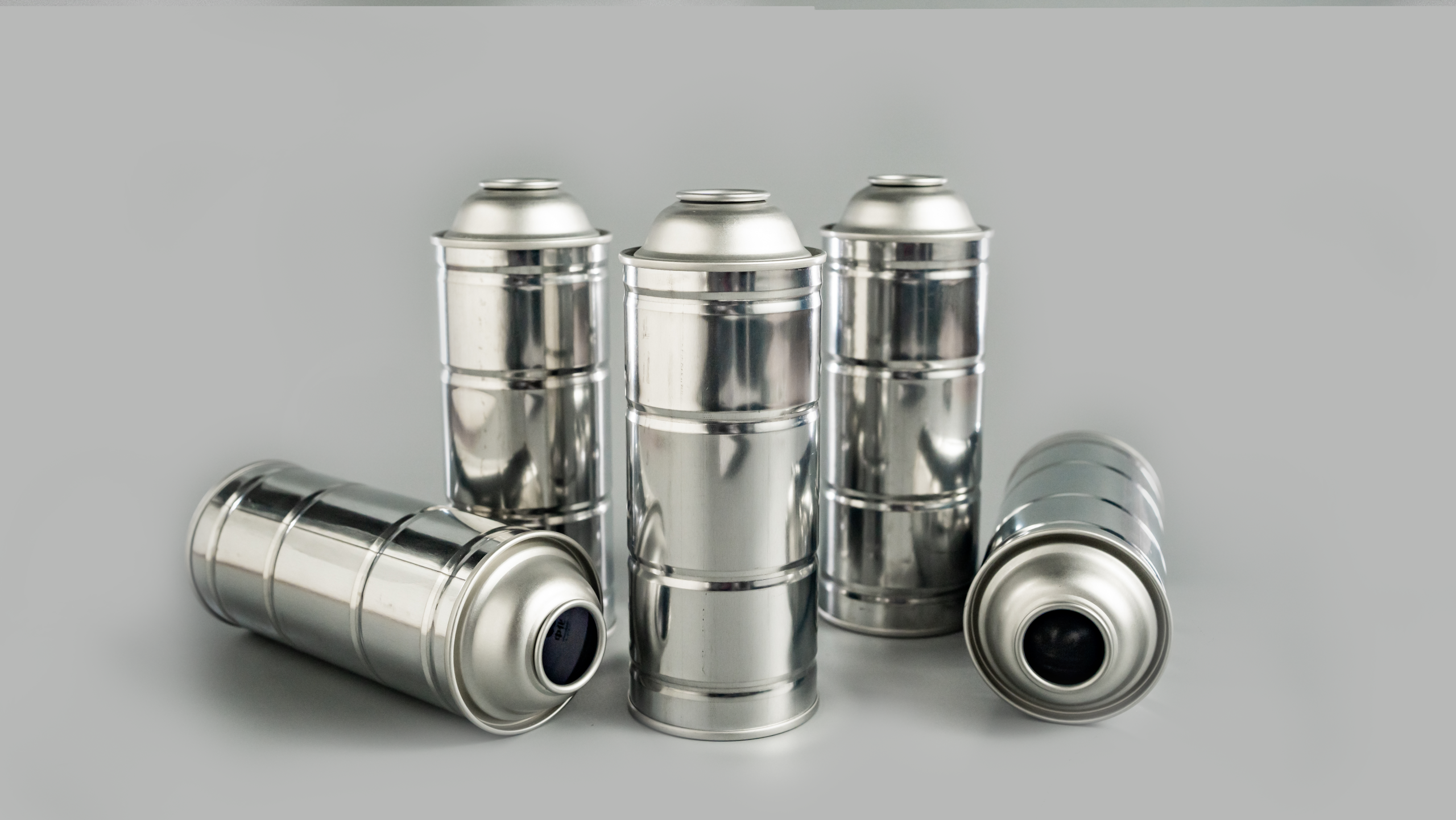
In agricultural planting, home protection and commercial disinfection fields, custom insecticide cans are no longer simple packaging containers, but key carriers to ensure product efficiency and enhance user experience. According to 2025 industry data, the global market size of custom insecticide spray cans has increased by 15.7% year-on-year. More and more enterprises have realized that customized cans adapted to product characteristics can effectively solve problems such as insufficient sealing, inconvenient use and poor safety of traditional packaging. Whether it is household mosquito repellent spray or agricultural-specific insecticide, personalized insecticide tin cans are becoming the preferred packaging in the disinfection industry with their precise adaptation advantages.
1. Core Value of Custom Insecticide Cans: More Than Just “Containing”
- Precise Sealing to Lock Efficacy: Customized cans can optimize the sealing structure according to the composition of insecticides (oil-based, water-based, emulsion, etc.), combined with leak-proof valve design, which can reduce more than 90% of pesticide volatilization and extend the shelf life of active ingredients by 1-2 years. Especially for high-pressure custom insecticide cans, professional sealing technology can avoid potential safety hazards during transportation and storage.
- Safety Protection for Scenario Adaptation: By customizing can thickness, material and nozzle type, it can meet different scenario needs. For example, household cans adopt child-resistant design, agricultural cans enhance compression and wear resistance, and food-safe custom insecticide cans use non-toxic coatings to adapt to fruit and vegetable fresh-keeping insecticidal products.
- Humanized Design to Enhance Experience: The nozzle atomization effect (fine mist, directional spray, foam) can be customized to adapt to different usage scenarios—fine mist for indoor disinfection, directional spray for fruit tree insecticide; can size can be adjusted according to usage frequency, from 50ml portable to 1000ml large-capacity, meeting the needs of families, farms, shopping malls and other places.
- Environmental Protection and Durability to Meet New Regulations: Eco-friendly custom insecticide cans made of high-recovery tinplate have a recovery rate of 98%, complying with global environmental packaging new regulations in 2025, which not only reduces enterprises’ carbon footprint but also meets consumers’ green consumption concepts.
2. Popular Application Scenarios of Custom Insecticide Cans (2025 Data)
| Application Scenario | Core Customization Needs | Representative Products | Market Share |
|---|---|---|---|
| Home Protection | Compact and portable, child-resistant, low odor | Mosquito repellent spray cans, cockroach killer cans | 42% |
| Agricultural Planting | Large capacity, high-pressure spray, corrosion resistance | Fruit tree insecticide cans, farm herbicide cans | 35% |
| Commercial Places | Efficient atomization, easy operation, large capacity | Shopping mall disinfection cans, hotel mosquito repellent cans | 15% |
| Pet Protection | Mild formula adaptation, small capacity, precise spray | Pet flea repellent spray cans | 8% |
3. Frequently Asked Questions About Custom Insecticide Cans
Q1: What is the production cycle and minimum order quantity for custom insecticide cans?
A: The minimum order quantity for regular custom orders is as low as 500 cans, with a production cycle of 7-12 working days, including can design, material selection, sample testing, mass production and other links; if special processes (such as anti-counterfeiting printing, special valve customization) are required, the cycle can be extended to 15 working days, supporting small-batch trial production.
Q2: What safety standards must custom cans meet?
A: They must comply with mainstream global safety certifications, including EU CLP Regulation, US EPA standards, and China’s GB 30000-2024 classification and labeling standards. Cans involved in food contact scenarios need to pass additional FDA food-grade testing to ensure no heavy metal precipitation from the inner coating of the can.
Q3: How to match can materials suitable for different types of insecticides?
A: Oil-based insecticides are recommended to use thickened tinplate with solvent-resistant coating; water-based insecticides can use regular tinplate or food-grade plastic composite materials; high-pressure insecticides need to enhance the compression resistance of the can, using tinplate with a thickness of more than 1.2mm and explosion-proof valves.
4. 2025 Custom Insecticide Can Purchasing Guide
- Prioritize manufacturers with special qualifications for disinfection packaging to ensure core processes such as leak-proof and pressure resistance;
- Clarify product characteristics: Customize nozzle and can structure according to the form of insecticide (spray, emulsifiable concentrate, suspension concentrate);
- Pay attention to detailed design: Can printing should clearly mark usage instructions, warning signs and environmental recycling marks;
- Test sample performance: Before mass production, be sure to conduct sealing, spray effect and storage resistance tests to avoid later problems.
As the disinfection industry’s requirements for product safety and practicality continue to increase, custom insecticide cans are evolving from “adaptable packaging” to “efficiency-enhancing tools”. Through precise customization, enterprises can not only maintain the best efficacy of products during transportation and storage but also improve consumer experience through humanized design. In the future, smart custom insecticide cans with both environmental attributes and intelligent functions (such as dosage control, anti-counterfeiting traceability) will become a new industry trend, bringing safer and more efficient packaging solutions to the disinfection field.