

Turn the can upside down and put it on the bench.
Almost everything that will decide whether this can survives a year in a warehouse is now facing you, in a ring about four millimetres wide: the curl, the compound seated inside it, and the double seam that joins the end to the body.
It is the least photogenic part of the product and the only part that has to be right every single time.
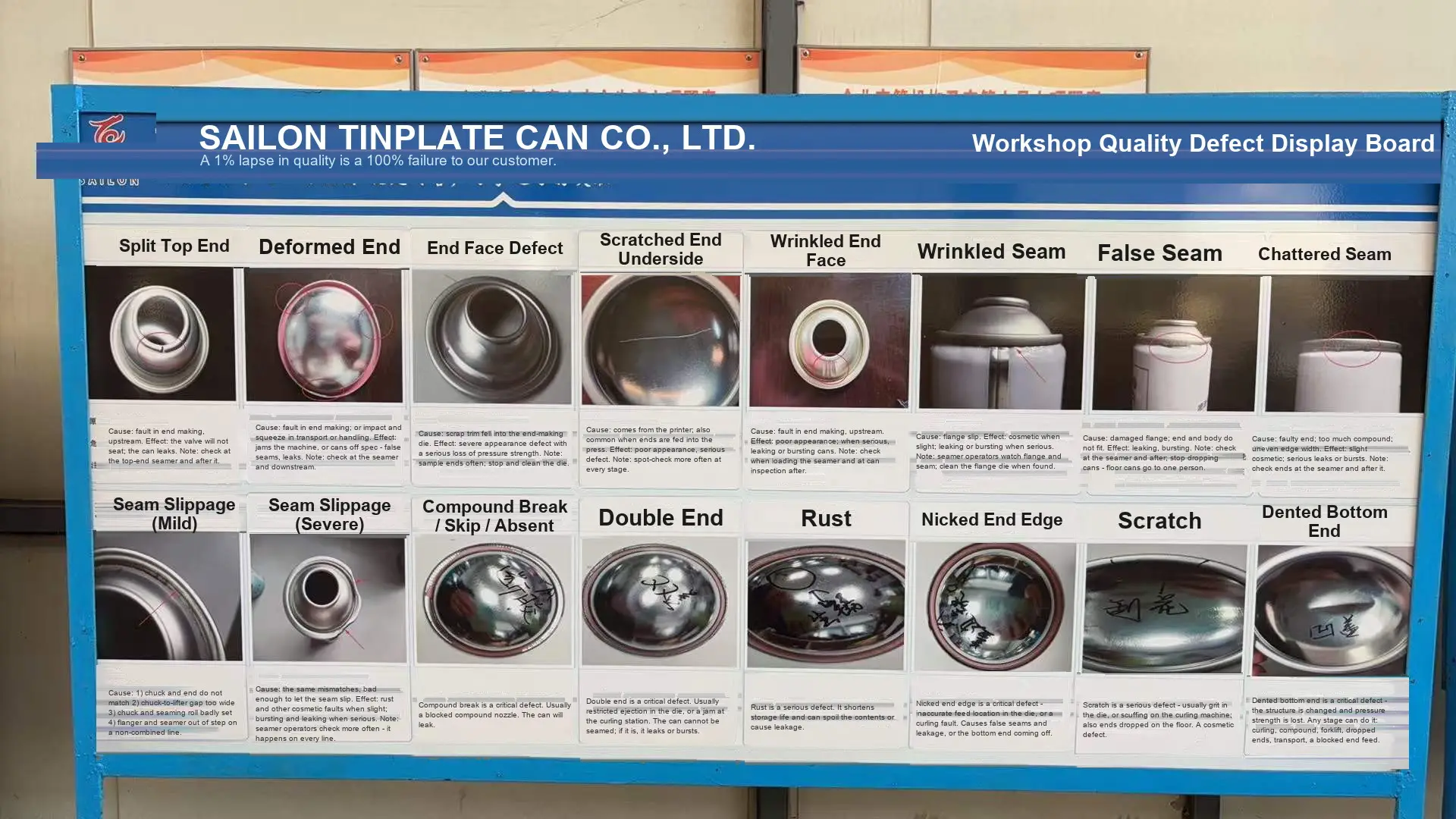
First, a distinction that changes who you call
There are two joints on an aerosol tin can, and buyers confuse them constantly.
The double seam joins the cone and the dome to the body. On a three-piece aerosol tin can this happens at the can plant, before the can is ever shipped. You receive a finished, sealed container with one opening in the top — the valve cup aperture.
The valve crimp joins the valve to that aperture. That happens at your filler.
So when a can leaks at the shoulder, the first question is not “was the seaming bad?” but “which of the two joints failed?” A double seam that failed was made weeks ago in Foshan. A valve crimp that failed was made on your line this morning, and the fix is a crimp dimension, not a claim.
The one exception: if you buy bodies and ends separately and seam in-house, the double seam becomes yours. That is unusual in aerosol and common in food cans, and it’s worth stating plainly in any supply agreement which party owns which joint.
The curl
The curl is the rolled edge of the end, and it is where the compound lives. Three things go wrong here.
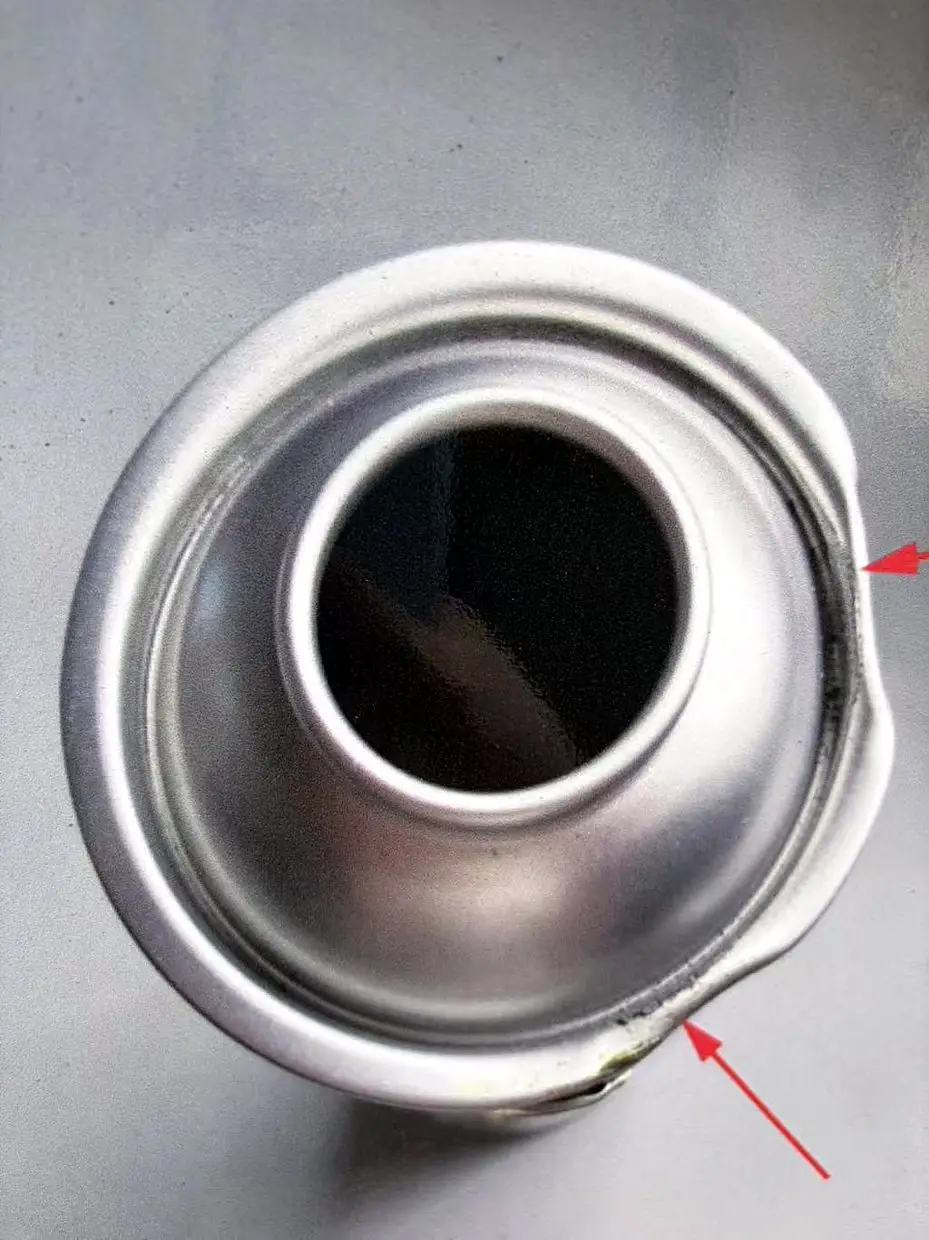
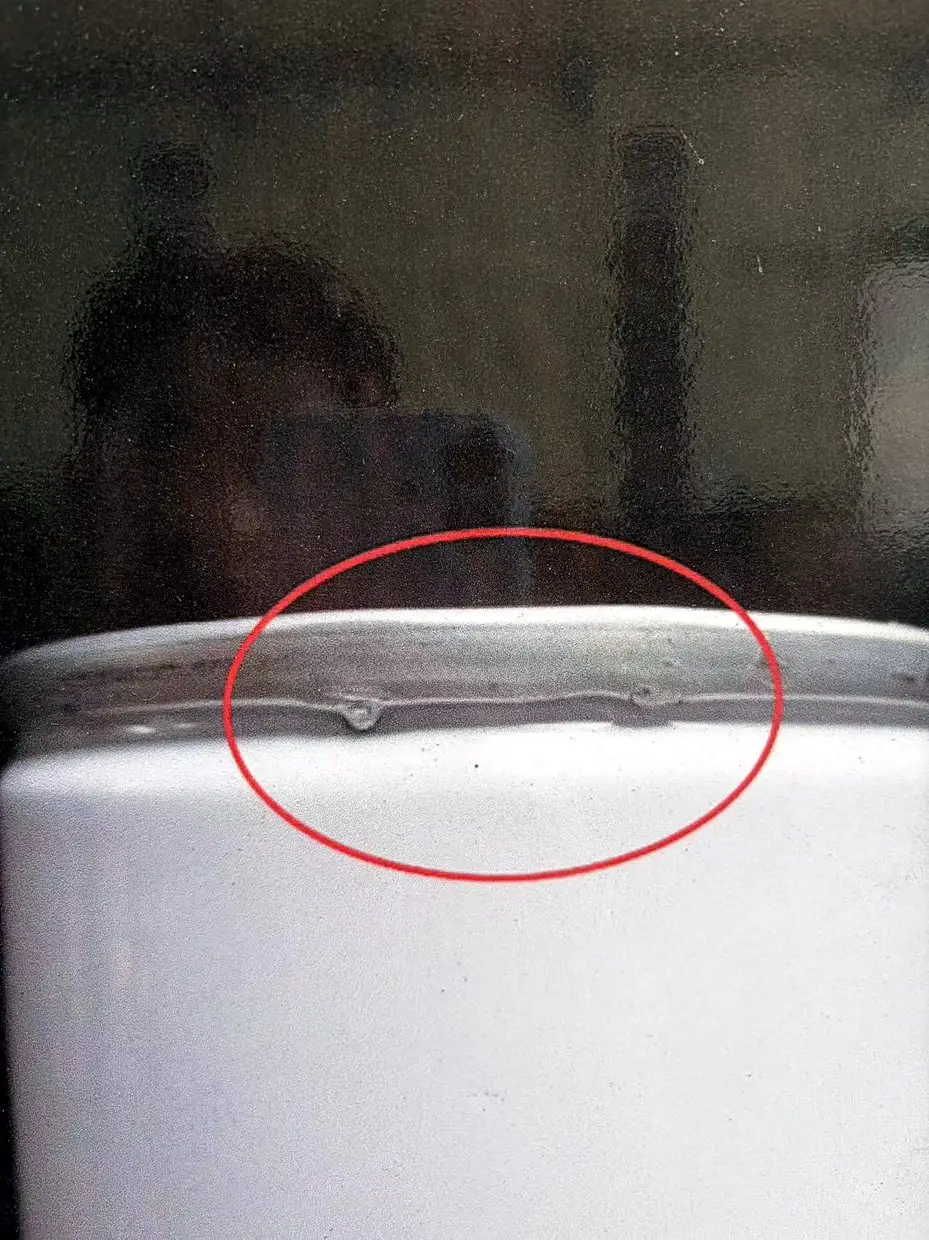
Edge notch
A nick or a missing bite of metal on the curl circumference. It looks trivial — a millimetre of missing edge on a 65 mm can — and it is not, because that notch is a section of the seam with no metal to interlock and no compound to seal.
Cause is usually handling before seaming: ends nested in a magazine, fed through a chute, catching on a guide. If you see notches in a cluster on one side of the pallet, suspect the feed path rather than the press.
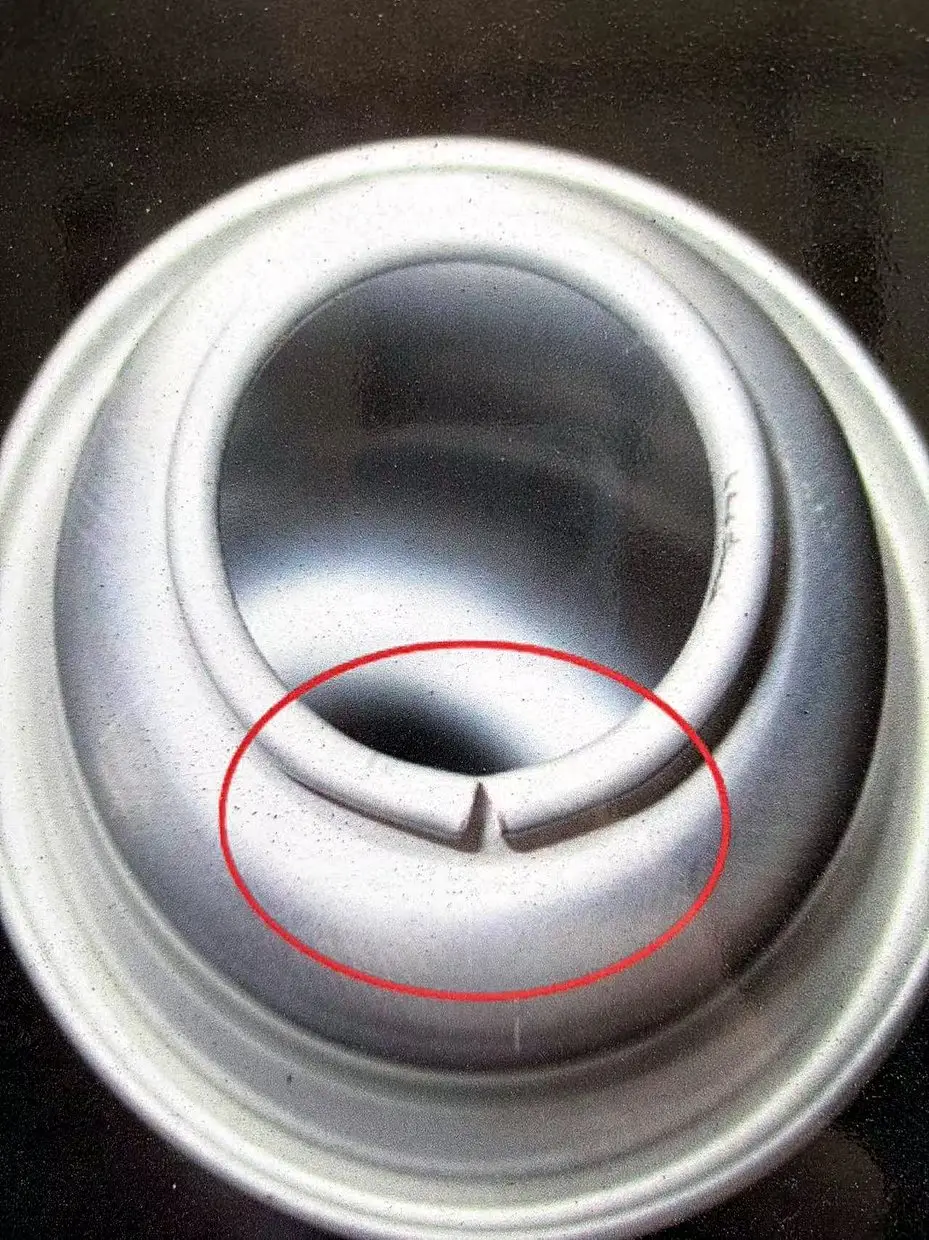
Curl crack
A split in the curl itself, sometimes only visible as a dark line in the channel where the compound sits.
Tinplate is ductile, but the curl is formed at the limit of what the material will take, and a worn curling tool, a gauge at the low end of the tolerance, or an end that has been re-struck will push it past that limit.
This is the defect most often missed on a visual line check, because the crack sits inside the channel where the light doesn’t reach. Raking light, or a fingernail run around the circumference, finds things a straight-on look does not.
Score-line split
On ends with a score, the metal is deliberately thinned to a fraction of its gauge so it opens predictably. That is by design. What is not by design is a split appearing at the score before the can is ever used.
Score depth is a narrow window. Too shallow and the end won’t open cleanly under pressure; too deep and it opens in the warehouse. When you see score splits, the question to ask your supplier is not “why is this one cracked” but “what is your score residual and how often do you measure it”.
The end face
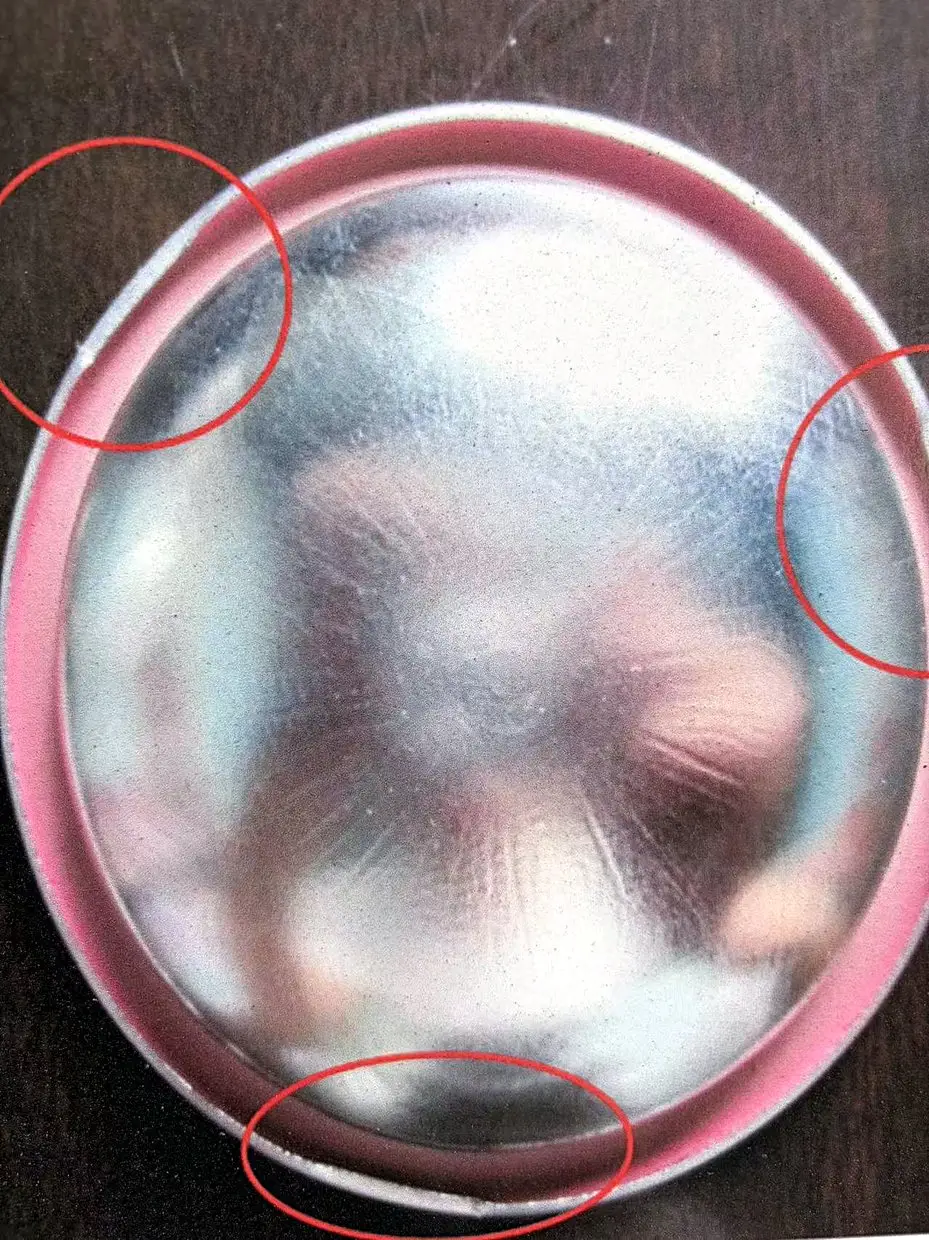
Wrinkle
Puckering across the flat of the end, radiating outward from the centre. It happens when the forming sequence pulls material faster than it can flow — a blank holder pressure problem, or a sheet with the wrong temper for the draw.
A wrinkled end still seams. It just doesn’t seat as flat, and on a can that will be stacked it is the beginning of a pressure-distribution problem rather than an instant failure.
Scratch
Abrasion on the lacquered face, from ends sliding against each other, against a magazine wall, or against the inside of a carton.
Scratches matter commercially more than mechanically on most products. On a cosmetic can where the end faces the customer every time they pick it up, a scuffed top is a returned product.
Deformation
The end is not flat, or not concentric. Sometimes visible as a wobble when the can stands on a table; sometimes only as a dimensional reading.
Worth separating from dent: a deformation is usually formed-in and appears across a whole batch, while a dent is a single event and appears on a handful of cans.
The compound ring
Sealing compound is applied as a ring in the curl. It is the only thing standing between your propellant and the atmosphere, and it is applied by the gram.
Compound skip, shortage or absence
The ring is broken, thin, or missing across an arc. Under the seam, that arc has no gasket at all.
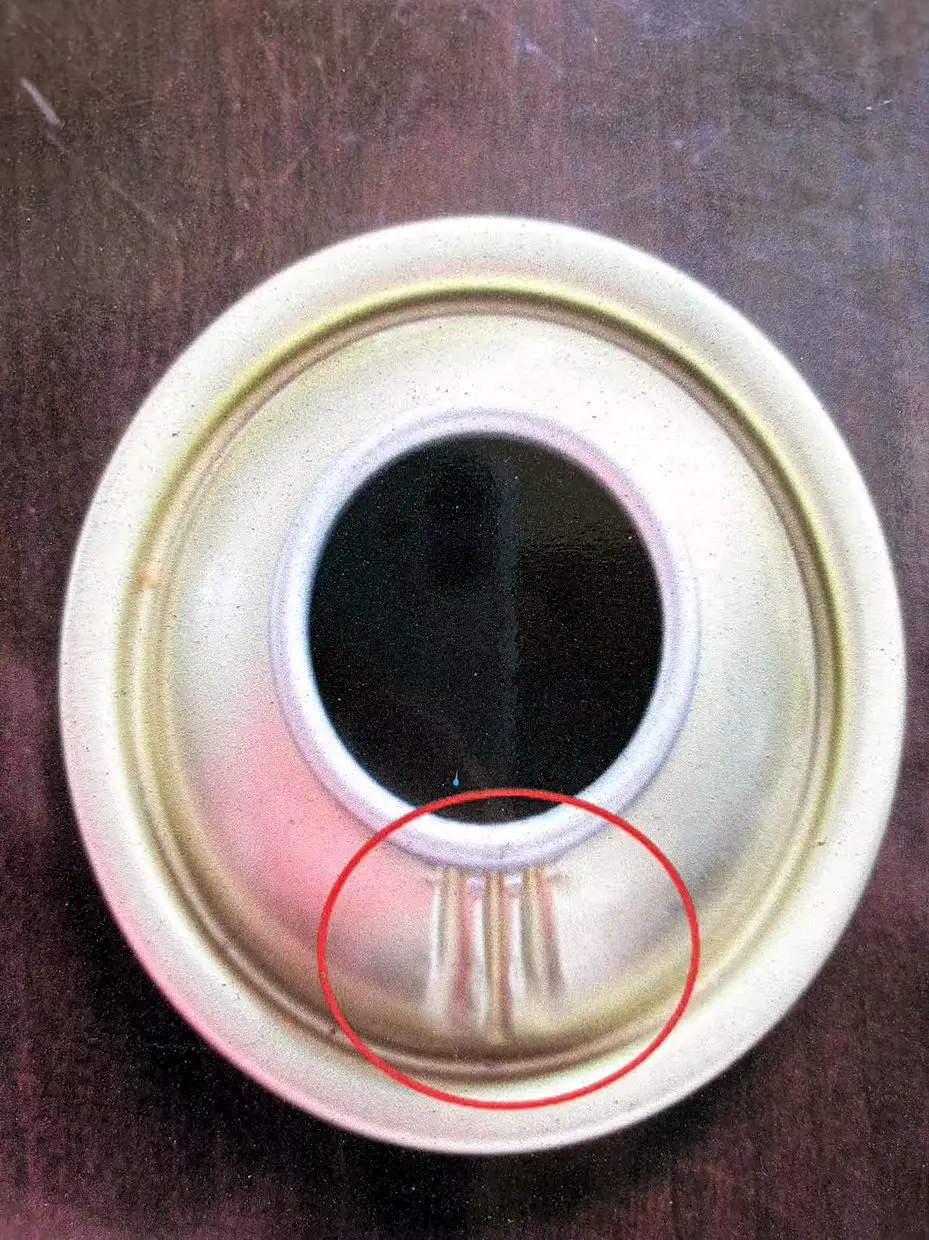
This is the highest-consequence, lowest-visibility defect on the whole can. You cannot see it on a seamed can without cutting one open. A batch with compound skips will pass a water bath if the skips are small enough, and fail on a shelf nine months later.
Ask your supplier two questions: what is the compound weight per end, and how is it checked — by weight sample, or by vision system? A supplier who weighs ends on a schedule is doing it properly. One who checks “by looking” is not checking.
Over-application and squeeze-out
Too much compound, and the excess has to go somewhere when the seam closes. It extrudes — a bead or a series of small blobs at the seam junction.
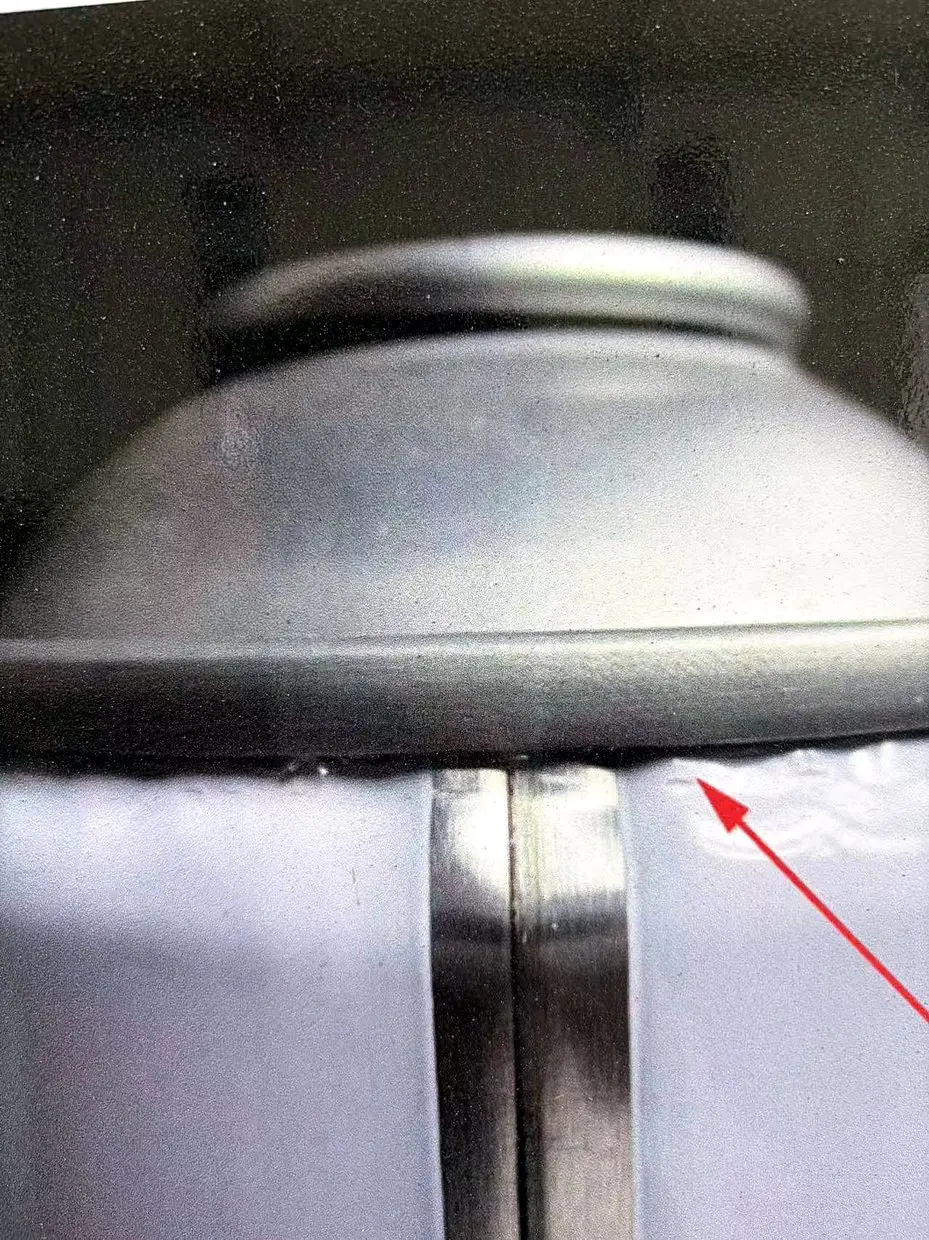
Most buyers grade squeeze-out as cosmetic. That’s usually right, with one exception: if the compound is a type that can migrate, extruded material inside the can becomes a product-contamination issue rather than a cosmetic one, and the conversation changes.
The double seam
Five rollers, two operations, and about forty milliseconds per can. Most of what goes wrong here is mechanical and appears in runs rather than singles.
False seam
The hooks did not interlock. The seam looks closed, sits at the right height, and separates under pressure or under a thumbnail.
The cause is a setup or wear condition — chuck or roll pressure, roll profile, or a can that wasn’t seated squarely. It is a 100% reject when found, and finding it requires a tear-down: cut the seam, measure hook length and overlap, look at the cross-section. There is no external inspection that substitutes for this.
Seam tooth
A sharp protrusion or spur standing off the seam, where the roll jumped or the metal was displaced rather than formed.
Beyond the appearance, a tooth is a handling hazard — it cuts gloves and it can damage neighbouring cans in a case — and it indicates the seaming rolls are not where they should be.
Seam slip
The roll slides instead of forming. The result is a seam that is loose, low, or both. Slip usually shows up as a run of cans rather than one, because whatever moved stayed moved.
Seaming wrinkle
Puckering along the seam where the end and body meet. Mild wrinkles are tolerable in many specifications; deep ones mean the metal folded instead of compressing, and the seal depends on compound filling a gap it was never sized for.
The shoulder and the dome
Dent at the shoulder radius
A dent on the flat of a dome is mostly cosmetic. A dent on the radius where the dome turns into the body is where the pressure load concentrates. It creates a stress riser exactly where you least want one, and on a high-pressure can it should be treated as a structural defect regardless of depth.
Double bottom
Two ends fed into the same can. Almost always the second end is a partial or a nested end that travelled through the feed. Easy to spot from the outside once you know to look for it — the base sits proud, or the can stands unevenly.
It is also the clearest possible evidence that the end feed is misbehaving, so a single find justifies checking the rest of the run.
Rust
On ends, rust almost always starts at an edge — the cut edge of the curl, or a scratch that reached bare metal. On a new can it should not be there at all. On a can that has been sitting, it is a storage question: condensation, uncontrolled humidity, a container that sweated on the voyage.
What can be fixed, and by whom
| Defect | Origin | Fixable after the fact | Owner |
|---|---|---|---|
| Compound skip | End making | No | Can maker |
| Curl crack | End making | No | Can maker |
| Score split | End making | No | Can maker |
| Edge notch | End handling / feed | No | Can maker |
| False seam | Seaming setup | No | Can maker |
| Seam tooth | Seaming rolls | No | Can maker |
| Seam slip | Seaming rolls | No | Can maker |
| Squeeze-out | Compound weight | Cosmetic grading only | Can maker |
| Valve crimp leak | Filling line | Yes, re-crimp | Filler |
| Dent at shoulder | Handling | No | Whoever handled it |
| Edge rust | Storage, freight | No | Depends on packaging and conditions |
| Face scratch | Handling | No | Whoever handled it |
The pattern is uncomfortable but honest: nearly everything on this list that fails a can was decided before the can left the plant. Which is why the useful question at the audit is not “what is your defect rate” but “which of these do you measure, how often, and can I see the record”.
If you buy cone and dome separately
Some buyers do, for repacking or for a filling operation that seams in-house. Three things to specify beyond dimensions:
Compound type and weight per end, not just “with compound”. The weight is what determines whether the ring seals.
Score residual, if the end is scored, with a stated measurement method.
Packing format and nesting, because the scratch and notch defects above are created in the magazine and the carton, not at the press.
Our cone and dome range for 45–70 mm cans covers the standard configurations; if you are matching ends to a necked-in body, the difference between necked-in and straight-wall construction explains why the same diameter end is not interchangeable between the two.
SAILON makes complete aerosol tin cans and cone-and-dome sets in Foshan — 45 mm to 70 mm, 400 million cans a year. If a seam is failing on your line and you are not sure whether it left our plant that way, send photographs of the tear-down cross-section and the batch code. We answer those with measurements, not opinions.