

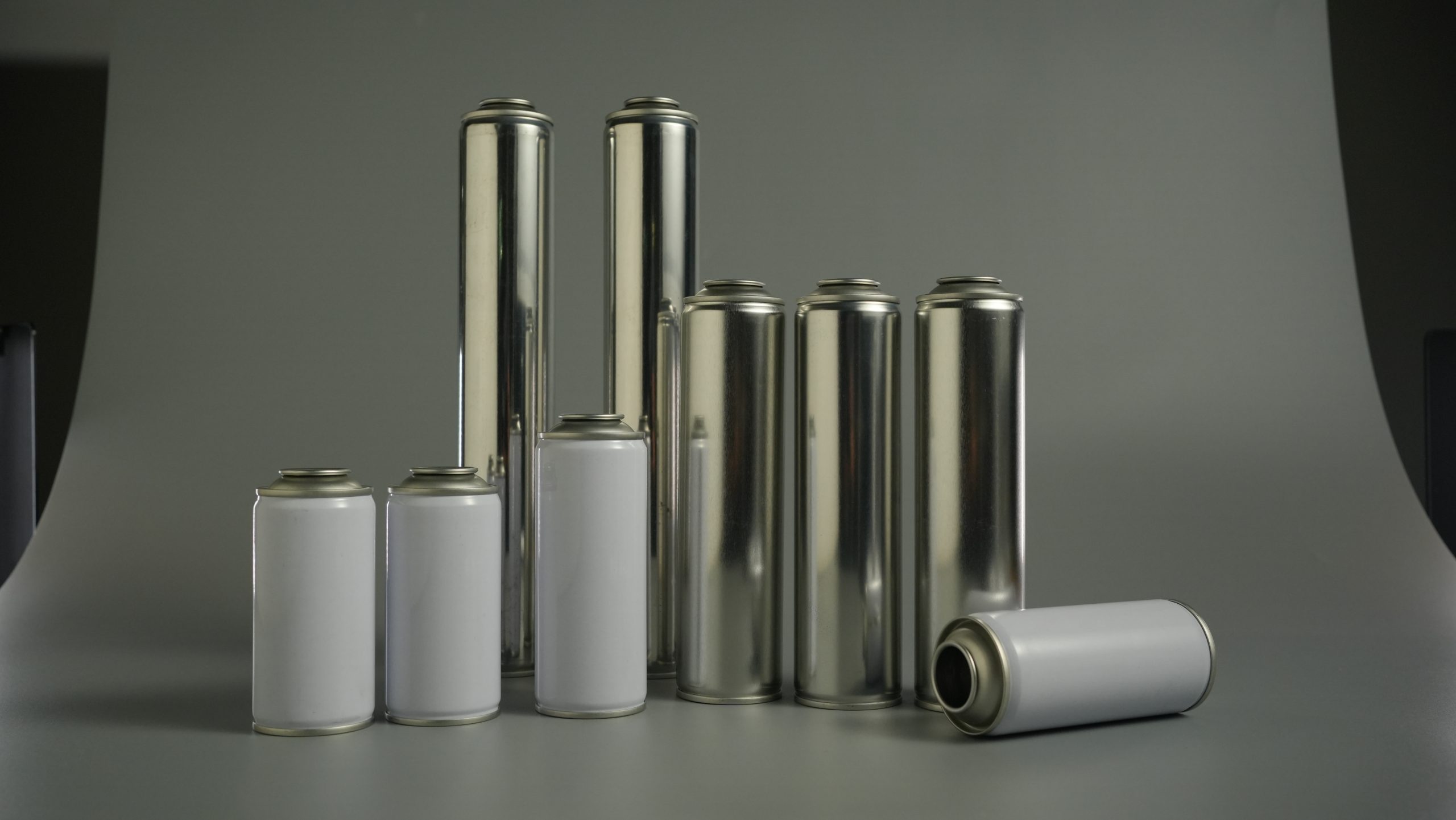
In the field of precision electronic manufacturing, aerosol tin cans are no longer ordinary packaging containers, but “quality guardians” of semiconductor-grade cleaning sprays. Even nanoscale impurity residues and trace metal ion precipitation can lead to the failure of core components such as semiconductor chips, PCB boards, and sensors, resulting in losses in mass production. The core value of semiconductor-grade aerosol tin can customization is to eliminate secondary pollution from the source of packaging and adapt to the strict requirements of high-purity cleaning solvents, which is the key reason why many precision electronic enterprises choose exclusive aerosol tin cans.
Many enterprises engaged in precision electronic production often fall into a misunderstanding when choosing cleaning spray packaging — they think that any aerosol tin can can meet the needs, but ignore the huge difference between “ordinary industrial grade” and “semiconductor grade”. In fact, the requirements of semiconductor components for cleaning environment and packaging materials have long been refined to the ppb level (one in a billion). Minor impurity residues and tin layer defects in ordinary aerosol tin cans may become “invisible killers” that reduce product yield.
To understand the special requirements of semiconductor-grade cleaning sprays for aerosol tin cans, it is first necessary to clarify their core pain points: the high purity of cleaning sprays and the zero-impurity demand of semiconductor components force the packaging to have extreme cleanliness, chemical stability and sealing performance. High-precision aerosol tin cans can solve these pain points through multiple exclusive processes, which can be expanded from the following three core process details:
- Particle Size Control: Eliminate Micro-Impurities from the Source: The inner wall cleaning of semiconductor-grade aerosol tin cans is by no means ordinary water washing or wiping, but adopts a triple process of “ultrasonic precision cleaning + deionized water circulation flushing + dust-free drying”. After cleaning, it must meet the ultra-high cleanliness level of NAS 1638 Class 1 or ISO 4406 18/16/13, which means that the number of particles larger than 1 micron in the can does not exceed 100, and the number of particles larger than 2 microns does not exceed 16. This strict control is equivalent to not allowing any visible dust in a standard mineral water bottle, while ordinary industrial-grade aerosol tin cans do not have such cleaning standards. The anti-rust oil and metal debris remaining on the inner wall will directly pollute the cleaning spray.
- Surface Passivation Process: Lock Metal Ions to Prevent Precipitation: The aerosol tin can surface passivation process is one of the core technologies for semiconductor-grade packaging. For aerosol tin cans with low-carbon steel substrates, if there are pinholes or breakpoints in the tin layer, trace metal ions such as iron and zinc will precipitate under the immersion of high-purity solvents. After mixing into the cleaning spray, they will adhere to the surface of semiconductor components, affecting their electrical conductivity and service life. Semiconductor-grade aerosol tin cans adopt chromate passivation or chrome-free passivation process to form a dense passivation film on the surface of the tin layer, like a “protective shield”, which firmly locks metal ions and ensures that the ion precipitation is controlled at the ppb level, fully complying with the strict standards of semiconductor production.
- LVOC Compatibility: Adapt to High-Purity Solvents Without Reaction: High-purity IPA (isopropanol), electronic-grade fluorine solvents, high-purity acetone, etc., commonly used in semiconductor-grade cleaning sprays, all have strong chemical activity. Ordinary packaging containers may react with these solvents to produce volatile organic compounds (VOC) or impurities, affecting the cleaning effect. LVOC-compatible aerosol tin cans adopt special food-grade tin plating and inner wall coating, which have excellent chemical inertness, perfectly compatible with various high-purity cleaning solvents, without dissolution, reaction or precipitation. They can not only ensure the purity of the cleaning spray, but also avoid damage and leakage caused by solvent corrosion of the container.
To more clearly show the differences between semiconductor-grade and ordinary industrial-grade aerosol tin cans and facilitate enterprises to quickly distinguish and choose, the following is a detailed characteristic comparison table, covering core dimensions such as process, testing and adaptation scenarios:
| Characteristics | Ordinary Industrial-Grade Aerosol Tin Cans | Specific Semiconductor-Grade Aerosol Tin Cans | Application Scenarios |
|---|---|---|---|
| Inner Wall Treatment | Only coated with ordinary anti-rust oil, no precise cleaning treatment, with more residues | Nanoscale chemical passivation + triple dust-free cleaning, meeting NAS 1638 Class 1/ISO 4406 18/16/13 cleanliness standards | Ordinary industrial cleaning, non-precision product packaging |
| Residue Control | Trace metal ion precipitation is allowed, no strict detection standards, only basic anti-rust detection | Strictly implement ion precipitation detection (ppb level), each batch has a test report, eliminating impurity residues | Semiconductor component cleaning, precision electronic component cleaning |
| Seal Material | Ordinary rubber, easy to age and precipitate impurities, general sealing performance | Polytetrafluoroethylene (PTFE) or special low-extract gasket, with strong chemical inertness, no impurity precipitation, and sealed against leakage | High-purity solvent packaging, long-term storage needs |
| Testing Standards | Only test appearance and sealing, no cleanliness and ion precipitation testing | Each batch tests cleanliness, ion precipitation, and LVOC compatibility, and can provide third-party test reports | Precision manufacturing with high requirements for product purity and yield |
Combining years of industry experience and actual consultations from many precision electronic enterprises, we have sorted out several high-frequency FAQs to answer common questions when choosing semiconductor-grade aerosol tin cans and help everyone avoid selection misunderstandings:
Q1: Why can’t ordinary aerosol tin cans be used for semiconductor-grade cleaning sprays?
In fact, there are two core reasons: first, the cleanliness is not up to standard. The anti-rust oil and metal debris on the inner wall of ordinary aerosol tin cans will pollute the high-purity cleaning spray, leading to secondary pollution of semiconductor components; second, the stability is insufficient. The tin layer of ordinary aerosol tin cans has no professional passivation treatment, metal ions are easy to precipitate, and the sealing performance is poor, which is easy to cause solvent leakage or deterioration, and ultimately affect product yield.
Q2: What parameters need to be provided for the customization of semiconductor-grade aerosol tin cans?
Three core parameters are mainly required for customization: first, the type of cleaning solvent (such as IPA, fluorine solvent, etc.) to match the corresponding inner wall coating and passivation process; second, the container specifications (capacity, size) to adapt to the filling needs of the production line; third, the cleanliness standard (such as NAS 1638, ISO 4406) to ensure compliance with the enterprise’s production standards. In addition, if there are requirements for the delivery cycle and test report of bulk orders, they can also be explained in advance.
Q3: What is the gap between aluminum cans and semiconductor-grade aerosol tin cans?
Although aluminum cans are lightweight and slightly lower in cost, they have two fatal shortcomings: first, insufficient chemical stability. They are prone to corrosion when in long-term contact with high-purity cleaning solvents, precipitating aluminum ions to pollute the solvent; second, insufficient strength. They are easy to deform and break during high-pressure filling and long-distance transportation, leading to solvent leakage. After passivation treatment, aerosol tin cans have far better chemical stability than aluminum cans, higher strength and better sealing performance, making them more suitable for long-term storage and transportation of semiconductor-grade cleaning sprays.
Q4: How to judge whether an aerosol tin can meets semiconductor-grade standards?
The most direct way is to check the test report, focusing on three indicators: whether the cleanliness meets NAS 1638 or ISO 4406 standards, whether the ion precipitation is controlled at the ppb level, and whether it has a qualified LVOC compatibility test certificate. In addition, you can observe whether the inner wall of the can is smooth, free of impurities and scratches, and whether the seal is tight. These details can also intuitively reflect the product quality.
SAILON has been deeply engaged in the aerosol tin can customization field for many years, and deeply understands the strict needs of the precision electronic manufacturing industry. For semiconductor-grade cleaning sprays, it has created an exclusive high-precision aerosol tin can customization plan. From raw material selection (using high-purity low-carbon steel and food-grade tin plating), to triple dust-free cleaning, professional surface passivation, and strict sealing testing, each process follows NAS 1638 and ISO 4406 standards, and each batch of products can provide third-party test reports, ensuring that ion precipitation, cleanliness, and LVOC compatibility fully meet the requirements of semiconductor production.
We can not only customize exclusive semiconductor-grade aerosol tin cans according to the customer’s solvent type and specification requirements, but also provide stable delivery of bulk orders, one-on-one technical consultation and after-sales guarantee, solving the pain points of enterprises in packaging selection, and helping enterprises improve product yield and reduce production losses. After all, in the field of precision electronic manufacturing, packaging is never a “supporting role”. A qualified semiconductor-grade aerosol tin can is not only a “protective shell” for cleaning sprays, but also a “plus item” for the enterprise’s product quality.