

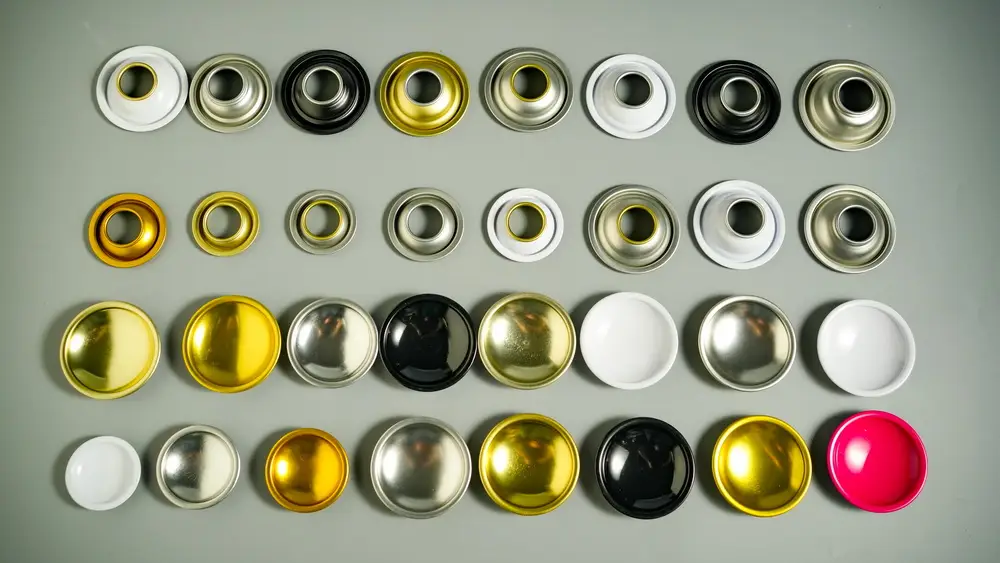
You have probably experienced this nightmare: after working tirelessly on product formulation and filling, you store the inventory for just three months, only to get customer complaints about bottom leaks, loss of pressure, or cans swelling in high summer temperatures. For procurement and R&D managers, choosing the wrong tinplate aerosol cans is like putting a ticking time bomb into your supply chain.
Aerosol cans are not simple metal containers. Aggressive solvents can attack the inner walls, water-based ingredients trigger electrochemical corrosion, and pressure swings from propellants test structural limits. Today, the technical team at SAILON skips the generic report fluff to share real-world insights on custom tinplate aerosol can manufacturer selection strategies.
Four Core Application Scenarios and Selection Logic
Insecticides and Pesticides: Stop Aggressive Solvents from Penetrating Walls
Insecticide formulas contain strong organic solvents like xylene that penetrate ordinary coatings. If single-layer coatings are used, solvent action strips the inner layer and corrodes the steel. For proper insecticide aerosol cans selection, the aerosol can inner coating process must utilize a double-layer solvent-resistant lacquer (such as heavy epoxy-phenolic). Welded seams require powder side-striping while ensuring that aerosol can deformation and burst pressure ratings reach at least 1.2 MPa and 1.4 MPa.
Automotive and Industrial Maintenance: Handling High Pressure and Heavy Shock
Rust penetrants and carburetor cleaners use high-pressure propellants and face tough transport environments. When configuring an automotive care aerosol can customization solution, choose heavy-gauge 3-piece cans with a thickness of 0.20-0.24 mm. Combined with high-pressure valves, boost the aerosol can deformation and burst pressure targets to 1.4 MPa and 1.6 MPa, using reinforced double-seaming to withstand hot summer transit.
Household Cleaning Sprays: Protecting Water-Based Formulas from Pinhole Rust
Water-based air fresheners and dusters easily generate galvanic corrosion. Water reacting with metal forms micro-pitting at the bottom, piercing the wall in a few months. Achieving reliable water-based aerosol anti-corrosion is critical: always use dense water-based inner coatings and maintain tin plating of at least 2.8/2.8 g/m² on top and bottom ends for sacrificial protection.
Personal Care and Cosmetics: Balancing Safety Standards with Premium Aesthetics
Sunscreens and hairsprays categorized under personal care aerosol packaging directly touch skin, requiring high safety and shelf presence. Inner linings must pass FDA or EU REACH standards for food/cosmetic contact. For exterior styling, 8-color offset printing with matte or soft-touch varnishes elevates shelf appeal.
Specification Comparison
| Scenario | Recommended Thickness | Inner Coating Requirements | Pressure Targets | Preferred Solution |
| Insecticides | 0.19-0.21 mm | Double-layer epoxy-phenolic | Def ≥1.2 MPa / Burst ≥1.4 MPa | Reinforced powder seam coating |
| Industrial | 0.20-0.24 mm | Oil & pressure resistant | Def ≥1.4 MPa / Burst ≥1.6 MPa | Heavy plate with high-pressure seal |
| Household | 0.19-0.21 mm | Water-based lacquer + 2.8/2.8 g/m² tin | Def ≥1.2 MPa / Burst ≥1.4 MPa | Enhanced water-based aerosol anti-corrosion |
| Personal Care | 0.18-0.20 mm | Cosmetic grade / BPA-NI | Def ≥1.2 MPa / Burst ≥1.4 MPa | Precision printing for personal care aerosol packaging |
Real-World Traps That Catch 90% of Buyers
To save costs, many brands pack water-based formulas into uncoated plain cans. Water reacts directly with metal, piercing the bottom in less than a season and scrapping the whole inventory. For any formula with over 5% water content, water-based lining is mandatory.
Propellant selection is another hidden trap. Dimethyl ether (DME) swells poor coatings and rubber gaskets, while liquefied petroleum gas (LPG) causes sudden pressure spikes in hot summer weather. If using DME, conduct swell tests on your tinplate aerosol cans; if using high LPG ratios, upgrade the container pressure class immediately.
Misalignment between the can neck and valve crimp is another common failure point. Buying cans from one vendor and valves from another without tolerance alignment leads to micro-leaks that drain pressure within six months. Always work with a reliable custom tinplate aerosol can manufacturer to verify dimensions and perform joint pullout tests.
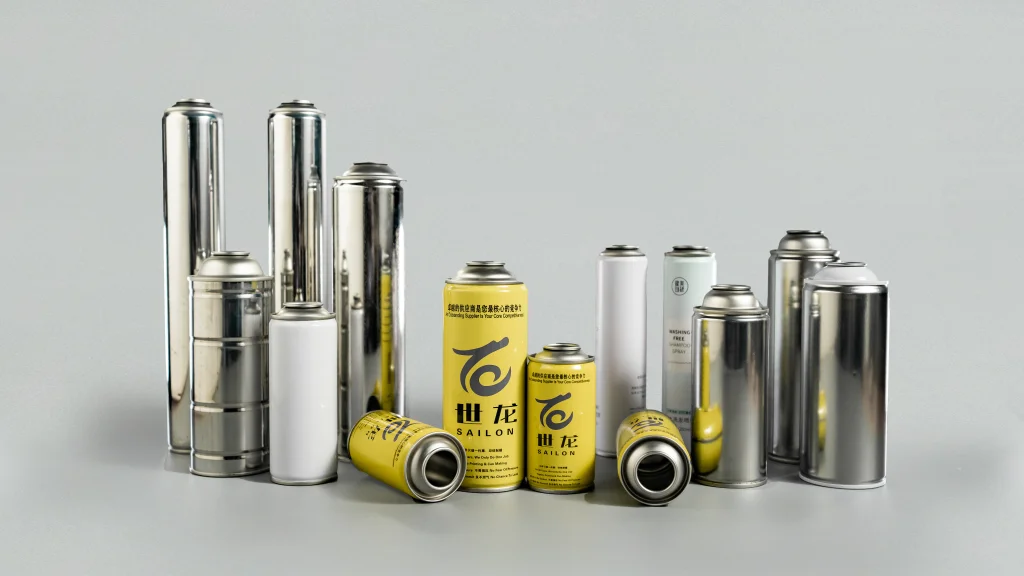
Frequently Asked Questions
How do you quickly test inner coating quality?
Two practical methods are used: the copper sulfate test, where liquid is poured inside to reveal pinholes via reddish copper deposits, and the current conductivity test, where water is filled and energized. A current exceeding 2 mA indicates that the aerosol can inner coating process lacks density.
Why are tinplate cans recommended for large-volume aerosols?
Compared to aluminum, tinplate aerosol cans offer superior structural strength, pressure safety, and cost efficiency for larger volumes (400 ml to 750 ml), making them the preferred choice for cost-conscious brands.
What is the passing criteria for accelerated shelf-life testing?
Filled cans are placed in a 45°C incubator for 3 months (equivalent to 2 years at room temperature). Key metrics include weight loss rate, coating adhesion, formula discoloration, and bottom pitting.
Partnering with Experts Who Understand Formulations
Choosing the right tinplate aerosol cans is not just buying a container—it protects your formulation investment. SAILON operates fully automated detection lines and provides comprehensive custom tinplate aerosol can manufacturer services, alongside free compatibility and copper testing in our factory lab.
If you are planning a new product launch or facing leak issues, contact the SAILON engineering team today for free samples and expert advice on our aerosol leak and explosion prevention guide.