

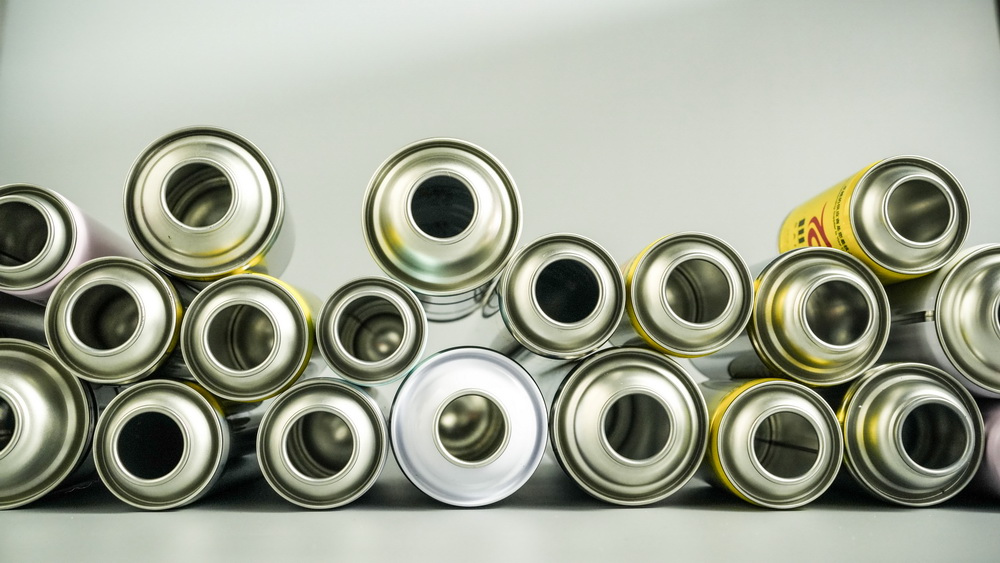
Discoloration and off-flavor of hairspray and shaving foam aerosols during shelf life are mainly caused by ethanol-induced inner coating swelling failure of tinplate aerosol cans. When the ethanol content of the formula reaches 70%-95%, the inner wall coating of ordinary aerosol cans will swell due to solvent penetration, leading to reduced adhesion and iron ion migration that contaminates contents. The alcohol resistance of hairspray & shaving foam aerosol cans directly determines the long-term storage quality of cosmetic aerosol products. Based on Fick’s diffusion law, SAILON has established a 55°C/7-day ethanol accelerated swelling test system with four quantitative evaluation criteria, which can quickly predict the alcohol resistance of inner coatings and accurately evaluate the 1-year shelf life failure risk of products at room temperature.
I. Three-Stage Swelling Failure Chain of Inner Coatings in High-Alcohol Systems
Coating damage caused by high-alcohol formulas is not simple surface corrosion, but a progressive complete failure chain, which is the core cause of shelf life deterioration of hairspray & shaving foam aerosol cans.
The first stage is penetration and diffusion. The curing crosslinking rate of epoxy coatings is generally 85%-95%, leaving tiny molecular gaps and free volumes that act as penetration channels for ethanol molecules to invade the internal coating structure continuously.
The second stage is coating swelling. Infiltrated ethanol molecules destroy hydrogen bonds between coating molecular chains and interact with polar groups, causing overall coating expansion. The different expansion coefficients between the coating and tinplate substrate generate continuous shear stress at the interface, weakening coating adhesion imperceptibly.
The third stage is complete failure. Accumulated stress leads to continuous adhesion attenuation, local blistering and microcracks of the coating. Iron ions migrate into the contents through cracks, resulting in product discoloration and odor change. SAILON laboratory traced multiple terminal product complaints, with the measured iron ion concentration of defective samples reaching 3.2ppm, far exceeding the qualified threshold. SEM scanning also confirmed large-area interface peeling between epoxy coating and tinplate substrate.
II. Core Shortcomings of Conventional Industry Coating Detection Methods
Most three common industry detection methods only screen surface problems, failing to accurately capture deep coating swelling and interface failure under high-alcohol environments, easily leading to disconnection between qualified test results and actual terminal failure.
| Test Method | Operation Procedure | Swelling Detection Capability | Limitations and Blind Spots |
|---|---|---|---|
| Ambient storage with filled materials | Store cans filled with finished materials at room temperature for 6-12 months | Reflect real failure with severe detection lag | The half-year-plus cycle cannot adapt to supplier evaluation and rapid batch release, with extremely low reference value |
| Conventional water resistance test | Immerse cans in room-temperature water for 7-14 days | Unable to detect alcohol-induced swelling | Water and ethanol have vastly different solvent penetration mechanisms and molecular activity; water resistance data has no correlation with alcohol resistance |
| Ether wipe test | Wipe coating surface repeatedly with ether cotton balls | Only detect surface curing degree | Cannot identify core hidden dangers such as deep coating swelling and interface adhesion attenuation, resulting in one-sided detection |
III. SAILON High-Temperature Ethanol Accelerated Test Method and Scientific Basis
To solve the lag and one-sidedness of traditional detection, we optimize a non-destructive accelerated aging test solution for hairspray & shaving foam aerosol cans based on Fick’s diffusion model and Arrhenius temperature effect, accurately simulating the long-term erosion of high-alcohol formulas.
The test adopts 50% ethanol aqueous solution as the medium, immerses inverted cans to fully cover the gas-liquid interface on the can wall, and conducts continuous testing at 55°C for 7 days. Electrochemical Impedance Spectroscopy (EIS) is applied synchronously to track real-time changes in coating capacitance and impedance for dynamic coating integrity monitoring.
Many industry practitioners wonder why 55°C is fixed as the core test temperature. In fact, the diffusion rate of ethanol in epoxy coatings is highly correlated with temperature. Hundreds of SAILON experimental groups prove that the ethanol diffusion rate increases by 2.3-2.8 times with every 10°C temperature rise. 7-day immersion at 55°C is equivalent to 1-year shelf life at 25°C room temperature, with an acceleration factor of 52 times. Meanwhile, the upper temperature limit is controlled below 60°C to avoid coating thermal aging caused by high temperature and eliminate interference from non-swelling failure, making it the optimal parameter balancing test efficiency and data accuracy.
IV. Quantitative Qualification Criteria
Combining national standards, industry practical experience and verified data from leading brands, we have established implementable and traceable qualification criteria for coating alcohol swelling resistance, suitable for batch release and supplier audit of all hairspray & shaving foam aerosol cans.
| Test Item | Qualification Standard | Test Method | Benchmark Basis / Remarks |
|---|---|---|---|
| Appearance Condition | No blistering, whitening or coating peeling | Visual inspection + 4x magnifier observation | Focus on weak stress concentration areas such as can bottom R-angle and weld heat-affected zone |
| Coating Adhesion | ISO 2409:2020 Class 0-1 | Cross-cut test + 3M #600 tape peel test | General industry standard for aerosol can coating adhesion evaluation |
| Iron Ion Migration | Iron content increment ≤1ppm | ICP-MS mass spectrometry detection (limit: 0.01ppm) | Safety threshold verified by SAILON and leading beauty brands, tailored for high-alcohol formula systems |
| Post-Pasteurization Condition | No coating deterioration such as blistering, peeling and whitening | 60°C water bath retest for 30 minutes | Simulate hot water bath process after product filling for secondary risk verification |
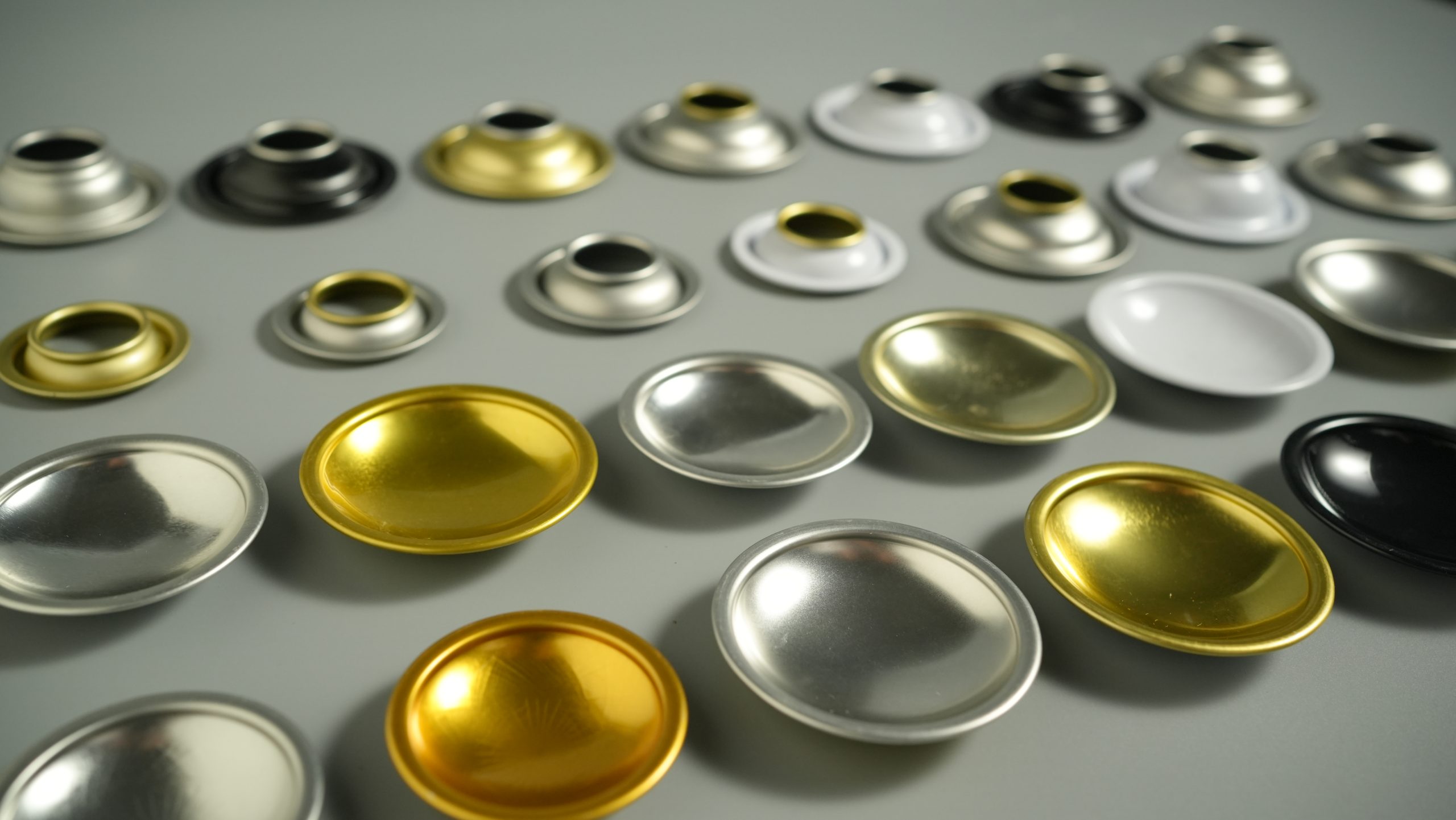
In terms of coating selection, ordinary epoxy coatings, epoxy phenolic coatings and acrylic coatings show significant differences in solvent resistance and anti-swelling performance under different ethanol concentrations. SAILON accurately matches the most cost-effective alcohol-resistant coating system according to customers’ formula alcohol content, avoiding shelf life deterioration from the source.
V. Frequently Asked Questions (FAQ)
Q1: Why can’t high-alcohol formula aerosol cans be replaced by ordinary water-based aerosol cans?
A1: Ethanol is a highly active polar solvent that can penetrate and swell most organic coatings and destroy coating structure and adhesion, while water molecules have weak penetration and will not damage conventional coatings. This is why hairspray & shaving foam aerosol cans require exclusive anti-swelling testing and specialized coatings.
Q2: Does thicker coating mean better ethanol swelling resistance?
A2: Not necessarily. Excessively thick coatings accumulate internal stress and are prone to microcracks, reducing solvent resistance. According to practical data, the optimal coating thickness for high-alcohol formula cans is 8-12μm with standardized high-temperature curing process for stable anti-swelling performance.
Q3: Which aerosol products require priority ethanol swelling accelerated testing?
A3: Any product with alcohol solvent content (ethanol, isopropanol, etc.) exceeding 50% needs special testing. Such ingredients easily cause coating swelling and iron ion contamination. SAILON provides free formula risk assessment and testing consultation to avoid batch quality accidents.
Q4: Besides inner coatings, what other factors affect aerosol can alcohol resistance?
A4: The alcohol resistance of aerosol cans relies on a multi-dimensional protection system. High-purity primary tinplate is adopted to control tin plating uniformity and reduce bare steel risks; laser welding and weld powder repair coating eliminate weld pinholes and coating fractures; can mouth flanging flatness is controlled within 0.12mm to ensure uniform compression of sealing gaskets, comprehensively improving the overall alcohol resistance and penetration resistance of cans.
With standardized test systems and quantitative evaluation criteria, SAILON incorporates the alcohol resistance of each batch of hairspray & shaving foam aerosol cans into core batch release indicators, fully guaranteeing the product quality and shelf stability of cosmetic aerosol brands.