

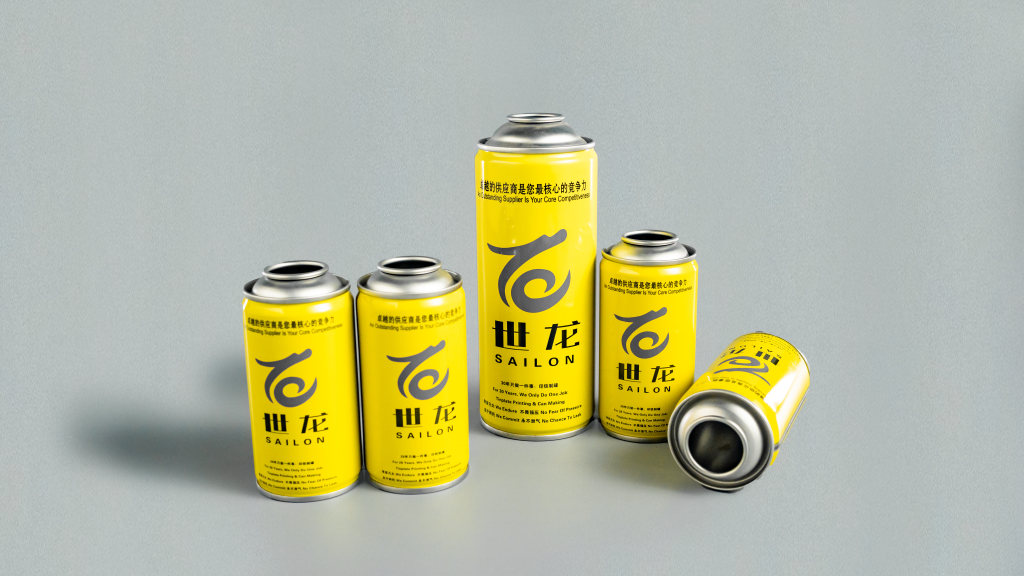
Many leather care practitioners encounter a common and troublesome problem: after leather care aerosol cans are launched on the market, frequent end-user complaints arise. The spray fails to produce a uniform mist and only releases thin streams when half or one-third of the product remains, completely losing its practical effect. This is a prevalent after-sales pain point in the leather care industry. Many people attribute the issue to insufficient propellant filling, but in fact, most cases of half-can failure and internal pressure loss stem from organic silicone oil, an essential ingredient in care formulas. With years of experience in custom silicone-resistant leather care aerosol cans, SAILON analyzes the root causes and fundamental solutions to this common industry problem based on measured data and numerous practical cases.
1. Real End-User Pain Points: Frequent Pressure Decay in Stored Leather Care Sprays
Manufacturers producing leather care products often face this dilemma: newly produced silicone formula leather care aerosol cans pass all factory inspections for pressure and spraying performance, yet develop pressure failure issues after 2-3 months of normal storage and transportation.
Multiple care brand partners report that among 10 randomly inspected finished care sprays, an average of 3 cans suffer insufficient pressure when one-third of the content remains. This hidden quality problem does not appear during factory delivery but directly increases product return rates and erodes user trust, undermining well-developed formulas due to trivial tank adaptation issues. Is there no way to avoid this delayed aerosol can pressure loss failure?
2. Core Failure Principle: How Silicone Oil Triggers Aerosol Can Valve Leakage
Organic silicone oil serves as a core functional ingredient in leather care agents. Components such as dimethyl silicone oil and amino silicone oil brighten leather, soften texture, and form a protective film, delivering superior care effects. However, these functional ingredients also act as the primary cause of pressure decay in leather care aerosol cans.
In fact, silicone oil features high molecular activity and strong permeability—traits that enhance care performance yet gradually erode the core sealing structure of aerosol cans. Most conventional aerosol cans adopt nitrile rubber (NBR) sealing gaskets, which gradually swell and deform after long-term contact with silicone formulas. The enlarged gaskets prevent complete valve closure, allowing propane and butane propellants to slowly leak through valve stem gaps. This continuous internal pressure drop ultimately leads to half-can failure of leather care sprays.
3. Common Industry Misconception: Overlooked Compatibility Between Tanks and Formulas
Most current leather care brand quality control systems have obvious blind spots. Brands only focus on testing compatibility between care formulas and tank inner coatings, ignoring compatibility between aerosol can valve elastomers and silicone formulas, forming a long-standing industry “compatibility blind box”.
In conventional storage environments, finished aerosol cans lose 20%-40% of their pressure after 2 to 3 months of storage. To cover up the problem, many manufacturers simply increase the initial propellant pressure. This method only temporarily improves spraying effects, failing to resolve the fundamental issues of gasket swelling and valve leakage, resulting in batch failure in the later stage.
4. Comprehensive Optimization Solution: Eliminate Silicone-Induced Aerosol Can Pressure Failure
Targeting the industry-wide problem of pressure decay in silicone-based leather care aerosol cans, SAILON has developed a full-system compatibility optimization solution covering valves, tank bodies and accessories based on tinplate aerosol can R&D experience, completely eliminating pressure decay from the source.
| Optimization Dimension | Detailed Solutions | Optimization Effects | Applicable Scenarios |
|---|---|---|---|
| Valve Seal Upgrade | Replace traditional NBR gaskets with FKM fluororubber and VMQ silicone rubber seals | Silicone swelling resistance improved 5-10 times | Care formulas with 5%-30% silicone content |
| Seal Hardness Adaptation | Provide multiple hardness options from Shore A50 to A70 | Precisely adapt to silicone formulas of different viscosities | High, medium and low viscosity leather conditioners |
| Inner Tank Optimization | Adopt high-density epoxy phenolic anti-corrosion inner coating | Block capillary channels for silicone penetration | Products for long-term storage and batch circulation |
| Isolation Technology Application | Optional bag-on-valve technology to completely isolate formulas from metal accessories | 100% avoid silicone corrosion and penetration | High-silicone content dedicated leather care aerosol cans |
| Valve Accessory Anti-corrosion | Valve springs adopt nickel-plating process or 304 stainless steel material | Resist trace acid corrosion from silicone oil | Acidic and high-activity silicone care formulas |
This customized optimization solution abandons superficial industry remedies. It adapts to customer formula components, silicone content and storage cycles, perfectly solving pressure decay and spraying failure of stored leather care aerosol cans.
5. Standardized Testing Process: Ensure Long-Term Pressure Stability of Aerosol Cans
High-quality optimization solutions require strict testing standards for implementation. SAILON has established a complete aging, leakage detection and pressure testing system for silicone-compatible leather care aerosol cans, matching long-term shelf-life application scenarios.
We conduct a 4-week accelerated aging test in a 50°C constant-temperature oven to simulate 6 months of market circulation and warehousing. The pressure decay rate of qualified products is controlled within 5%. Meanwhile, helium mass spectrometry leakage detection is adopted to strictly limit the valve leakage rate below 1×10⁻⁴ mbar·L/s, far exceeding conventional industry standards. Each batch of customized tanks is equipped with an exclusive compatibility test report for traceable and verifiable quality.
6. Practical Case: Greatly Reduce After-Sales Problems of Care Sprays
A professional leather care brand once faced a 15% pressure decay rate for self-developed silicone formula aerosol cans, leading to frequent product returns and customer complaints. After cooperating with SAILON, we customized a dedicated solution with FKM fluororubber valves and high-density anti-penetration inner coatings for special leather care aerosol cans.
After implementation, the brand’s product pressure decay rate dropped to 3%, and the overall return rate decreased by 70%. In on-site spraying comparison tests between new and old tanks, the optimized tank delivers uniform and fine mist with stable spraying duration, completely solving the industry pain point of leather care sprays losing air pressure halfway through use.
7. Industry FAQ: Core Answers to Leather Care Aerosol Can Pressure Decay
To help more manufacturers avoid tank adaptation problems quickly, we sort out high-frequency industry questions and accurately answer difficult problems related to silicone compatibility and pressure decay of leather care aerosol cans.
Q1: Why do new leather care sprays suffer half-can failure after storage?
A: The core cause is that organic silicone oil in the formula erodes conventional rubber seals, causing slight valve leakage and continuous internal pressure loss. This is a typical incompatibility issue between formulas and tank accessories, rather than insufficient product filling.
Q2: Are ordinary tinplate aerosol cans suitable for high-silicone leather conditioners?
A: Definitely not. Ordinary NBR-sealed tanks cannot resist silicone swelling and erosion, leading to inevitable pressure decay after long-term storage. High-silicone formulas require silicone-resistant dedicated leather care aerosol cans.
Q3: Why do qualified aging-tested tanks fail after market circulation?
A: Most manufacturers only conduct short-term pressure tests without simulating high-temperature long-term storage and transportation conditions. SAILON’s accelerated aging tests can predict potential long-term pressure decay risks in advance.
8. Customized Services: Free Matching of Exclusive Aerosol Can Solutions
If your brand is troubled by pressure decay and half-can spraying failure of leather care aerosol cans, there is no need to bear passive after-sales losses. Specializing in custom tinplate leather care aerosol cans, SAILON provides free formula compatibility evaluation services for customers.
You can submit leather conditioner formula ingredients or MSDS documents for precise matching of suitable valve materials and tank coating solutions. Meanwhile, you can apply for a valve sample pack including NBR, FKM and VMQ materials to intuitively compare the silicone resistance and anti-pressure-loss effects of different materials.