


When it comes to choosing an Aerosol Tin Can for your product, the difference between Necked-In (necked) and Straight-Wall (straight-walled) designs is more than just appearance—it directly affects whether your valve cup fits perfectly and whether the production line runs smoothly. Many manufacturers have encountered such troubles: clearly choosing high-quality valve cups, but during the sealing process, there are frequent problems such as poor sealing and leakage, and after checking, they find that the root cause is the mismatch between the can type and the valve cup. So, how do these two Aerosol Tin Can designs differ, and which one is more suitable for you?
Let’s first clarify the core characteristics of the two. The Straight-Wall Aerosol Tin Can lives up to its name—its body diameter is consistent with the top opening, like a solid cylinder, with no obvious shrinkage at the top and bottom. The Necked-In Aerosol Tin Can has a more refined shape: both the top and bottom gradually shrink, and the diameter of the opening is smaller than the body, forming a “neck” structure. To make the difference more intuitive, let’s look at this comparison table:
| Feature | Necked-In Aerosol Tin Can | Straight-Wall Aerosol Tin Can |
|---|---|---|
| Diameter Relationship | Top/bottom diameter < can body diameter | Top diameter = can body diameter |
| Sealing Operation | More space for crimping machines, easier to fit valve cups | Limited operation space, higher requirements for equipment precision |
| Stackability | Can be nested and stacked, saving space | Cannot be nested, takes up more storage and transportation space |
| Aesthetic Style | Smooth lines, elegant and delicate | Tough and solid, industrial sense |
The most critical point for manufacturers is the compatibility with valve cups. The standard valve cup on the market is 1 inch (25.4mm), and this size is more compatible with the Necked-In Aerosol Tin Can in actual use. Why? Because the necked design reserves more operating space for the sealing machine. When the valve cup is installed, the crimping machine can better clamp and seal the can mouth, reducing the risk of leakage caused by incomplete crimping. In contrast, the straight-walled can’s opening is flush with the body, and the sealing machine needs to be more precise to avoid damaging the can body while ensuring the sealing effect—this is especially obvious in large-scale production.
Stackability is another point that cannot be ignored. For enterprises that need to store and transport in large quantities, the Necked-In Aerosol Tin Can can be stacked nestedly, which can save at least 30% of the storage space compared to the straight-walled can. Imagine that a warehouse that originally holds 10,000 straight-walled cans can hold 13,000 to 14,000 necked-in cans—this is a considerable cost saving in logistics and storage. Of course, if your product batch is small and storage space is not a problem, the straight-walled can’s solid appearance may also be a plus.
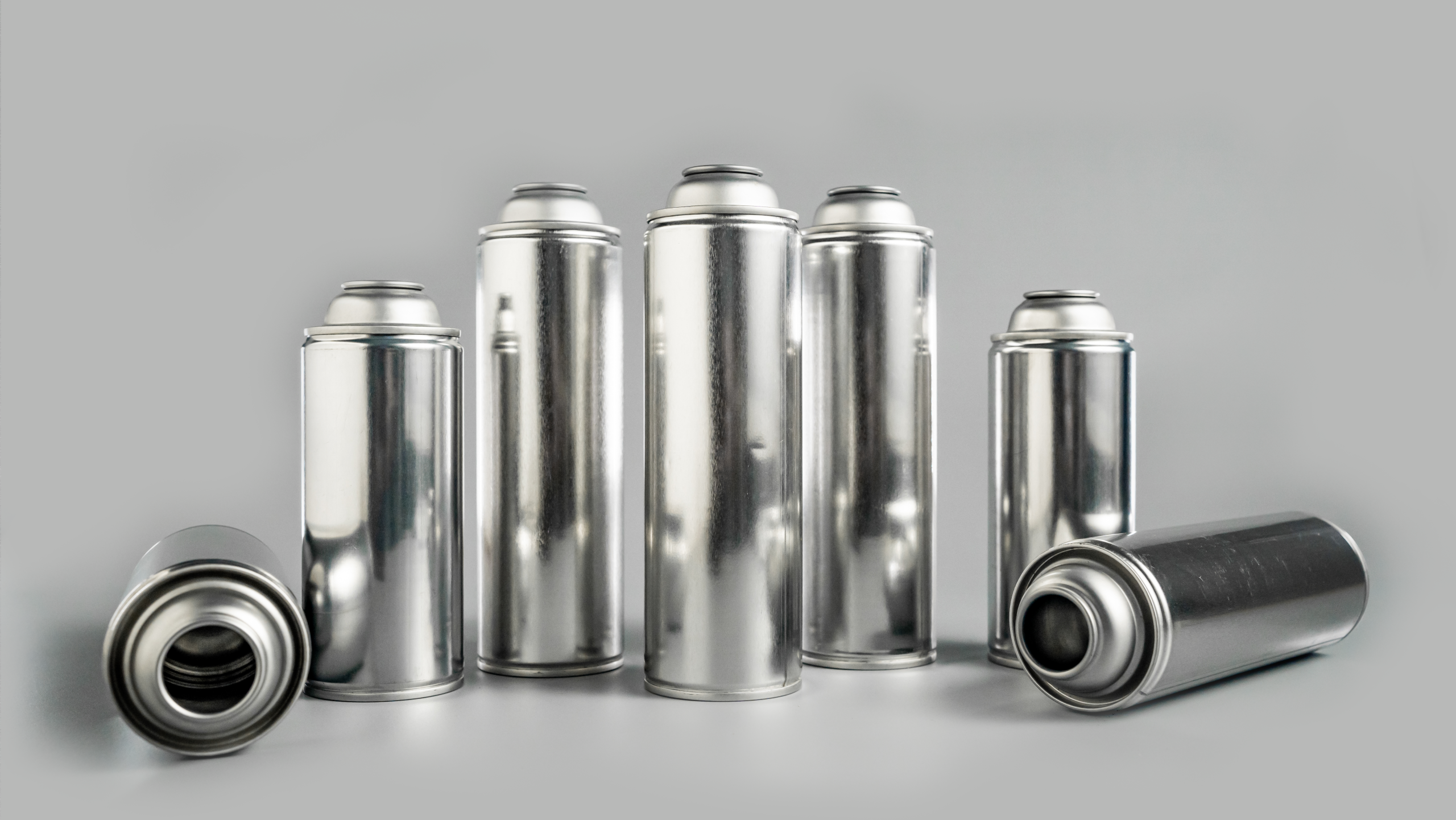
Aesthetic considerations also affect product positioning. Straight-walled Aerosol Tin Cans have a rugged industrial feel, which is very suitable for products such as heavy-duty cleaners, rust removers, and automotive maintenance sprays—their appearance can intuitively convey the “powerful and durable” product attribute. The Necked-In Aerosol Tin Can has smoother lines, which are more in line with the aesthetic needs of daily chemical products such as home care sprays, air fresheners, and beauty mists. It can make the product look more refined and easily win the favor of consumers on the shelf.
Let’s answer some common questions that manufacturers often ask:
Q: Can the necking degree of the Necked-In Aerosol Tin Can be customized according to the valve cup of a specific model?
A: Of course. At SAILON, we specialize in customizing Aerosol Tin Cans, and we can adjust the necking angle and diameter according to the size parameters of your valve cup and product filling requirements. This ensures that the can body and valve cup achieve “zero gap” matching, and the sealing pass rate is as high as 99.8%.
Q: Is the production cost of the two can types very different?
A: In fact, the difference in raw material consumption between the two is not large. The production cost is mainly related to the customization requirements such as the thickness of the tinplate and the printing process. For example, if you need a thicker tinplate for a straight-walled can to maintain its shape, the cost may be slightly higher; while the necked-in can has higher requirements for the forming process, but the cost can be controlled through mass production.
Q: For products that need to be filled at high pressure, which can type is more stable?
A: Both can meet the high-pressure filling requirements as long as they comply with the national standard production. However, the Necked-In Aerosol Tin Can has a more uniform stress distribution due to its structural characteristics, and the stability during transportation and storage is slightly better. This is a detail we have observed in cooperation with many high-pressure product manufacturers.
In the end, choosing between Necked-In and Straight-Wall Aerosol Tin Cans depends on a combination of your valve cup specifications, production equipment, product positioning, and logistics needs. If you pursue efficient sealing, space-saving storage, and refined product appearance, the Necked-In design is probably a more reliable choice; if your product is positioned as industrial-grade, and the equipment is compatible with straight-walled cans, the straight-walled design can also meet your needs.
If you are still unsure which can type is more suitable for your product, you can consult the technical team of SAILON at any time. We will provide you with professional Aerosol Tin Can customization suggestions based on your actual situation, and even offer detailed technical drawings to help you avoid detours in production. After all, a suitable Aerosol Tin Can is not only a carrier of the product but also a guarantee for the smooth operation of the entire production chain.