

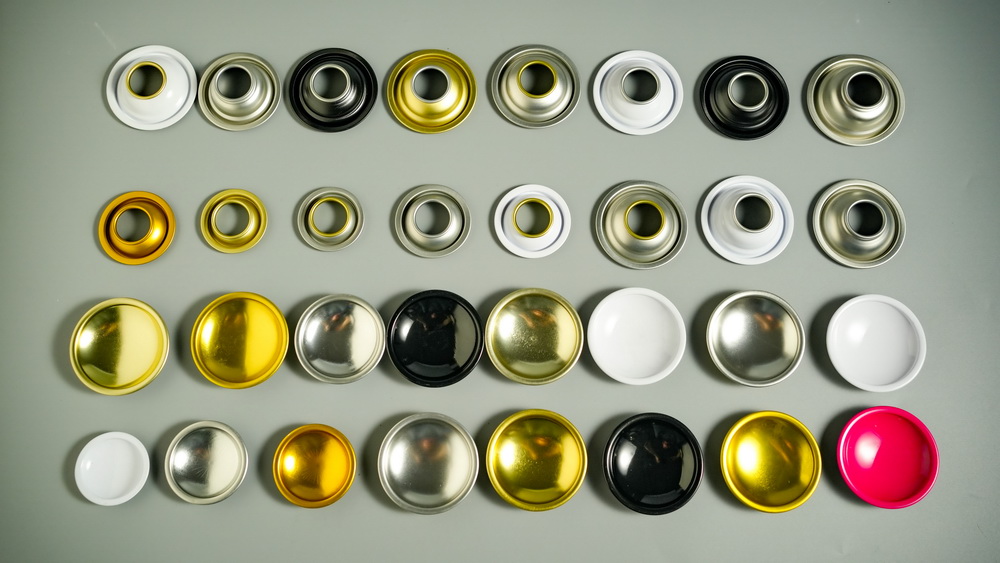
Walk into offline beauty stores, and you will find that the market performance of similar spray products often hinges on tiny details. One tin aerosol can cap features uniform and glossy coating with premium metallic luster; while another cap of the same specification suffers from uneven color and dense tiny pits. Most customers make their purchase decision at first glance. As a matter of fact, the brand image of high-end cosmetics is closely linked to packaging quality. Various surface defects on coating of cosmetic spray can caps will downgrade product perception step by step and shrink the premium value that brands deserve.
1. Tiny Packaging Defects Lead to Comprehensive Brand Loss
1.1 Visual Impacts in Different Display Scenarios
Spotlights in beauty counters, white light in supermarkets and mixed light in beauty collection stores will all magnify minor flaws on packaging surfaces. According to recent research in the beauty industry, nearly 70% of consumers judge the overall quality of skincare and cosmetic sprays by the first visual impression of outer packaging. A neat and flawless coating makes customers believe the product adopts premium materials and strict quality control. On the contrary, uneven color and rough pits will leave people with a deep impression of poor workmanship.
Will a high-end beauty product line with huge investment lose its reputation just because of defective can caps? In most offline scenarios, coating defects will not affect the basic use of aerosol cans, but they will continuously lower brand positioning in consumers’ minds. In the long run, brands will easily get trapped in cut-throat price competition among similar products.
1.2 Chain Negative Effects Caused by Defects
Starting from the cheap visual impression on shelves, consumers will gradually lower their expectations for product efficacy and formula strength, and the high-end brand image built over years will fade away. Products originally positioned at mid-to-high end have to adjust pricing strategies following mass-market items. This is the inevitable consequence if brands neglect color difference control for can cap coatings.
2. Explore Root Causes of Coating Defects on Tin Aerosol Can Caps
2.1 Causes of coating color difference
It is impossible to completely eliminate color deviation in industrial production. The core solution of the industry is to keep color difference within a controllable range. Color value fluctuation of coating materials between batches, parameter deviation of air pressure and paint output of electrostatic spraying equipment, uneven temperature inside curing ovens, inconsistent surface tension of tinplate substrates, as well as daily changes of temperature and humidity in production workshops will all lead to inconsistent color of finished products. Even slight color deviation barely visible to naked eyes is a problem requiring strict control under the acceptance standards of high-end beauty packaging.
2.2 Triggers of surface pitting and pinholes
Surface pitting on aerosol can caps and pinholes are two different types of surface defects with distinct causes. Dust and particles floating in the workshop mixing into the coating will form raised pits on the surface. Excessively fast volatilization of solvent inside the paint after spraying will produce tiny bubbles and leave pinholes. Oil and residual impurities on substrates before spraying will further cause coating craters. These problems not only ruin appearance, but also damage the protective structure of coatings, making can caps more vulnerable to oxidation and rust after long-term storage.
2.3 Hidden risks of coating peeling
Many brands also encounter the problem of large-area coating peeling on can caps, which mostly stems from inadequate pre-treatment before spraying. Insufficient degreasing and surface activation of substrates, or poor adhesion between primer and tinplate will result in large-scale coating peeling during transportation vibration and repeated opening and closing of can caps, completely damaging packaging integrity.
3. Standardized Testing System: Quantify Coating Quality Standards
To stabilize product quality, subjective judgment must be replaced with practical testing rules. The industry generally adopts international standards and professional equipment for acceptance inspection.
| Inspection Item | Applicable Standard | Testing Equipment | Core Acceptance Requirements |
|---|---|---|---|
| Coating Color Difference | ASTM D2244 | Spectrophotometer, Standard Light Booth | No visible color difference compared with sealed standard samples; color difference value within agreed range |
| Surface Pitting & Pinholes | ISO 4628-31 | 10x Magnifying Glass, High-definition Microscope | No dense pits; size and quantity of single pinholes meet grade requirements |
| Coating Scratch Resistance | ISO 1518-1:2023 | Scratch Tester | No scratches or coating peeling after normal friction and contact |
| Defect Grade | Pitting Density | Pinhole Size | Applicable Product Positioning |
|---|---|---|---|
| Grade 1 (Premium) | No visible pits | No pinholes | Luxury cosmetics and limited-edition cosmetic sprays |
| Grade 2 (Qualified) | Sparse scattered pits | Diameter less than 0.02mm, extremely small quantity | Mid-range mainstream cosmetic sprays |
| Grade 3 (Defective) | Locally dense pits | Large aperture and large quantity | Prohibited from entering terminal markets |
Apart from visual inspection, the industry also conducts comprehensive performance tests beyond pinhole defects on beauty packaging coatings. The regular testing list is as follows:
- Pencil hardness test to verify coating hardness and wear resistance
- Xenon lamp aging test to check coating stability under long-term light exposure
- Salt spray corrosion test to evaluate rust prevention performance of coatings
- Temperature and humidity cycle test to simulate environmental changes during storage and transportation
- Fastener durability test to confirm coating integrity after repeated assembly
4. Comprehensive Comparison of Three Mainstream Can Cap Decoration Technologies
Different processing technologies show obvious gaps in defect control capability. Brands can select solutions according to product positioning and procurement budget.
| Technology | Color Consistency | Surface Smoothness | Mass Defect Rate | Workshop Requirement | Operation Cost | Applicable Positioning |
|---|---|---|---|---|---|---|
| Single-color Spraying + Manual Sorting | Average | Medium | Relatively high | Basic Production Workshop | Low | Mass-market affordable beauty products |
| Fully Automatic Electrostatic Spraying | Excellent | Fine | Relatively low | Class 100,000 Dust-free Workshop | Medium | Mid-to-high-end cosmetic sprays |
| Integrated Injection Molding & IMD Technology | Superior | Nearly Defect-free | Extremely low | High-cleanliness Sealed Workshop | Relatively high | Luxury beauty products and custom spray products |
5. Real Industry Case: Quality Control Upgrade Triggered by Packaging Defects
Many domestic beauty brands have been troubled by coating defects. A high-end beauty brand launched a limited-edition spray product, and terminal stores continuously reported surface pitting and partial color difference on aerosol can caps after goods were delivered nationwide. Traceability results showed that the spraying workshop of the cooperative processor failed to meet cleanliness standards, and color value testing was omitted during coating material incoming inspection. Multiple oversights led to a large number of defective products.
To avoid similar problems, the brand updated the cooperation rules for packaging materials, requiring all can packaging suppliers to establish permanent color sample files and conduct color difference sampling inspection as well as full visual inspection before each batch delivery. This incident reminds the whole industry that negligence in front-end production will eventually turn into pressure on terminal sales and brand reputation.
6. Full-process Quality Control Guidelines for Brands
6.1 Set Mandatory Quality Standards in Product Development Stage
- Determine ΔE color difference tolerance according to brand grade and clarify standards in product technical specifications
- Define the upper limit of size and quantity for pits, pinholes and scratches to form written acceptance basis
- Seal standard color plates and appearance samples by both suppliers and buyers as the only reference for long-term mass production
6.2 Add Restrictive Clauses in Procurement Cooperation
- Fix the brand and model of coating materials; advance communication and re-sampling are required for any material replacement
- Require suppliers to attach color difference reports and appearance inspection records issued by professional testing institutions for each batch of goods
- Clarify on-site sampling ratio, inspection procedures and rejection rules for defective products
6.3 Key Inspection Items for Supplier On-site Audit
During factory visits, prioritize checking the cleanliness level of spraying workshops, calibration records of color measuring equipment and temperature verification reports of curing ovens. Meanwhile, verify test data of substrate degreasing procedures to control the basic quality of tin aerosol can caps from the source.
7. Frequently Asked Questions (FAQ)
- Q: Can products with barely visible slight color difference be sold normally? A: It is not recommended for mid-to-high-end cosmetic sprays. Spotlights and natural light in stores will amplify color deviation, which can be easily noticed by consumers and damage high-end brand image in the long run.
- Q: How to quickly distinguish surface pitting on aerosol can caps from pinholes? A: Pitting refers to tiny raised particles on the coating surface, staying only on the outer layer. Pinholes are tiny holes penetrating the coating, which can be clearly observed with a magnifying glass. Pinholes cause greater damage to the protective performance of coatings.
- Q: Will long-term storage aggravate various coating defects on can caps? A: Coatings with qualified quality will not change obviously under conventional storage conditions if production quality control is in place. However, existing tiny pinholes and craters will expand rapidly in humid environments and accelerate substrate oxidation.
- Q: How to build a complete batch quality traceability system for can caps? A: It is suggested to record data one by one in three links: coating material incoming inspection, spraying production and finished product testing. Match exclusive batch numbers and color sample archives to quickly locate problematic links once defects occur.
SAILON is a professional manufacturer focusing on customization of tin aerosol can caps, and we implement strict coating quality control throughout the whole production chain. We are equipped with Class 100,000 dust-free spraying workshops, fully automatic electrostatic spraying equipment and a complete set of professional testing instruments. From color value verification of incoming raw materials, real-time monitoring of production parameters to multiple rounds of sampling inspection for finished products, we effectively prevent color difference, pitting, pinholes and other defects. Packaging details determine brand height. Choosing a reliable packaging partner helps every cosmetic spray stand out in the market with exquisite appearance and maintain unique brand value and competitiveness.