

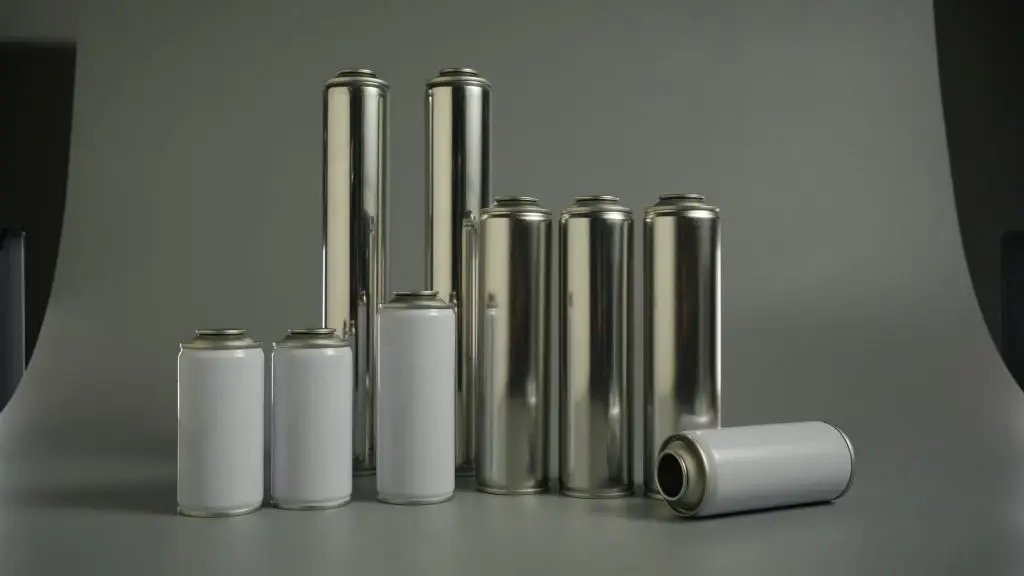
Off-flavors or chemical solvent lingering in your aerosol products are rarely caused by formula degradation alone. In 80%+ of field cases, the root cause lies in incomplete lacquer curing or micro-defects within the internal coating of the aerosol tinplate can. This guide breaks down the critical parameters between industrial, cosmetic, and food-grade internal linings—helping procurement and R&D teams prevent off-odors and solvent retention at the source.
1. The Chemistry of Off-Odors: Solvent Retention vs. Metallic Leaching
When an end-user releases an aerosol spray and detects an off-flavor, it typically points to one of two distinct failure modes in the manufacturing process:
- Sharp Chemical / Solvent Residue (Pungent “Paint-Like” Odor):
- Mechanism: After internal liquid coating application, cans pass through a high-temperature baking oven for polymer cross-linking. If line speeds are too aggressive or oven thermal zones fluctuate, the resin fails to fully cross-link. Unreacted monomers and volatile organic compounds (VOCs) become trapped inside the film.
- Impact: Over time and under changing ambient temperatures during storage, these residual solvents slowly migrate into the liquid formulation or aqueous base.
- Subtle Metallic Off-Taste (Iron Leaching):
- Mechanism: Micro-pinholes caused by erratic spray pressure, mechanical scuffing during assembly, or micro-fractures during the necking-down and flanging stages expose the bare tinplate substrate.
- Impact: Acidic or water-based formulations react with exposed iron, leading to mild electrochemical corrosion. Released iron ions ($\text{Fe}^{2+}/\text{Fe}^{3+}$) infuse into the formulation, resulting in a distinct metallic taste or scent upon skin application or ingestion.
2. Substrate & Resin Selection: Why Industrial Cans Must Never Be Cross-Used
Matching the right lining chemistry with the correct tinplate specification is non-negotiable for product compliance and shelf-life stability.
- Industrial-Grade Cans: Typically utilize Epoxy-Phenolic linings. While they offer robust chemical resistance for aggressive solvents, trace amounts of residual Bisphenol A (BPA) cannot be completely ruled out. Suitable strictly for rust inhibitors, degreasers, and technical paints.
- Cosmetic & Food-Grade Cans: Mandate BPA-NI (BPA Non-Intent) modified polyester systems. For high-end food applications, silicone-modified topcoats are often applied to minimize ingredient migration.
- Substrate Quality: Standard single-reduced tinplate is replaced with DR (Double Reduced) High-Cleanliness Tinplate. Plates undergo intensive surface degreasing prior to lacquering to prevent rolling oil residues from carbonizing and emitting burnt off-odors during curing.
3. Plant-Level QC: 5 Essential Rules for Odor Prevention
Formulation is only half the battle; tight operational control during production determines final coating integrity:
- Oven Thermal Profiling: Continuous tracking with temperature data loggers ensures a peak metal temperature (PMT) of 200°C with an effective dwell time of at least 10 minutes.
- Dry Film Thickness (DFT) Control: Maintained strictly at 8–12 μm for cosmetics and 10–15 μm for food grade. Too thin risks micro-pinholing; too thick causes skin-curing, leaving under-cured solvents underneath.
- MEK Rub Resistance Testing: Mandatory methyl ethyl ketone (MEK) double-rub testing every 2,000 units. Cosmetic linings must exceed 80 double rubs, while food grade demands 100+ rubs to confirm cross-linking density.
- Post-Forming Thermal Purging: Following necking and flanging, cans undergo internal purging with 80°C oil-free, dust-free hot air to evacuate residual volatile molecules and micro-particulates.
- Enclosed Retain-Sample Audits: Finished batch samples are stored in sealed conditions at ambient temperatures for 30 days before undergoing olfactory evaluation to detect latent off-odor development.
4. Technical Specification Matrix: Industrial vs. Cosmetic vs. Food-Grade
| Parameter | Industrial Grade | Cosmetic Grade | Food Grade (FDA Compliant) |
| Internal Lining System | Epoxy-Phenolic Resin | BPA-NI Polyester / PAM Modified | FDA-Compliant BPA-NI Lining System |
| Dry Film Thickness (DFT) | 5–8 μm | 8–12 μm | 10–15 μm |
| Primary QA Testing | Conductivity Test ($<10\text{mA}$) | MEK Rub Test + Sensory Panel Audit | Iron Ion Migration + GC-MS Headspace Analysis |
| Long-Term Stability Focus | Mechanical Integrity Only | Resistance to Polyol Extraction | Prevention of Lipid Oxidation by Metal Ions |
| Typical Target Formulations | Degreasers, Penetrating Oils, Marking Paints | Sunscreen Sprays, Setting Sprays, Deodorants | Cooking Oil Sprays, Whipped Cream, Olive Oil |
5. Practical Troubleshooting FAQ
Q1: How can we perform a quick in-house screening for internal coating off-odors without specialized lab equipment?
A: We recommend the Deionized / Purified Water Incubation Test:
- Fill empty sample cans with room-temperature purified water and crimp with standard valves.
- Incubate in a constant-temperature chamber at 50°C for 48 hours.
- Cool to room temperature and conduct a sensory/taste test. Any noticeable metallic tang, paint-like smell, or turbidity indicates incomplete cross-linking or pinhole defects.
Q2: The empty cans passed standard porosity/conductivity tests, but hairspray developed an off-odor after 6 months. What went wrong?
A: Polyols commonly used in hairsprays act as mild solvents over time. Standard porosity tests only check for physical bare metal exposure—they do not assess cross-linking density. If the lining is insufficiently cured, polyols will leach unreacted low-molecular-weight compounds out of the coating matrix over extended storage. At SAILON, we deliberately elevate curing profiles and thermal safety margins for cosmetic packaging to mitigate long-term chemical migration risks.
Q3: Does specifying a BPA-NI coating guarantee zero off-odor risk?
A: No. A BPA-NI resin is simply a baseline chemistry. If oven baking parameters are off, film thickness is inconsistent, or necking stresses fracture the coating, solvent retention or metal migration can still occur. Zero off-odor performance requires a holistic control loop across raw plate cleanliness, curing curves, DFT consistency, and post-assembly thermal purging.