

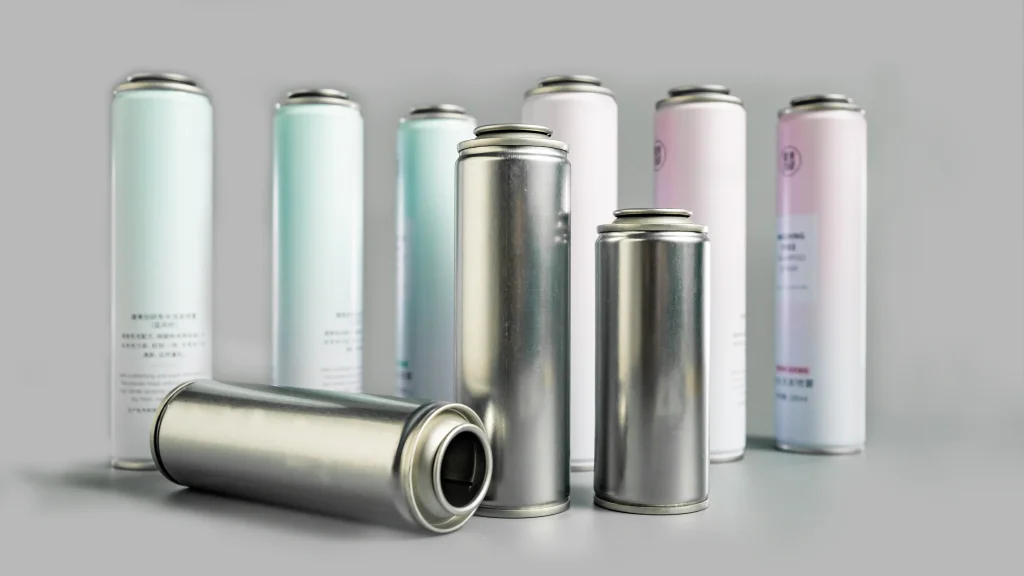
Imagine this: Your high-speed aerosol filling line is running at peak capacity, but by the end of the shift, the QC bin is overflowing with rejected cans. The valves are loose, the necks are wrinkled, and pressure is leaking. You’ve strictly followed the machine manual and dialed in the parameters a dozen times, yet the 45mm tinplate necked-in aerosol cans keep buckling. Sound familiar?
You are not alone. The 45mm slim profile is a notorious headache for filling factories worldwide. As a premier wholesale aerosol can supplier, SAILON has cracked the code. In this insider guide, we will uncover why these micro-deformations happen and how a simple engineering upgrade can boost your filling yield to 100%.
The Physics of Failure: Why Do 45mm Slim Cans Buckle Under Pressure?
In the packaging world, geometry dictates strength. Under the same material thickness, a slim, tall can is inherently less structurally stable than its short, wide counterparts (like 52mm or 57mm cans).
The culprit is the high aspect ratio (height-to-diameter). When a 45mm can undergoes the necking process, a natural stress concentration zone forms in the transition area from the can shoulder to the opening. Automatic valve inserting isn’t a gentle, static push—it is an instantaneous impact load. If the machine’s crimping stroke or shock absorption isn’t perfectly synced with the can’s critical pressure threshold, the downward force won’t distribute evenly. Instead, it punches straight into the neck, causing wrinkles or micro-collapses.
The Cost-Efficiency Myth: Many factories try to solve this by simply ordering thicker tinplate. However, industry data shows that upgrading to a two-stage progressive necking process improves vertical crush resistance by 30%, without adding weight or inflating material costs.
3 High-Frequency Machine Mismatches Ruining Your Yield
More than 90% of 45mm aerosol can deformations are not caused by defective raw materials, but by a systemic mismatch between the filling line mechanics and the tinplate’s physical limits. Watch out for these three common line errors:
1. Over-Stroke: Excessive Instantaneous Impact
To maximize throughput, high-speed lines often leave too much safety margin in the downward stroke. While the can might pass a static pressure test, it cannot withstand the rapid, high-frequency hammer effect, causing the valve cup slot to warp.
2. Missing Cushioning: Out-of-Control Dynamic Pressure
Older or poorly maintained filling lines lack flexible pneumatic or mechanical buffers. The static pressure looks perfect on the gauge, but the dynamic peak force during the split-second crimp punches right through the tinplate’s yield strength.
3. Misaligned Grippers: Unbalanced Eccentric Loading
Over time, star wheels and grippers wear down unequally. If a 45mm can is held at even a 1-degree tilt, the downward force concentrates on a single side of the neck, creating irregular micro-wrinkles that easily escape visual inspection but ruin the airtight seal.
Tech Specs: Tinplate Thickness vs. Pressure Resistance Calibration Table
To help your engineering team quickly calibrate your high-speed automated lines, here is SAILON’s updated reference standard based on real-world mass production testing.
| Tinplate Thickness (Body) | Vertical Crush Resistance (VCS) | Max Safe Downward Load | Recommended Stroke Control | Ideal Application Scenario |
| 0.20 mm | 210 N | ≤160N | Low-speed with soft buffering | Small-batch custom runs, lightweight cosmetic sprays |
| 0.22 mm | 265 N | ≤ 210N | Medium-speed flexible stroke | Mass-market personal care, deodorant, and hairsprays |
| 0.24 mm | 320 N | ≤ 260N | High-speed precision pressure | Heavy-duty industrial care, high-frequency filling lines |
The SAILON Solution: Re-Engineering the Necked-In Can
Achieving a 0% deformation rate with 45mm cans requires a holistic approach combining structural design, metallurgical grading, and precision forming.
- 12-Stage Progressive Dual-Necking: Instead of forcing the metal into shape in a few aggressive punches, SAILON utilizes a 12-stage gradual molding process. By gently shaping the curve across multiple micro-dies, we prevent localized metal over-stretching and maintain the tinplate’s original elasticity. This smooth transition effortlessly disperses downward forces.
- Targeted T4/T5 Temper Grading: We don’t believe in one-size-fits-all raw materials. Based on your specific filling line speed and product pressure requirements, we select custom high-stiffness tinplate components to provide excellent aerosol can crimp zone stability.
- Rigorous QA Protocol: Every batch of our custom printed necked-in cans undergoes strict vertical crush testing, axial concentricity checks, and valve slot precision calibrations before leaving the factory floor.
The 4-Step Daily Line Checklist for Maintenance Techs
Keep this quick checklist on your filling floor to stop deformation before it stalls your shift:
- Check Concentricity Daily: Inspect grippers and star wheels for wear. Ensure the can is held perfectly vertical to avoid eccentric loading.
- Match the Load to the Spec: Check your current tinplate thickness against our chart and ensure the crimper’s downward force does not exceed the safe load.
- Activate Soft-Buffer Modes: Lower the instantaneous impact spike by adjusting the machine’s pneumatic or hydraulic shock absorption.
- 2-Hour Spot Checks: Every two hours, sample finished cans to check valve cup roundness and slot flatness under a magnifier to catch micro-deformations early.
FAQ: Solving Your Quick Troubleshooting Doubts
Q1: Will switching to a thicker tinplate completely stop 45mm neck deformation?
No. Increasing thickness only bumps up basic resistance; it doesn’t solve stress concentration or unbalanced impact forces. Optimizing the neck geometry and machine timing yields far better results at a lower cost.
Q2: What is the most critical QA metric for high-speed 45mm can filling?
It’s all about dimensional consistency. In high-speed automated lines, even microscopic variances in can-to-can neck profiles or temper hardness will cause the machine to misfeed or over-compress, leading to batch failures.
Q3: Can SAILON customize the can structure for our specific filling machinery?
Absolutely. We offer end-to-end customization. Tell us your machine model, filling speed, and formulation properties, and we will engineer a custom 45mm tinplate can with perfectly matched temper, thickness, and neck geometry.
Q4: How do micro-deformations affect the end consumer?
Micro-deformations cause an uneven seal between the valve cup and the can rim. While it might look fine at the factory, it causes slow pressure leakage over months on retail shelves, resulting in weak spray patterns, dead stock, and costly product recalls.
Looking to optimize your aerosol filling yield or need samples of high-performance 45mm tinplate cans? Contact the SAILON Engineering Team today for a free consultation.