

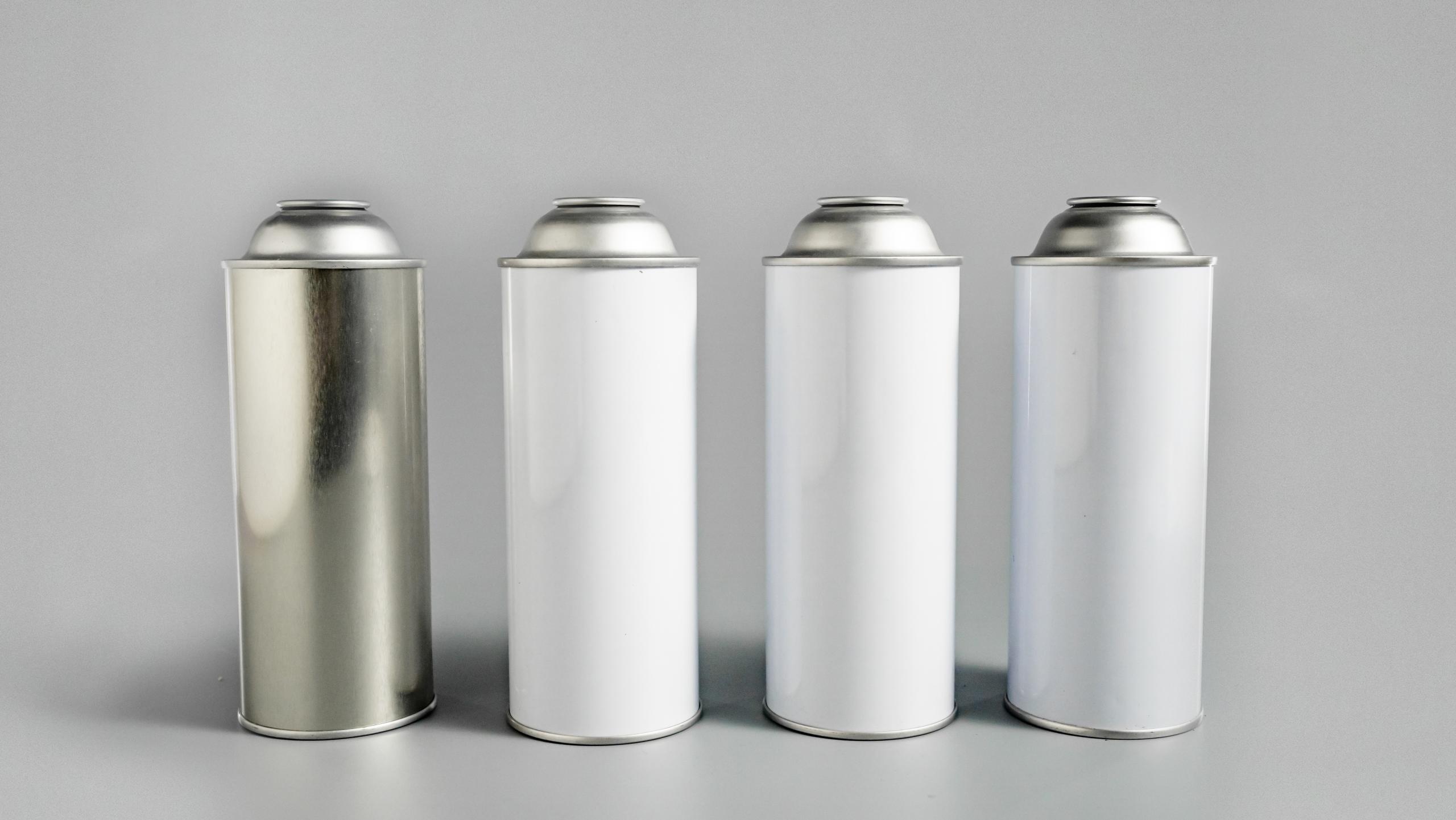
In the production and use of tinplate aerosol cans, tinplate aerosol can seam leakage is one of the most troublesome core problems for many enterprises. Both small and medium-sized production enterprises and large brand suppliers have encountered such a dilemma: after a batch of custom-made cans is put into storage, leakage is found in some products during unpacking inspection. This not only causes direct waste of raw materials such as tinplate base materials and coating materials, delays the subsequent filling production progress, but also may lead to complaints and claims from downstream customers, directly damaging the enterprise’s brand reputation. More seriously, if the can is loaded with flammable, explosive or corrosive contents, leakage will also bring great potential safety hazards. Frankly speaking, the seemingly insignificant weld seam is actually the most vulnerable key part of the tinplate aerosol can — it is the only joint of the can body, undertaking the important role of sealing the can body and bearing internal pressure. Even a micron-level tiny flaw may damage the overall airtightness of the can body and then cause leakage problems.
Many people mistakenly think that weld leakage is only caused by improper welding process operation, but in fact, based on years of industry practical experience and a large number of case analyses, the causes of leakage are often various and cannot be determined by a single factor. To help enterprises quickly troubleshoot potential hidden dangers in production and accurately locate the root cause of leakage, we have sorted out the most common leakage causes in the industry, the typical performances in the production process, and the long-term risks brought by leakage problems for everyone’s reference:
| Core Causes of Leakage | Typical Performances in Production | Long-Term Risks |
| Unstable welding current | Pinholes and uneven thickness at the weld seam, concentrated defects in mass production of custom cans, and signs of insufficient local fusion in some weld seams | Slow seepage of products during storage and transportation, gradual loss of internal pressure, resulting in failure of normal spraying of contents and affecting product use experience |
| Substandard tinplate base material quality | Oxidation spots and rust marks appear on the edge of the sheet, and there are obvious differences in the thickness of base materials between different batches, affecting the fusion effect during welding | Gaps and cracks are prone to appear at the weld seam. After long-term storage, the contents or external environment will corrode the can body, eventually leading to leakage and scrapping of batch products |
| Improper coating overlap | Exposed base metal and uneven coating coverage in the weld area, some areas have too thin coating or missing coating, which cannot play an effective protective role | The contents will directly corrode the can body base material, leading to thinning and damage of the can body. Usually, seal failure will occur a few months after production, causing leakage |
| Incomplete post-weld inspection | Only sampling inspection is adopted, missing micro-defects that cannot be identified by the naked eye, and some hidden dangers such as micro-pinholes and tiny gaps are not found in time | Batch leakage problems will occur after the products are launched, forcing enterprises to recall products, leading to a surge in customer complaints and seriously damaging brand reputation and market trust |
Among these common causes of leakage, unstable welding current is the most common and most likely to cause problems. When the welding current is too small, it will lead to incomplete fusion of the edges of the tinplate sheet, forming what is commonly known as “cold welding” in the industry, and the strength and airtightness of the weld seam will be greatly reduced; when the current is too large, it will burn through the thin tinplate sheet, leaving micro-pinholes that are difficult to distinguish with the naked eye. These hidden defects may not appear immediately in the conventional inspection on the production line, but in the subsequent transportation and storage process, with the changes of environmental temperature and pressure, the defects will gradually expand, eventually leading to can body leakage and irreparable losses.
As a professional custom tinplate aerosol can manufacturer deeply engaged in the tinplate aerosol can industry for many years with rich production experience, SAILON has a mature and complete solution to deal with weld leakage, avoiding leakage risks from the source and ensuring stable product quality: first, strictly screen raw materials, select high-quality tinplate base materials with uniform thickness, no oxidation and no rust, and each batch of raw materials must pass multiple inspections before being put into storage to ensure that the base material quality meets the production standards; second, adopt automatic welding equipment equipped with a real-time current monitoring system to monitor the stability of welding current throughout the process, accurately control welding parameters, ensure uniform weld seams and sufficient fusion, and eliminate “cold welding” and burn-through problems; finally, establish a strict finished product inspection system, and each batch of cans undergoes 100% online high-pressure water bath leak detection to accurately identify micro-leakage hidden dangers and ensure that unqualified products will not flow into the market.
Frequently Asked Questions (FAQ)
- Q: Can the weld leakage of tinplate aerosol cans be checked in advance with the naked eye?
A: It is difficult to achieve. Most micro-pinholes and tiny gaps are only micron-level in size, far beyond the recognition range of the naked eye, and professional detection equipment must be used to accurately check. For example, the helium mass spectrometry leak detector used by SAILON has extremely high detection accuracy, which can accurately detect micron-level leakage hidden dangers, avoid unqualified products from flowing into the market from the source, and ensure the product quality of customers. - Q: Do food-grade tinplate aerosol cans have special requirements for weld coating?
A: There are clear special requirements. The weld coating of food-grade cans must use food-contact epoxy phenolic materials, which are safe and non-toxic, can effectively isolate the contents from the can body base material, ensure no heavy metal precipitation, and guarantee food safety. The weld coating of SAILON’s food-grade cans will undergo special compatibility testing, strictly complying with the national GB/T 13042-2008 standard, and can be safely used for food packaging. - Q: How to reduce the probability of weld leakage in mass production?
A: In addition to strictly controlling the base material quality and welding process, it is recommended to adopt a three-level inspection mode of “first article inspection + batch inspection + finished product full inspection” to fully control product quality. The first article inspection confirms that the welding parameters are reasonable, the batch inspection timely finds abnormalities in the production process, and the finished product full inspection eliminates unqualified products from being put into storage. SAILON can provide full-process inspection reports, detailing each step of inspection data, to ensure that the weld quality of each batch of cans meets industry standards and customer requirements.
In summary, weld leakage of tinplate aerosol cans is not an unavoidable problem. Its core lies in accurately locating the root cause of leakage and controlling the key links of the entire production process. From raw material screening, welding process optimization to finished product inspection, each step must strictly follow industry standards and production specifications to eliminate leakage hidden dangers from the source. With mature technical solutions and strict quality control systems, SAILON can comprehensively solve the pain point of weld leakage for enterprises, provide safe, stable and compliant custom tinplate aerosol can products for customers in different industries, and help enterprises reduce losses and enhance brand reputation.