

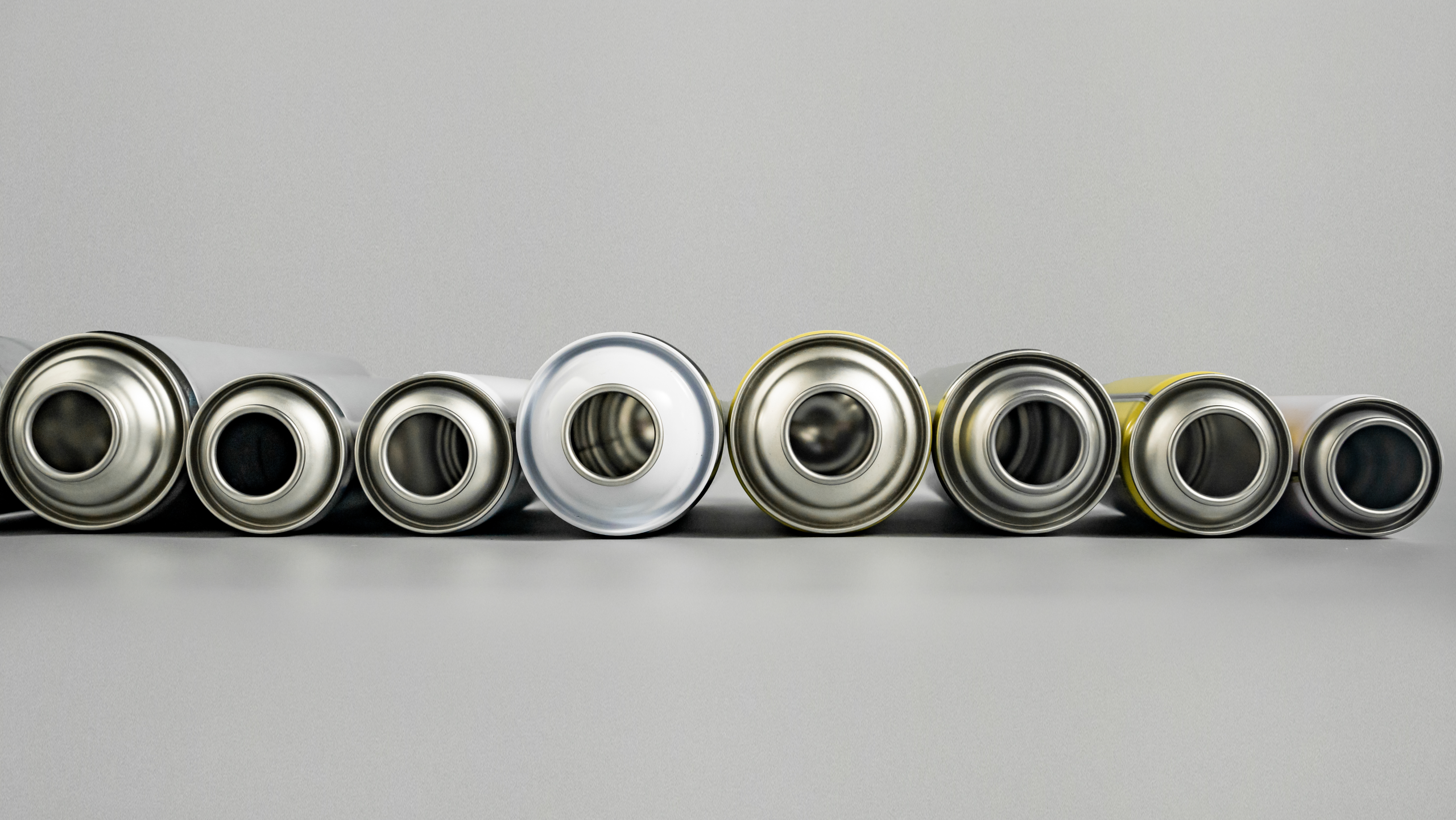
For insecticide product packaging, tinplate aerosol cans are the most widely used container carriers. To ensure finished products remain stable during long-term storage and transportation without leakage, swelling or rust, sufficient efforts must be made on chemical resistance. Most insecticide formulations contain xylene, D-limonene, ketone solvents and propane-butane propellants, which will continuously erode ordinary cans, making this the most easily overlooked core risk when sourcing insecticide tinplate aerosol cans. SAILON has long been engaged in the R&D and production of custom tinplate aerosol cans, accumulating a large number of actual measurement data for highly corrosive formulations such as insecticides, helping purchasers avoid brand losses and potential safety hazards caused by packaging failure from the root.
Erosion Logic and Actual Hazards of Insecticide Formulations to Tinplate Aerosol Cans
The component system of insecticides is far more complex than ordinary daily chemical sprays. The combination of polar solvents, natural extracts, emulsifying additives and high-pressure propellants will form a superposition effect of multiple corrosions. Aromatic solvents such as xylene will slowly dissolve low-density inner coatings, while citrus-derived extracts such as D-limonene have strong permeability, and even tiny coating defects can become channels for them to invade the tank substrate. Coupled with the electrochemical corrosion effect of water-based insecticides, the selection standards for chemical resistant tinplate aerosol cans are much higher than those of ordinary paint cans and air freshener cans.
The consequences of such erosion are not trivial: mild cases show pitting corrosion inside the tank and rust spots on the outer wall affecting product appearance; severe cases lead to large-scale shedding of inner coatings, direct reaction between tinplate substrates and chemicals to generate hydrogen, causing hydrogen swelling and deformation of the tank, and even valve seal failure and agent leakage. In extreme cases, abnormal internal pressure rise may trigger safety accidents. For purchasers focusing on product quality and compliance, choosing suitable weld-protected tinplate aerosol cans is no longer an option, but a basic requirement to ensure the safety of the product’s entire life cycle.
Three Core Paths of Chemical Corrosion to Tinplate Aerosol Cans
Internal Coating Penetration Corrosion
Acidic or high-polar solvents will gradually damage the cross-linked structure of the inner coating. When pinholes and cracks appear in the coating, the agent directly contacts the iron base layer in the tinplate, triggering an oxidative dissolution reaction and generating hydrogen accumulated in the tank. This kind of corrosion is hard to detect with the naked eye in the early stage, and usually shows bulging and leakage after 2-3 months of storage, which is the most common failure form of insecticide tinplate aerosol cans.
Weld Micropore Penetration Corrosion
There are natural microscopic pores in the weld area of three-piece tinplate aerosol cans, and ordinary repair coating processes cannot completely seal these gaps. Solvents such as D-limonene and esters will slowly penetrate along the pores, forming electrochemical corrosion in the tank interlayer, and eventually causing strip rust at the outer weld, which not only damages the packaging integrity but also pollutes the internal agent.
Sealing Component Swelling Failure
Incompatible reactions between agent components and tank mouth valve rubber and sealing gaskets will cause swelling and hardening of rubber materials, leading to spray valve jamming and poor sealing. Even if the tank body is intact, pressure relief and liquid leakage will occur, which is why the compatibility of accessories needs to be verified simultaneously when selecting custom tinplate aerosol cans.
Mandatory Chemical Resistance Tests Before Sourcing Tinplate Aerosol Cans
Professional can suppliers will provide complete resistance testing plans. For insecticide formulations, SAILON equips customers with the following four authoritative tests to verify the adaptability of cans at the laboratory level:
- 24-Week Accelerated Storage Test at 50°CSimulate 2 years of normal-temperature shelf life, monitor the internal pressure fluctuation, inner coating adhesion, and color and odor changes of the agent throughout the process, which is the core test to verify the stability of chemical resistant tinplate aerosol cans.
- Electrochemical Impedance Spectroscopy (EIS) TestQuantitatively analyze the shielding protection performance of the inner coating, judge the coating’s ability to resist solvent penetration through impedance values, and issue accurate data reports within 24 hours.
- Cathodic Delamination TestFor water-based insecticide formulations, test the coating’s resistance to peeling under cathodic reaction to avoid large-scale warping and shedding of the coating caused by water-containing agents.
- Special Weld Protection TestFocus on the solvent resistance of the weld repair coating area, conduct immersion tests with high-concentration D-limonene and xylene to eliminate weld penetration and rust problems.
Core Details to Confirm with Suppliers When Purchasing Insecticide Tinplate Aerosol Cans
To find suitable tinplate aerosol cans, purchasers should not only focus on appearance and price, but also verify production processes and material configurations in depth, as these details directly determine the chemical resistance of the cans:
- Inner Coating Material SelectionPrioritize confirming the adaptability of epoxy phenolic, modified epoxy and polyamide coatings. High-crosslinking epoxy phenolic coating has a xylene resistance of more than 6 months, making it the first choice for most synthetic insecticides.
- Tank Coating ProcessConfirm whether the double-coating double-baking (2C2B) process is adopted, which can increase the coating density by more than 40%, and is more resistant to strong solvent erosion than the single-coating process.
- Weld Repair Coating SchemePowder repair coating or strip film pasting processes are preferred. Compared with traditional liquid repair coating, the protective sealing performance is significantly improved, suitable for the production standards of weld-protected tinplate aerosol cans.
- Tank Neck Sealing Protection TreatmentCheck whether the neck sealing area is added with protective wax or thickened coating. This area is a stress concentration point, and corrosion leakage is very easy to occur without protection.
- Compliance Testing DocumentsRequire suppliers to provide chemical compatibility statements and resistance test reports issued by third-party institutions such as SGS and Intertek to ensure product compliance.
Actual Case: Failure of Tinplate Aerosol Cans and SAILON’s Solution
A customer once used tinplate aerosol cans with ordinary epoxy phenolic coating to fill plant-derived insecticides containing 5% D-limonene, and experienced tank bottom swelling and weld rust after only 3 months. After testing by SAILON’s technical team, it was found that D-limonene penetrated the standard epoxy coating, triggering pitting corrosion at the weld micropores, and hydrogen accumulation led to tank deformation.
We adjusted the scheme for the customer, replacing it with polyamide-modified epoxy inner coating and a double-layer weld repair protection structure. The newly produced custom tinplate aerosol cans successfully passed the 50°C 24-week accelerated test. After subsequent mass launch, no corrosion failure occurred again, helping the customer avoid the loss of large-scale recall.
Comparison Table of Tinplate Aerosol Cans with Different Inner Coatings for Insecticide Formulations
| Inner Coating Type | Xylene Resistance | D-Limonene Resistance | Water Resistance | Flexibility | Suitable Insecticide Types |
|---|---|---|---|---|---|
| Epoxy Phenolic (EP) | ★★★★ | ★★ | ★★★ | ★★ | Synthetic Pyrethroid Insecticides |
| Modified Epoxy | ★★★ | ★★★★ | ★★★★ | ★★★ | Mixed Insecticides Containing Natural Extracts |
| Polyamide (PA) | ★★ | ★★★★★ | ★★★ | ★★★★ | High-Concentration Citrus Oil-Based Insecticides |
Frequently Asked Questions About Sourcing Tinplate Aerosol Cans
Q1: Can ordinary tinplate aerosol cans for paint be used to fill insecticides?
A: It is not recommended. The inner coating of paint cans is only designed for aromatic hydrocarbon solvents, with insufficient resistance to D-limonene and ester additives. Coating damage will occur after short-term storage, failing to meet the packaging requirements of insecticides.
Q2: Which is more suitable for making insecticide tinplate aerosol cans, two-piece cans or three-piece cans?
A: Two-piece cans have no side seams and theoretically have better anti-penetration ability; three-piece cans with complete weld repair coating process have more controllable costs and qualified protection performance. SAILON can provide customized selection suggestions according to customer formulations and budgets.
Q3: Without conditions for 24-week high-temperature testing, how to quickly verify the chemical resistance of tinplate aerosol cans?
A: You can ask the supplier for historical test data of cans with the same formulation, or apply for rapid Electrochemical Impedance Spectroscopy (EIS) testing, and judge the coating protection ability through data within 24 hours.
Q4: Can the coating of custom tinplate aerosol cans be adjusted for special insecticide formulations?
A: Absolutely. SAILON will exclusively deploy inner coating formulas according to the customer’s agent solvent and propellant ratio, optimize weld and neck sealing processes, and create exclusive chemical resistant tinplate aerosol cans solutions.
Five-Step Implementation Process for Purchasing Tinplate Aerosol Cans for Insecticides
First, sort out all the formula components of the insecticide completely, clarify the specific proportions of solvents, cosolvents and propellants, which is the basic basis for selection. Combine the most corrosive core components to select the matching inner coating type, giving priority to adapting high-resistance coating schemes. Clarify the protection process requirements of welds and tank mouths to suppliers, and confirm the production standards of weld-protected tinplate aerosol cans. Obtain complete third-party test reports and compatibility statements to verify the compliance and stability of the cans. Conduct small-batch trial filling, complete 1-month high-temperature storage test at 50°C, and start mass production after no abnormalities.
SAILON always manufactures tinplate aerosol cans with strict chemical resistance standards. For different scenarios such as insecticides, daily chemical sprays and industrial sprays, we provide a one-stop solution from coating selection, process customization to inspection and verification. Relying on mature production processes and a complete testing system, each insecticide tinplate aerosol cans can adapt to complex pharmaceutical formulations, ensuring product storage safety and brand reputation.