

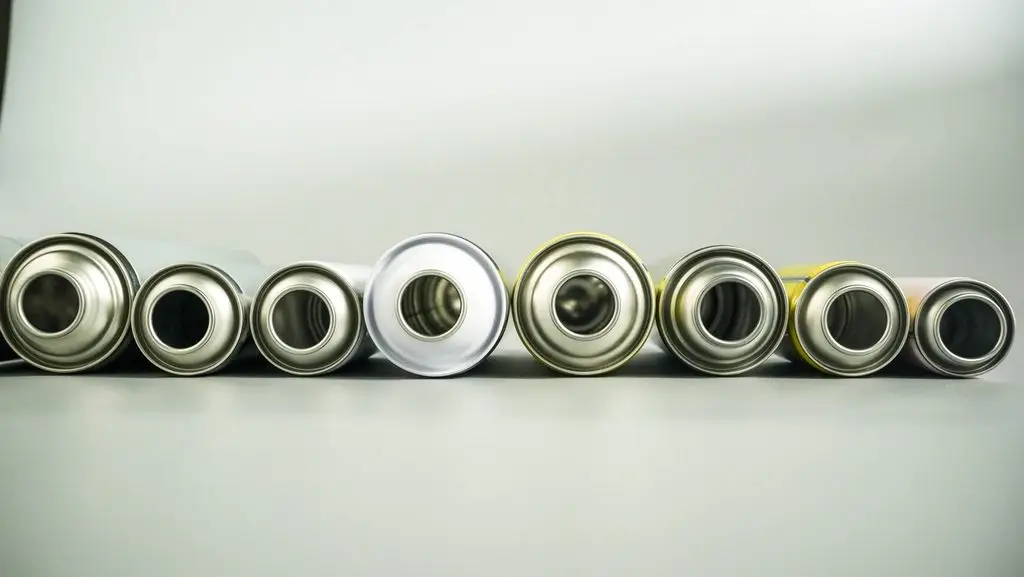
Alcohol-free, natural water-based hairsprays are exploding in popularity across global haircare markets. However, many brand owners and aerosol contract fillers (OEM/ODM) have stumbled into a costly disaster: Just 3 months after landing on retail shelves, reddish rust spots appear around the necked-in area of the tinplate aerosol cans, dispensing contaminated, brownish spray!
For premium haircare brands built on clean formulations and quality, customer complaints of this nature are devastating. Mass product recalls and ruined retail partnerships follow rapidly. R&D and procurement managers often jump to the conclusion that the inner lacquer formulation was wrong. Yet, upon cutting open the failed cans, the body lacquer remains pristine—the severe pitting rust is isolated strictly to the necked-in bend.
At SAILON Aerosol Packaging Lab, our root-cause analyses reveal a hidden industry reality: The culprit isn’t necessarily the lacquer type itself, but microscopic cracks (micro-cracks) torn into the inner lining during the aggressive mechanical necking process. Here is your practical, factory-tested guide to diagnosing and preventing necking corrosion in tinplate aerosol cans.
1. Why Does Rust Attack Specifically at the “Necking Bend”?
To eliminate rust, we must understand the microscopic damage occurring during the necking stage:
- Aggressive Water-Based Formulations: Unlike solvent or high-alcohol formulas that evaporate rapidly, water-based hairsprays contain abundant free water and electrolytes. Water molecules exhibit high penetration capability, aggressively attacking raw steel substrates.
- Mechanical Necking Stress: During aerosol can manufacturing, the top portion undergoes multi-die necking (Neck-in) to form the finished collar. This area experiences intense mechanical deformation and stress.
- Lacquer Elongation Mismatch: Conventional gold lacquers (epoxy phenolic) lack sufficient flexibility. Their elongation rate is lower than that of the underlying tinplate steel. Under sharp bend forces, the dry lacquer film develops invisible micro-cracks, exposing raw steel.
- Electrochemical Pitting Corrosion: Water-based liquid penetrates these microscopic fissures, establishing micro-galvanic cells with the iron substrate. Within 30 to 90 days, intense pitting corrosion forms iron oxide (red rust), contaminating the product.
2. Actionable Pitfall Avoidance: SAILON’s Dual Anti-Corrosion Solutions
To overcome necking micro-cracks, SAILON offers two reliable, production-proven solutions for aerosol brand owners:
Option A: High-Elongation Silicone-Modified Inner Coating
During flat sheet coating, upgrade to Silicone-Modified Polyester/Epoxy coatings. The silicone modification endows the polymer chain with exceptional elasticity, achieving an elongation rate exceeding 20%. Even under severe multi-stage necking deformation, the lining stretches synchronously with the steel without fracturing.
Option B: Post-Necking Repair Spray System
For highly aggressive water-based formulas containing active salts or chelating agents, implement a Post-Necking Repair Spray process after the aerosol can necking and curling stages are complete. This targeted secondary spray covers any micro-stresses or microscopic imperfections, creating an absolute 100% barrier against liquid contact.
3. Necking Anti-Corrosion Performance Comparison Matrix
| Parameter | Standard Water-Based Tinplate Can | SAILON Silicone-Modified / Post-Repaired Can | Direct B2B Client Benefit |
| Necking Lacquer Condition | Micro-cracked, exposed iron base | Continuous, crack-free lining | Complete barrier against water & electrolyte attack |
| Copper Sulfate / Salt Spray Test | Red copper spots in < 24 hrs | 72+ hrs zero rust or copper deposit | Guarantees 2–3 year long-term shelf stability |
| Dispensed Product Clarity | Rust-tinted liquid after 3 months | Clear, pristine spray throughout lifecycle | Zero consumer complaints; brand trust protected |
| Formulation Compatibility | Limited to pure oil/high-alcohol bases | Full support for alcohol-free & high-water formulas | Enables green, clean-label product innovation |
🛠️ Practical QC Tip: 5-Minute Copper Sulfate (CuSO4) Micro-Crack Test
The Challenge: Micro-cracks are invisible to the naked eye. Waiting 90 days for shelf testing is too slow. How can your QC team detect cracks before mass filling?
SAILON Lab Testing Protocol:
- Cut open the necked-in shoulder section of an empty tinplate aerosol can using shears.
- Submerge the specimen in a 10% Copper Sulfate (CuSO4) aqueous solution for 5 minutes.
- The Science & Result: Copper ions displace iron on exposed raw metal, but will not react with continuous lacquer. If micro-cracks exist, bright red metallic copper dots instantly deposit along the crack lines. If the coating is intact, zero copper deposits appear!
4. Frequently Asked Questions (FAQ)
Q1: Does upgrading to SAILON high-elongation silicone coating significantly increase per-can packaging cost?
SAILON Expert Answer: The cost increment per can is minimal. Compared to the massive financial loss of product recalls, dumped inventory, and brand damage, investing in specialized necking anti-corrosion inner lining delivers an outstanding ROI.
Q2: How do we determine which solution fits our specific hairspray formula?
SAILON Expert Answer: Corrosion prevention shouldn’t rely on guesswork. SAILON provides comprehensive Coating Compatibility & Accelerated Aging Tests. Send us a small sample of your formulation, and our engineers will perform current-porosity and electrochemical testing to recommend the exact inner lacquer specification.
Q3: Why choose customized tinplate aerosol cans over aluminum cans for water-based formulations?
SAILON Expert Answer: Tinplate aerosol cans offer superior pressure resistance, structural strength, and cost competitiveness. With SAILON’s advanced necking anti-corrosion technology, tinplate cans deliver corrosion resistance equal to aluminum while reducing your overall packaging procurement costs by 15%–25%.
📩 Developing a New Water-Based Hairspray or Cleaning Spray?
Water-based, clean-label formulations are the future of aerosol personal care, but don’t let invisible micro-cracks sabotage your product launch. SAILON provides advanced porosity testing and specialized necking anti-corrosion tinplate aerosol cans to protect your brand.
Contact the SAILON Aerosol Engineering Team today for free inner lacquer compatibility testing and anti-corrosion test sample cans!