

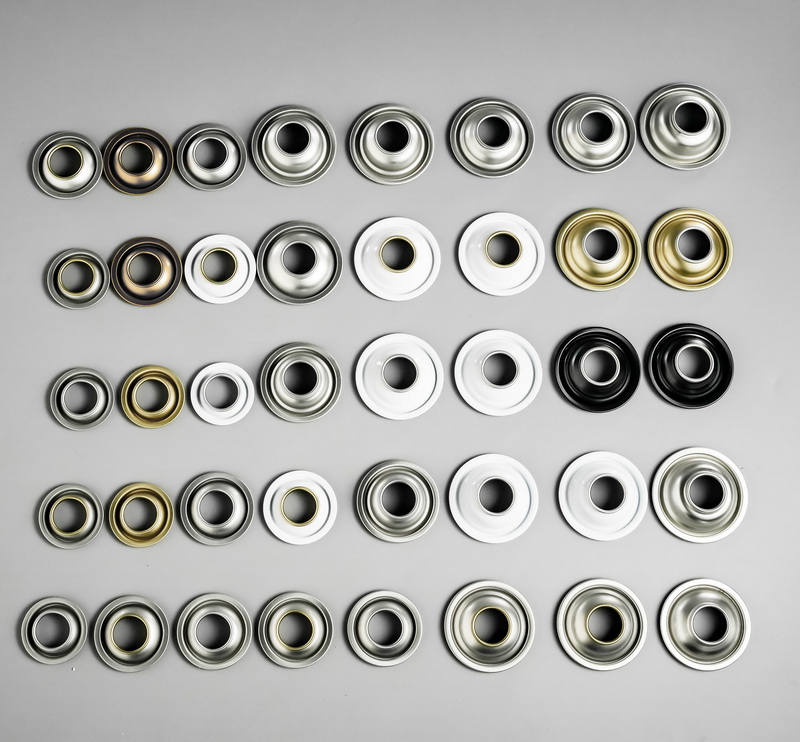
Driven by both consumption upgrading and environmental policies, tinplate aerosol cans are rapidly expanding from industrial packaging into the food industry. According to the latest report from Hengce Consulting, the global tinplate packaging can market reached $17.03 billion in sales in 2024, with food applications accounting for the largest share. It is projected that demand in the food sector will grow at a compound annual rate of 9.4% from 2025 to 2031. This packaging form, which combines high sealability, strong environmental friendliness, and customization flexibility, is redefining packaging standards in segments such as coffee, baking, and pre-cooked meals.
Scene Expansion: Revolutionizing Food Packaging from Dining Tables to Outdoor Settings
Tinplate aerosol cans have achieved full-scene coverage in the food sector, with their core advantages precisely matching consumer needs in various scenarios:
1. Coffee Sector: A “Fresh Extraction Revolution” with Nitrogen Preservation
“Press the nozzle for 3 seconds, and the atomized coffee powder blends directly into hot water – the taste is almost identical to freshly ground coffee.” A representative from an emerging coffee brand showcased a tinplate aerosol coffee can, which has become a hit product in the market. Such products use high-barrier tinplate cans combined with food-grade inert gas propulsion technology, extending the shelf life of coffee powder to 12 months while completely isolating light and oxygen from damaging the flavor. Japan has launched a two-component separation-type coffee grinding powder aerosol can, which, through the pressure-resistant design of the tinplate can (withstand pressure up to 120 PSI), achieves independent storage of coffee powder and flavoring agents for on-demand mixing.
2. Baking Scenes: A “Kitchen Essential” with Precise Dosage Control
The rise of the home baking market has driven a surge in demand for tinplate aerosol cans. A Zhejiang-based food company uses customized tinplate aerosol cans for its baking oil spray products. Featuring a 45° angled nozzle design for precise spraying, the cans’ inner FDA-certified epoxy coating ensures oil does not come into contact with the metal, preventing odors. Data shows that the repurchase rate of such packaged products is 22% higher than that of traditional plastic bottle packaging, primarily because the sealability of tinplate cans extends the shelf life of oil sprays from 6 months to 18 months.
3. Pre-cooked Meals and Functional Foods: A “Trust Carrier” for Safety Compliance
For products such as pre-cooked meal seasonings and functional nutritional sprays, the safety advantages of tinplate aerosol cans are particularly prominent. A 52mm-diameter tinplate aerosol can used by a pre-cooked meal enterprise complies with GB 4806.1-2016 (National Safety Standard for Food Contact Materials), with heavy metal migration strictly controlled to ≤0.01mg/kg for lead and ≤0.005mg/kg for cadmium, fully meeting the “ready-to-eat” safety requirements for pre-cooked meals. In the functional food sector, the light-blocking property of tinplate protects vitamin-based ingredients from oxidation, increasing the retention rate of active ingredients in nutritional sprays by 30%.
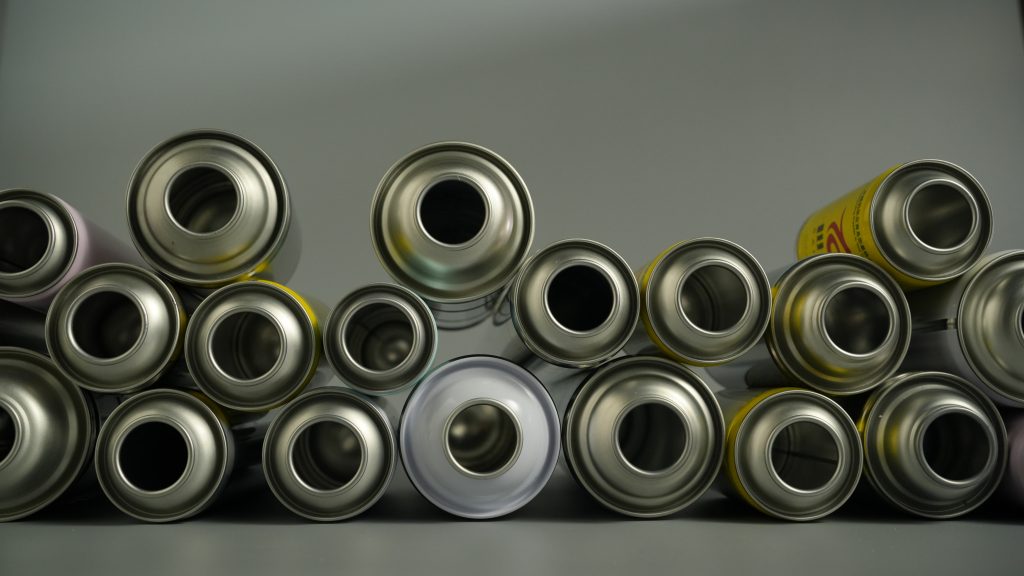
Technical Core: Dual Breakthroughs in Safety and Environmental Protection
The rapid popularity of tinplate aerosol cans in the food sector stems from targeted upgrades in material technology and production processes:
1. Food-grade Safety Barriers
All tinplate aerosol cans in contact with food adopt a three-layer safety design: the inner layer uses a food-grade epoxy phenolic resin coating with a thickness of ≥8μm, which remains intact after 48 hours of xylene immersion, effectively isolating the contents from the metal can body; the can body uses 99.9% pure tin-plated steel with a coating of ≥5.6g/m², showing no perforation corrosion after 480 hours of salt spray testing; the valve system uses food-grade silicone, with a leakage rate of ≤1×10⁻⁶ Pa·m³/s, far exceeding industry standards. These designs enable products to pass international authoritative certifications such as FDA and EFSA, adapting to global market needs.
2. Full-life-cycle Environmental Advantages
The sustainability of tinplate materials creates a competitive edge in food packaging: its recycling rate reaches 95%, with zero performance degradation after recycling. It can be melted and reused over 10 times, consuming 35% less energy and reducing carbon emissions by 40% compared to aluminum can production per ton. Leading domestic enterprises have fully adopted chromium-free passivation technology and water-based coatings, reducing VOC emissions by 90%, fully complying with China’s GB/T 38053-2024 environmental standards and the EU’s PPWR regulations. After switching to tinplate aerosol can packaging, one brand obtained the “Green Food Packaging Certification” due to its environmental attributes, increasing its premium space by 15%.
3. Customized Process Adaptability
The process flexibility of three-piece tinplate aerosol cans perfectly matches the diverse needs of the food industry: they can be customized to any diameter from 45-70mm and capacities from 200-1000ml, adapting to full-spec products from portable coffee sprays to family-sized baking oil sprays; the can body supports UV printing, matte frosting, and other processes, combined with customizable nozzles (e.g., quantitative spraying, mist/stream switching), enhancing product recognition and user experience. A 330ml mini tinplate coffee can developed by an enterprise for outdoor scenarios, with a necked-down straight-body design, reduces weight by 18% and has become a popular camping gear item.

Corporate Practice: 27 Years of Customization Experience Empowers Food Brand Upgrades
“The core of food packaging is ‘safety + experience,’ and the technical characteristics of tinplate aerosol cans just meet both,” said the technical director of SAILON , which has 27 years of experience in tinplate aerosol can R&D. The company has developed exclusive solutions for food-grade aerosol cans:
- Full-spec Customization: Covering diameters of 45/52/57/60/65/70mm, supporting 7-day rapid prototyping, and adapting to 12 food scenarios including coffee, baking, and pre-cooked meals;
- Compliance Assurance: Establishing 12 quality inspection processes, with full traceability from base material procurement (using Baosteel’s first-grade tinplate) to finished product delivery, passing 16 domestic and international certifications such as ISO 15750 and GB 13042-2023 (National Standard for Aerosol Cans in China);
- Environmental Upgrades: Adopting bio-based linings and BPA-free coatings, reducing carbon emissions by 2.5 tons per 10,000 food-grade aerosol cans produced, helping brands achieve sustainable development goals.
It is reported that the company’s recently mass-produced nitrogen-preserved aerosol can, developed in cooperation with a leading coffee brand, sold over 500,000 units in its first month on the market. Meanwhile, breakthroughs have been made in the R&D of sterile tinplate aerosol cans for the functional food sector, with samples expected to be launched in the first quarter of 2026.
Future Trends: Lightweight and Intelligence as New Directions
As the food industry continues to upgrade, tinplate aerosol cans are moving toward “lighter and smarter” development. Industry experts predict that through optimization of wall-thinning and stretching technology, the can body thickness is expected to be reduced from the current 0.23mm to 0.18mm, further reducing costs while maintaining 12Bar pressure resistance; smart cans integrated with NFC chips will enable product traceability and dosage reminder functions, first landing in the high-end food sector.
In an era of increasingly stringent food safety and environmental demands, tinplate aerosol cans, with their technological iteration and scene adaptability, are becoming a core choice for food packaging upgrades. For food enterprises pursuing quality and sustainability, customized tinplate aerosol cans are not just packaging carriers but also important drivers of brand value enhancement.