

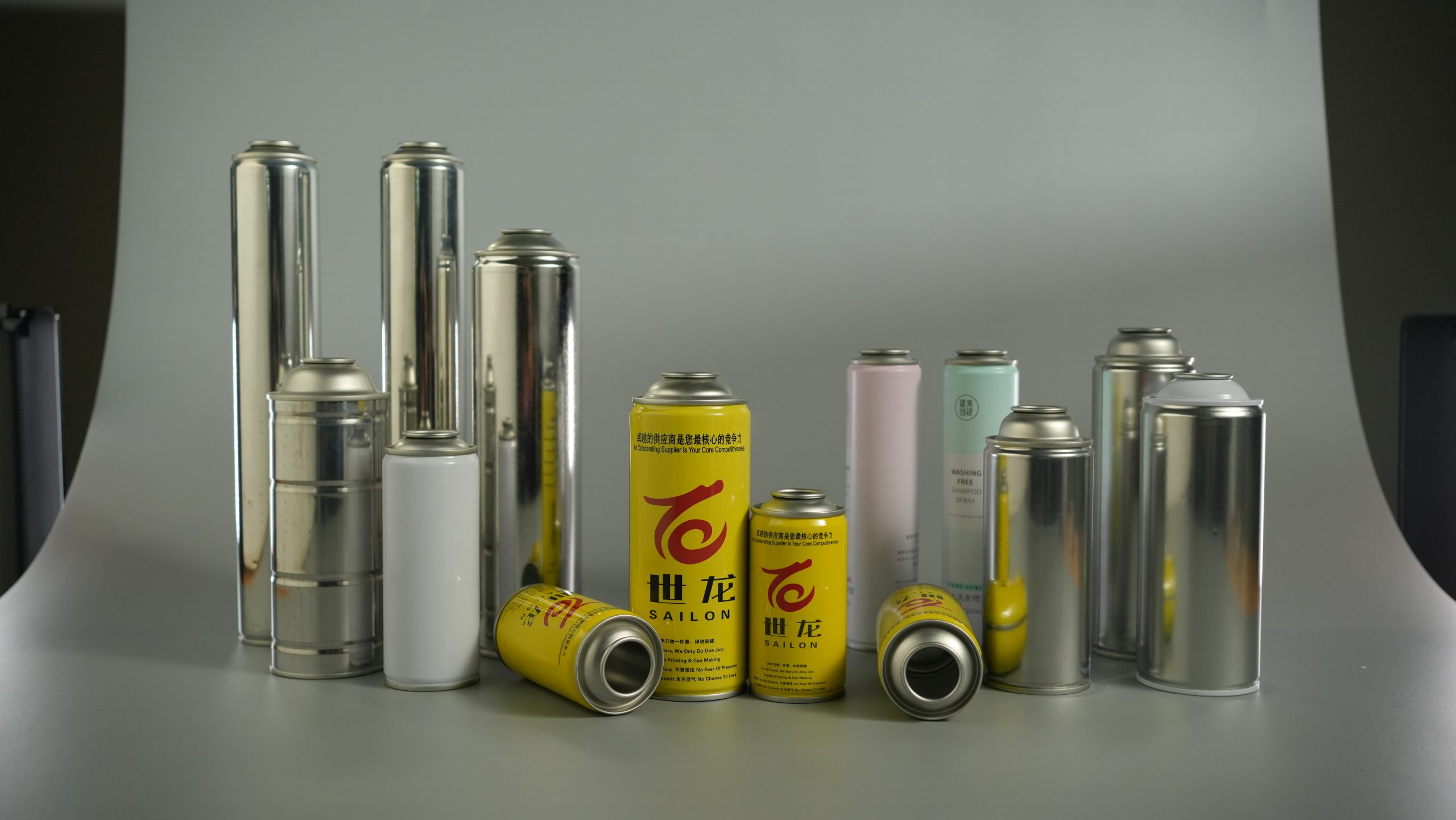
In the field of aerosol packaging manufacturing, the structural design of tinplate cans is inseparable from the adaptation of propellants. Different gas media not only change the atomization effect of spray, but also directly determine the wall thickness standard, internal coating formula and valve sealing component selection for custom aerosol tinplate cans. With years of deep engagement in aerosol can R&D and production, SAILON has dealt with a large number of actual working condition cases. Many manufacturers only focus on appearance and capacity, ignoring hidden production troubles such as tank deformation, interface leakage and shortened shelf life caused by physical properties of propellants.
Gas propellants are mainly divided into liquefied and compressed categories. LPG and DME belong to liquefied gas with gas-liquid coexistence at room temperature, while compressed air and nitrogen are constant-pressure compressed gas. The essential difference in physical characteristics sets completely different technical thresholds for the engineering design of tinplate cans. Liquefied gas can maintain long-term stable saturated vapor pressure inside the tank with minimal pressure fluctuation; compressed air pressure will drop sharply as internal materials are consumed. Repeated pressure changes will continuously pull the metal material of the can body, putting forward higher requirements for the anti-fatigue deformation ability of the tank.
【Quick Preview of Core Selection Logic】
- LPG Solution: Focus on cost-effectiveness, 0.19-0.20mm wall thickness + Nitrile rubber gaskets, suitable for conventional daily chemical and auto maintenance tinplate cans.
- DME Solution: Focus on chemical compatibility, 0.20-0.21mm wall thickness + epoxy phenolic double-layer internal coating + Viton gaskets, customized for DME dedicated tinplate cans.
- Compressed Air Solution: Focus on mechanical strength, 0.22mm+ thickened wall + high-strength dome bottom structure + high-pressure resistant valves, suitable for high-pressure compressed air aerosol cans.
Adaptation Standard of Different Propellants and Tinplate Can Wall Thickness
The wall thickness of the can is not an optional parameter. It needs to be comprehensively determined combined with medium saturated vapor pressure, chemical corrosion resistance, burst pressure limit and curling reinforcement technology of tinplate cans. With the current industry commonly used cold-rolled tin-plated sheet and triple curling sealing process, there are clear technical ranges for the optimal wall thickness configuration corresponding to different propellants.
| Propellant Type | Standard Test Temperature & Pressure | Recommended Can Wall Thickness | Supporting Process Reinforcement Configuration | Adapted Custom Can Type |
| LPG Liquefied Petroleum Gas | 25℃ 0.4–0.8MPa | 0.19mm–0.20mm | Single-layer conventional curling, ordinary epoxy internal coating | Daily chemical spray, car maintenance tinplate cans |
| DME Dimethyl Ether | 25℃ 0.5–0.9MPa | 0.20mm–0.21mm | Double-layer epoxy phenolic anti-corrosion internal coating, thickened curling | DME dedicated tinplate cans, industrial solvent aerosol cans |
| Compressed Air/Nitrogen | Initial 1.2–1.6MPa Dynamic pressure drop | 0.22mm and above | High-strength dome bottom cover, overall can body reinforcement | high-pressure compressed air aerosol cans, high-pressure dust removal spray cans |
Compared with LPG, a “self-regulating pressure” medium, compressed air, as a “constant-volume compression” medium, its biggest packaging challenge lies in the negative impact of pressure drop on atomization quality and the continuous test on the tensile strength of the can body. The tolerance of metal plates to static stable pressure and dynamic alternating pressure is completely different. The stable pressure of LPG only makes the can body bear force evenly, while the repeated pressure rise and fall of compressed air will accumulate micro-deformation of the metal, and problems such as bulging and curling cracking will appear over time. In the simulation test of new product working conditions, SAILON found that ordinary tinplate cans with 0.20mm wall thickness would undergo irreversible deformation after hundreds of cycles under continuous compressed air pressure cycling test. After thickening to 0.22mm and matching with high-strength bottom cover structure, the overall anti-fatigue performance is more than doubled.
Key Points of Valve and Sealing Ring Material Adaptation
Valve aperture, valve body structure and sealing gasket material are the key to determine the leakage resistance of tinplate cans. Especially DME medium has strong molecular penetration and swelling characteristics, and ordinary rubber seals are prone to expansion, softening and failure and falling off. We sorted out the adaptation key points of commonly used rubber materials in the industry for quick selection:
- Nitrile rubber: Suitable for LPG and conventional compressed air working conditions with cost performance, unable to resist strong swelling corrosion of DME
- Neoprene rubber: Excellent weather resistance, suitable for environment with variable high and low temperature, low compatibility with DME medium
- Viton rubber: Outstanding chemical corrosion resistance and swelling resistance, standard sealing material for DME dedicated tinplate cans
- EPDM rubber: Good sealing stability suitable for high-pressure compressed air working conditions, not suitable for liquefied oil and gas media
In actual production, many manufacturers fall into a misunderstanding: only replace the propellant while retaining the original valve and sealing ring configuration. The molecular permeability of DME is much higher than that of LPG. It will slowly penetrate into the rubber interior to change the molecular structure, expand and deform the gasket volume, and naturally form gaps and air leakage at the originally tightly sealed tank mouth. When SAILON customizes DME dedicated tinplate cans for customers, it will synchronously match customized viton rubber sealing components with solvent-resistant internal coating to avoid leakage risks from both structure and material.
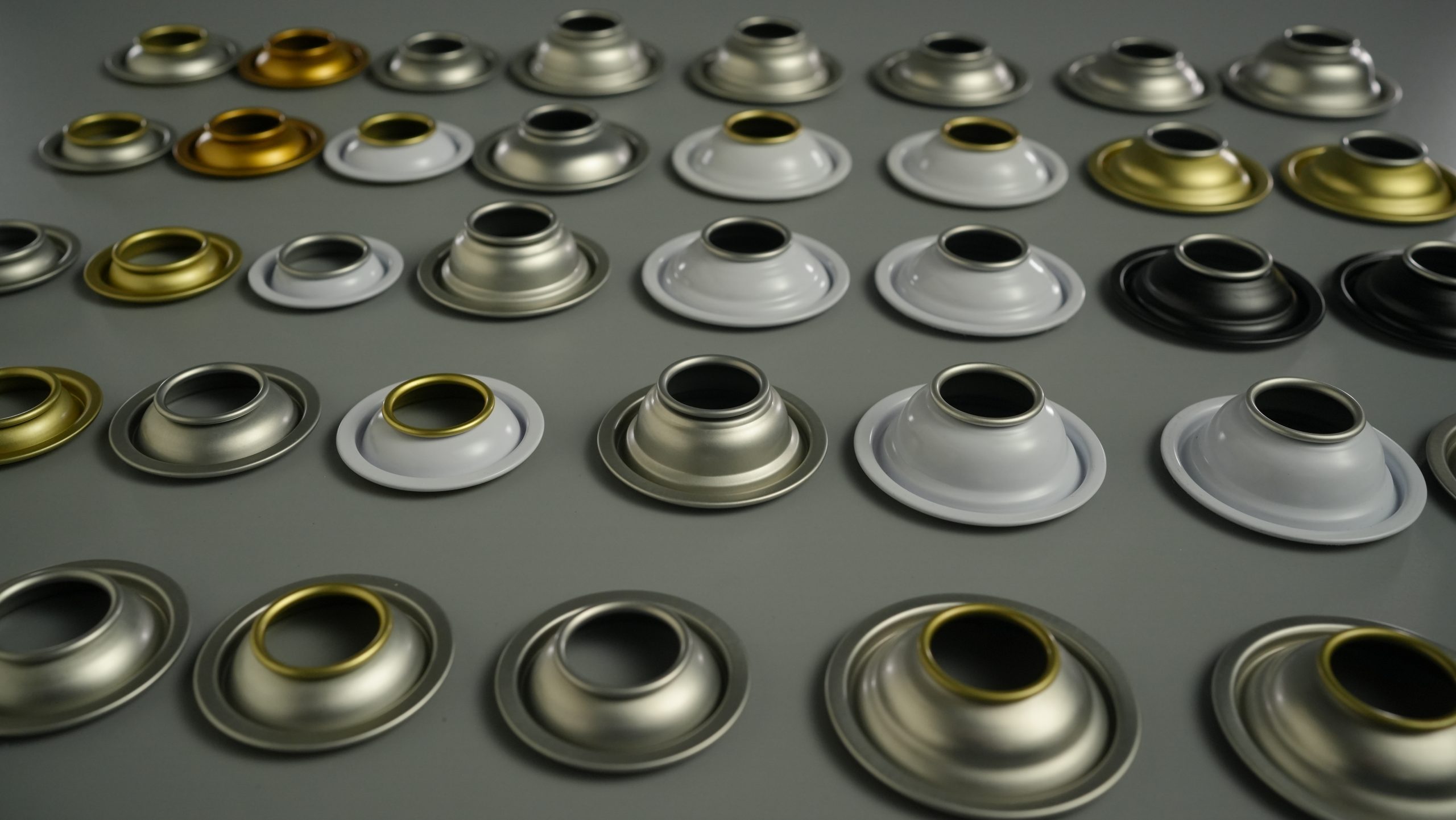
Common Industry Q&A
Q1: Why do original intact tinplate cans leak after switching the propellant to DME?
This is caused by the high polarity and strong solubility of DME. The swelling rate of ordinary nitrile rubber in DME can reach more than 30%, directly leading to air tightness failure. At the same time, DME will corrode ordinary water-based internal coatings, gradually erode the metal layer of the can wall, and internal rust will occur after long-term storage. Simply replacing with Viton rubber seals and upgrading to epoxy phenolic double-layer internal coating can completely solve such problems. SAILON will avoid such hidden dangers in advance when customizing DME dedicated tinplate cans.
Q2: What are the differences in pressure resistance test standards between high-pressure compressed air aerosol cans and liquefied gas tinplate cans?
Liquefied gas mainly adopts static pressure resistance test with the industry standard burst pressure reaching 1.4MPa; compressed air cans need to add dynamic pressure cycle aging test. Not only the static burst pressure must reach more than 2.0MPa, but also simulate the long-term repeated pressure relief and pressurization scenarios to detect the durability of can curling and bottom cover interface. All high-pressure compressed air aerosol cans of SAILON will complete multiple rounds of cyclic pressure sampling inspection before leaving the factory, strictly following the latest current industry test specifications.
Q3: Can we reduce the wall thickness procurement standard of tinplate cans by adjusting inflation pressure?
Properly reducing inflation pressure can indeed reduce the pressure load of the tank, but it will directly damage the spray atomization effect, jet range and uniform mist output, which is not worth the loss. A more stable way is to select SAILON high-strength refined tinplate base material, optimize the tank structure and curling process within the standard wall thickness range, and meet the safety requirements of high-pressure working conditions without blindly thickening the plate.
The safety and durability of aerosol cans never depend on the compliance of a single component, but the overall coordination of tinplate can wall thickness, internal coating technology, propellant medium and valve sealing system. SAILON focuses on all kinds of custom aerosol tinplate cans, which can one-to-one match the tank wall thickness, coating formula and valve accessory solutions according to different working conditions of LPG, DME and compressed air. It fits the actual use needs of different production scenarios and avoids common production problems such as tank deformation, leakage and corrosion from the source.