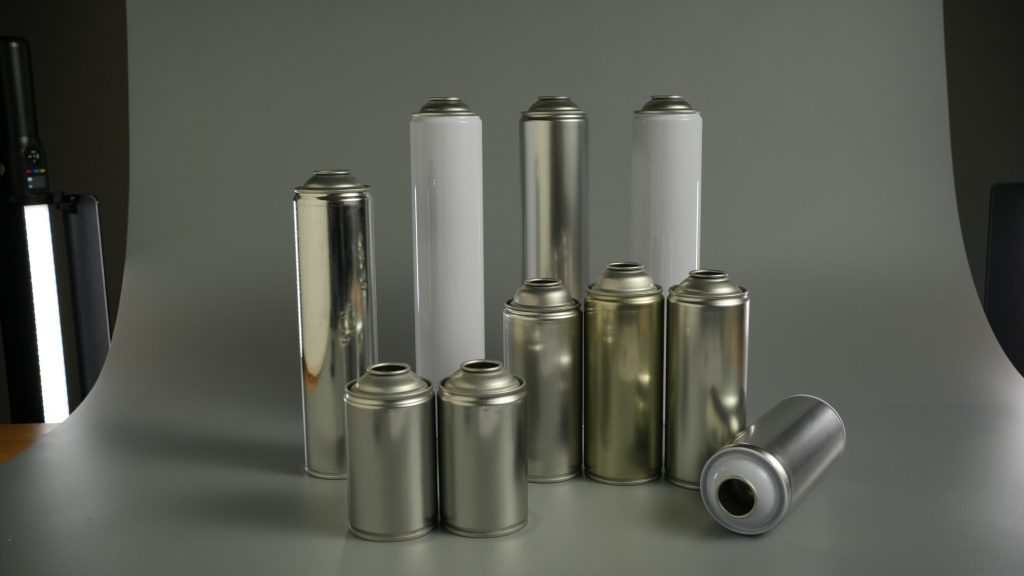

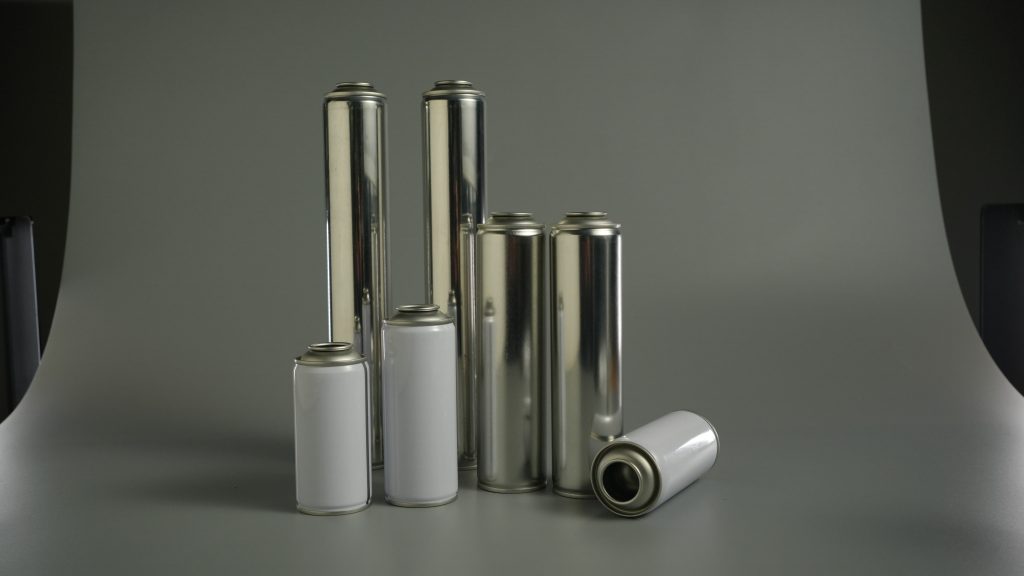
On a weekend afternoon at a city street corner, an artist squats in front of an abandoned wall, busy at work—what he holds in his hand isn’t an ordinary plastic aerosol can, but a custom tinplate aerosol can printed with an exclusive design. When he presses the nozzle, a fine mist of paint adheres evenly to the wall, and in less than half an hour, the outline of a cat leaping off the wall takes shape. Today, spray paint art has long broken free from the label of “niche graffiti” and become a common form of expression in streets, galleries, and even home decor. The core tool that carries this creativity—the aerosol can—has also evolved from a “one-size-fits-all” product to a custom tinplate version that better meets creative needs, giving artists more freedom to create on different surfaces like canvases, walls, and cars.
The reason spray paint art has gained rapid popularity lies in its ability to break the constraints of traditional art, and custom tinplate aerosol cans take this “freedom from constraints” to the next level. Compared to traditional painting, which relies on specialized tools and materials, custom tinplate aerosol cans offer “all-around adaptability”: whether it’s a rough concrete wall, a smooth metal car exterior, or a textured wooden canvas, it can adjust the internal pressure and nozzle type to ensure the paint adheres firmly. For example, when refinishing old furniture, a 150ml small tinplate can with a 0.8mm fine-mist nozzle can accurately outline the carved details of the furniture; when painting a large outdoor mural, a 600ml large-capacity tinplate can with a wide-spray nozzle reduces the need to change cans, making large-area coloring more efficient. The table below clearly shows the difference in creative adaptability between custom tinplate aerosol cans and ordinary aerosol cans:
| Creative Scenario | Advantages of Custom Tinplate Aerosol Cans | Limitations of Ordinary Aerosol Cans | Practical User Feedback |
|---|---|---|---|
| Large outdoor murals | 0.25mm thick can body (shock-resistant), heat-insulating coating (prevents paint deterioration) | Plastic cans deform easily after sun exposure; paint thins | “Painted outdoors for 3 days, the tinplate can never leaked” |
| Small item customization (skateboards/helmets) | 4.2cm narrow can body (easy one-handed use), anti-fingerprint coating | Thick/heavy can body (causes hand fatigue); easy to get oily | “Held the can steadily with one hand while painting skateboards; no paint stuck to the can” |
| Long-term storage (after color testing) | Double-sealing process; paint doesn’t clump for 12 months | Poor sealing; paint solidifies after 3 months | “The paint I left last year still works like new” |

Beyond adaptability, the visual appeal of spray paint art also benefits from custom tinplate aerosol cans. They can hold a richer color palette—from matte Morandi tones to metallic golds—all of which can be sprayed evenly thanks to stable internal can pressure. When creating an indoor decorative painting, you can first use a tinplate can with a fine-mist nozzle to paint a gradient starry background, then switch to a wide-spray nozzle to lay a soft base color, and finally use an ultra-fine nozzle to add highlights to the stars. You don’t need to change cans frequently during the process, and the color transition is smoother. This “all-in-one can” feature lets even beginners easily create layered works.
If you’re new to spray paint art and want to start with custom tinplate aerosol cans, keep these practical tips in mind:
- Choose the right can type before starting: For color testing or small-scale works, a 100-200ml small-capacity tinplate can is enough to avoid paint waste; for large-area creations, go straight for a 500-600ml large-capacity can with an adjustable nozzle (0.5-2mm)—it works for both fine lines and large-area coloring.
- Master “distance control”: Many beginners hold the can too close to the wall at first, leading to paint buildup and clumping. Practice with waste cardboard: hold the tinplate can 15-20cm away, move it steadily with your wrist, start with straight lines, then try curves. Once you get used to it, you’ll be able to control the paint thickness accurately.
- Don’t overlook safety details: While tinplate cans are safer than plastic cans (less likely to crack and leak), always work in a well-ventilated area and wear a mask and thin gloves—especially when using metallic paints. Even though custom tinplate cans reduce paint evaporation, protective measures will keep you more at ease.
In fact, the charm of spray paint art has never been about “complex techniques,” but about “the freedom to turn ideas into images.” Custom tinplate aerosol cans are like a “reliable assistant” for artists—with their durable material, flexible adaptability, and ability to hold rich colors, every press of the nozzle gets closer to the vision in your mind. Whether it’s an impromptu creation on a street wall or a carefully polished decorative painting in a studio, choosing the right custom tinplate aerosol can will let your creativity flow more smoothly.