

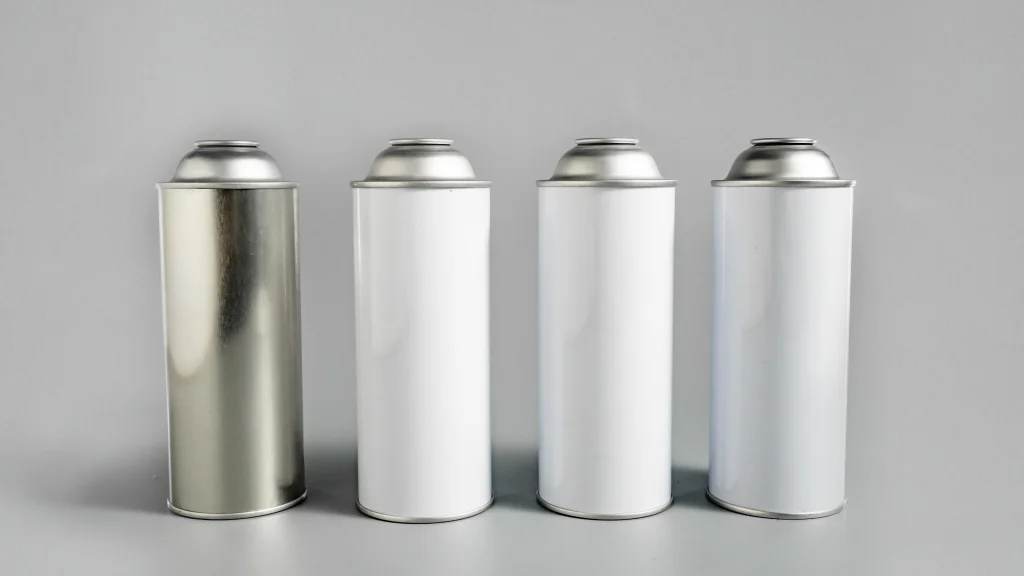
Opening a shipping container only to find rust spots creeping along the seams of your aerosol tin cans is every procurement manager’s worst nightmare. Cans that passed factory inspection with flying colors often arrive at tropical ports with unsightly corrosion after just over a week of transit across equatorial shipping lanes. For businesses scaling custom aerosol packaging, this translates directly to rejected shipments, wasted inventory, and strained client relationships.
With extensive experience in metal packaging structure and surface protection, SAILON has untangled the corrosion chain in high-temperature, high-humidity marine environments. Here is a field-tested, quantifiable anti-rust execution standard covering everything from base materials and coating cures to container-level moisture control.
I. The Anatomy of “Container Rain”: Why Short Voyages Cause Severe Corrosion
Many attribute transit rust simply to “high humidity,” but few examine the destructive physics inside a sealed container during a maritime journey—a phenomenon widely known as Container Rain.
- The Thermal Swing (“Container Rain”): As vessels traverse equatorial waters, intense daytime solar radiation pushes internal container temperatures past 50°C. Nighttime ocean cooling rapidly drops the container walls’ temperature. This violent diurnal temperature delta forces water vapor trapped inside to condense onto the ceiling and sidewalls, continuously raining down droplets onto stacked tinplate cans and soaking their exterior varnish.
- Electrochemical Micro-Batteries on Cut Edges: A more insidious threat lurks in the can’s physical geometry. Stamping top and bottom ends exposes bare iron along the cutting edges without tin plating. Under high humidity and trace airborne salt, these raw edges form microscopic galvanic cells with the ambient air, driving electrochemical corrosion inward from the cut. This is why rust almost always originates at the double seam.
- Varnish Porosity: Standard economical transparent varnishes leave microscopic pores invisible to the naked eye after curing. Sustained vapor infiltration eventually breaches these pores, creating scattered pitting on the can body that expands into visible rust patches over time.
II. Factory-Floor Material and Process Upgrades
Relying solely on end-of-line packaging to rescue substandard cans is a losing battle. True corrosion resistance starts on the production line:
1. Tiered Tinplate Selection
Standard domestic distribution typically relies on $2.8/2.8\text{ g/m}^2$ double-sided tinplate—adequate for dry climates, but helpless against persistent tropical moisture. For Southeast Asian routes characterized by year-round heat, rainfall, and high salinity, SAILON recommends upgrading the exterior tin coating weight to $5.6/5.6\text{ g/m}^2$. This thicker tin layer acts as a dense barrier, drastically delaying direct moisture contact with the iron substrate at an optimal cost-to-performance ratio.
2. Exterior Weather-Resistant Varnish & Curing Control
- Upgrade Varnish Grades: Ditch generic acrylic varnishes in favor of outdoor-grade polyester or modified acrylic coatings with superior heat, humidity, and salt-spray resistance.
- Lock in Film Thickness: Strictly control curing oven temperatures and line speeds to maintain a dry film thickness betweenweimi 3μm and 5μm. Too thin causes excessive micro-pores; too thick leads to brittleness and chipping.
- Seam Sealing Additives: Blend liquid-phase rust inhibitors directly into the sealing compound used in the double seams. This fills micro-crevices created during crimping, shutting out moisture ingress.
3. Physical Structural Optimization Checklist
- Full-Curl Design: Adopt full-curl stamping profiles for top and bottom ends to minimize the exposed surface area of bare iron edges.
- Automated Edge Spraying: Integrate an automated edge-spray workstation during forming to coat all raw cutting edges with a specialized anti-rust sealing oil, forming a localized hydrophobic barrier.
- Optimized Seaming Pressure: Slightly increase seaming pressure to ensure the sealing compound is evenly distributed, reducing water-trapping gaps.
- Complete Cooling Prior to Packing: Ensure finished cans are thoroughly cooled down before packaging to prevent residual heat from generating internal condensation inside sealed poly bags.
III. Quantified Packaging and Container Loading Standards
Once engineering upgrades are in place, post-production packaging and container stowage determine how long the anti-rust defense holds.
- VCI Anti-Rust Bags Over Standard PE Bags: Ditch standard plastic bags. Seal entire pallet loads of cans inside VCI (Volatile Corrosion Inhibitor) bags. Slow-release vapor molecules saturate the enclosed space, depositing an invisible, monomolecular passivating layer on the metal surface that chemically halts oxidation.
- Moisture-Barrier Pallet Liners: Lay poly-coated moisture-barrier kraft paper completely flat across the base of wooden pallets. This prevents ambient moisture from the timber from migrating upward, safeguarding the bottom layer of cans from localized point corrosion.
- High-Absorption Container Desiccants: Discard random desiccant placement. Use high-efficiency calcium chloride desiccant packs hung at a standard rate of no less than 1.5kg per cubic meter of container space. Prioritize hanging them along the interior side corrugations and top cargo gaps to aggressively trap free water vapor.
IV. Tiered Marine Anti-Rust Solution Matrix for Southeast Asia
Buyers can select the appropriate anti-rust execution package tailored to transit duration and climate conditions:
| Solution Tier | Comprehensive Packaging Configuration | Effective Protection Span | Target Route & Environmental Fit | Cost Premium |
| Basic Tier | Standard PE bagged + Wooden pallet + Limited silica gel packets | 7 – 10 Days | Short temperate routes, dry regional land-sea transit | Baseline Reference |
| Standard Tier | Pallet-sealed VCI bags + Bottom moisture-barrier paper + Quantitative calcium chloride desiccants | 30 – 45 Days | All Southeast Asian maritime routes, direct to humid ports like Jakarta, Port Klang, Singapore | +3% to +5% |
| Advanced Tier | Heavy-gauge dual-tinplate substrate + Weather-resistant thick exterior varnish + Sealed VCI bags + Outer aluminum foil shroud | 90+ Days | Trans-equatorial ultra-long voyages, multiple transshipments, prolonged port-side outdoor staging | +8% to +12% |
💡 Industry Insight: For Southeast Asian hubs like Jakarta, Port Klang, and Ho Chi Minh City—where goods frequently encounter sudden tropical storms during unlading—the Standard Tier offers the optimal balance of risk mitigation and cost-efficiency.
V. Frequently Asked Questions
Q1: The outer corrugated cartons are heavily molded and damp upon container unlading, but the cans show no visible rust. Do I need to take action?
A: Immediate intervention is mandatory. Moldy cartons indicate that the internal micro-environment humidity has severely breached safe thresholds. Moisture has likely already settled on the can surfaces, even if electrochemical corrosion has not yet formed visible red rust spots. The correct protocol: immediately strip away damaged packaging, move the entire batch to a climate-controlled dehumidified warehouse for air-drying, wipe down the exterior walls with lint-free wipes dipped in high-purity alcohol to remove salt residues and condensation, and repack them using brand-new inner VCI bags and outer boxes to prevent a sudden rust breakout during subsequent storage.
Q2: When running high-volume production, full-curl edge processing slightly increases cycle times. Are there low-cost alternatives?
A: If production line efficiency is a bottleneck, skip full structural modifications and instead add a simplified oil-spray applicator on the end-forming line to spot-spray edge anti-rust oil onto the stamped cut edges. This requires no mold adjustments and adds just a single lightweight spray step, establishing a durable hydrophobic barrier sufficient to resist routine maritime humidity at scale.
Q3: If I am already using VCI anti-rust bags, why do I still need container desiccants?
A: They serve complementary, non-interchangeable functions. VCI bags handle corrosion passivation at the micro-packaging level inside individual pallet wraps. Container desiccants regulate overall relative humidity within the macro container space, suppressing the formation of heavy condensation on the container ceiling that can drip down and saturate outer cartons. Given extreme equatorial temperature swings, combining both is the foolproof strategy for passing customs and client inspections smoothly.
As a dedicated supply chain partner specializing in full-cycle aerosol tin can customization, SAILON treats post-transit product integrity as the ultimate benchmark of quality. From salt-spray testing raw material stock to outfitting shipments with rigorous moisture-proof packaging protocols, we help brands conquer tropical maritime shipping challenges. Contact our engineering team today to match your shipping lane with the right custom protection package.