
Editor’s note: SAILON wrote and published this guide. We build tinplate aerosol cans in Foshan, China, and we ranked ourselves first, which is the claim you should discount. So we left the awkward parts in: the freight math on empty cans, the Section 301 duty line, the valve-cup mismatch that derails first orders, and a real limitation for every American company below. Nine of these ten sources are independent of us. Check our numbers against theirs, then check the other nine yourself.
Short answer: Need 50,000 cans next month? Buy stock from a distributor (#9 or #10). National brand with a filler booked? The US plants (#2–#7) are built for you. Need 200,000–500,000 custom printed 45–70 mm tinplate cans? That is the import gap we work in. Most “top 10” lists mix makers, distributors and contract fillers without saying which is which; this one separates them.
Reviewed November 2026 by the SAILON technical team. Company ownership, plant locations, MOQs and tariff exposure change; we flag the changes we know about and link primary sources where they exist. Verify current terms with each supplier before shortlisting.
Why This List Exists
Most searches for aerosol can manufacturers in the United States end in one of two places: a quote request nobody answers, or a quote for 500,000 pieces when the buyer needed 30,000.
A few groups own the domestic tinplate capacity. A second layer distributes. A third fills finished product. Working out who is on the other end of the email is most of the decision.
We quote against all three constantly, and the failures are boring. Lead time slipping six weeks at the print stage. A gauge quietly dropped from 0.20 mm to 0.18 mm, which is where the burst margin goes.
Ten entries below: nine options serving the US market and us. #6 and #7 belong to the same group; we split them because buyers still search for both names.
How We Evaluated These Aerosol Can Manufacturers and Suppliers
Six criteria, in order. They apply the same way to stock sizes and to custom printed aerosol cans. A supplier who fails the first two cannot recover with price.
| Criterion | Why It Matters |
|---|---|
| Can type and diameter coverage | Straight-wall or necked-in, 45 mm to 70 mm, plus height options. A gap means a second supplier and a second tooling set. |
| Printing and decoration | Color count, registration tolerance, varnish, body debossing. Shelf-facing brands live or die on this line. |
| Coating and internal lining | PVCNI, PFASNI, BPANI or PET laminate, matched to your solvent and propellant. The wrong lining blisters in month six, not at delivery. |
| Seal and pressure integrity | Double-seam dimensions, burst and deformation pressure, valve-cup fit. Most leak complaints start at the seam or the cup. |
| Certification and compliance | ISO 9001, DOT and UN pressure documentation, food-contact lining data. Your filler asks for these before it runs your batch. |
| MOQ, sample time, scheduling | The three numbers that decide whether a project is possible at all. A perfect can with a 500,000-unit floor is not a supplier for a 40,000-unit launch. |
Top 10 Aerosol Can Manufacturers: Quick Comparison
MOQ and lead times are ranges buyers report, not published terms. Two of the ten below are aerosol can suppliers rather than plants, and which one answers your email changes the number.
| Manufacturer | Location | MOQ | Customization | Lead Time | Best For |
|---|---|---|---|---|---|
| SAILON | Foshan, China | 200,000 cans | Full: 45–70 mm, eight-color print | 25–30 days plus ocean | Full-range custom programs |
| Sonoco Products | Hartsville, SC | High, project-based | Size and print, long runs | 10–16 weeks | National brand long runs |
| Crown Holdings | Philadelphia, PA | High, project-based | Heavy decoration | 10–14 weeks | Shelf-led cosmetics |
| Mauser (BWAY) | Atlanta, GA | High, project-based | Lining-first, 202–211 dia. | 8–12 weeks | Industrial formulas |
| DS Containers | Batavia, IL | Project-based | Debossing, wrap graphics | 8–12 weeks | Shelf differentiation |
| Trivium Packaging | Multiple US plants | High, project-based | Print plus coatings | 10–16 weeks | Multi-country launches |
| Trivium (Exal platform) | Youngstown, OH; group HQ Netherlands | Project-based | Shaped aluminum bodies | 8–14 weeks | Premium personal care |
| Spray Products | Warminster, PA | Per filling run | Formula plus fill | 4–8 weeks | No in-house filling line |
| Berlin Packaging | Chicago, IL | Stock, no minimum | Stock only | 3–10 days | Pilots and replenishment |
| Pipeline Packaging | Solon, OH | Low, case-based | Limited, stock items | 1–3 weeks | Delivery-first buyers |
1. SAILON: Best for 45–70 mm programs under 500,000 cans
Location: Foshan, Guangdong, China
Specialty: Tinplate cans, 45–70 mm, straight-wall and necked-in, printed in house
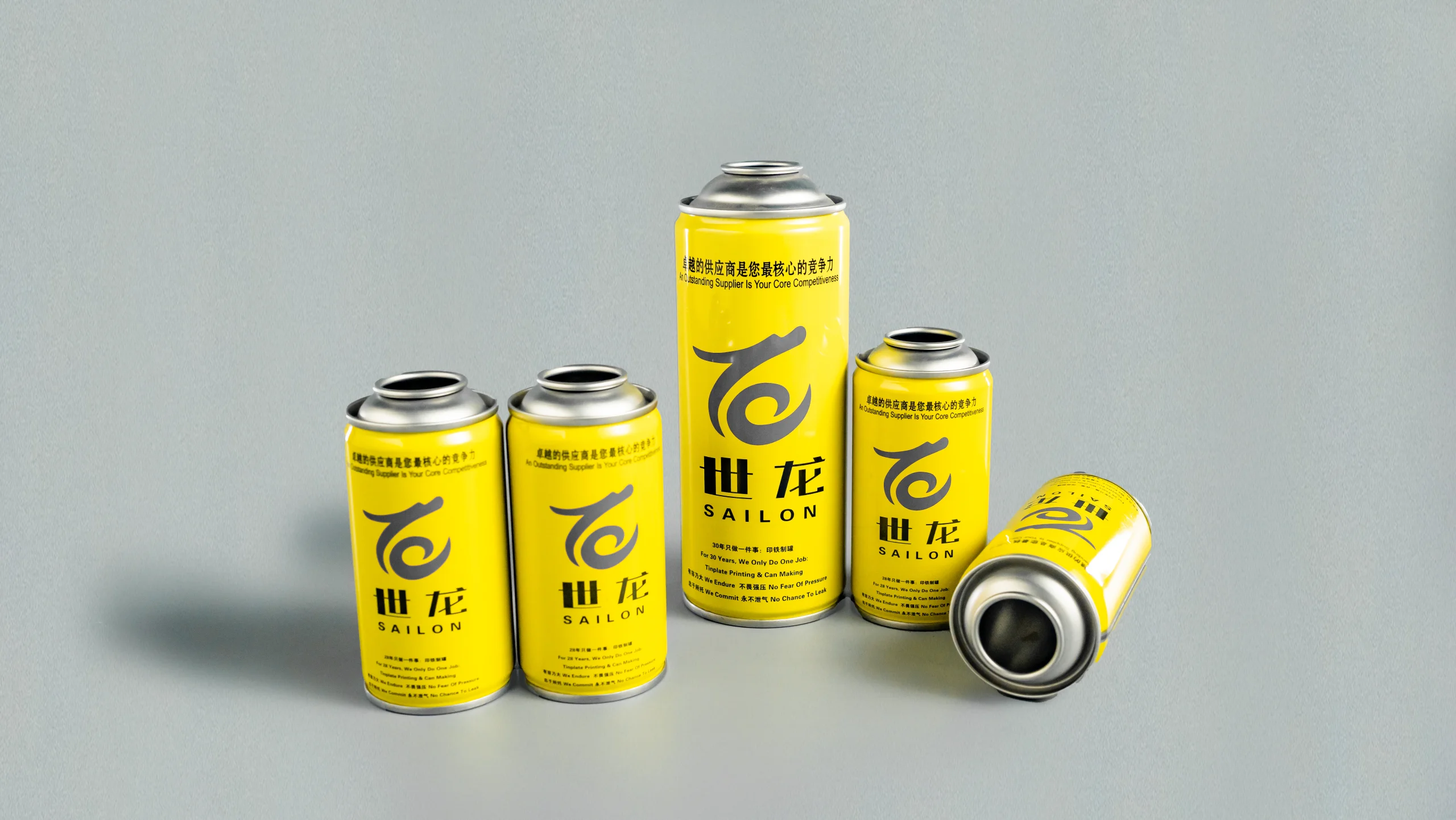
We make one product. Bodies from 45 to 70 mm in both profiles, with cone, dome, ends and valve fitments on one order instead of four. Printing runs in house, so an eight-color job does not queue behind another plant.
- 400 million cans a year, 50,000 m² plant, established 2007, 15 patents
- Both body types across 45–70 mm, ends and valves from one source
- Exports to 31 countries; automotive, household and personal care specs on file
Ideal for: brands needing 200,000 to 500,000 printed cans no US plant will schedule.
Project fit: 200,000-can minimum, 25 to 30 days in production, physical proof before the press runs. See the 45–70 mm can range and request a factory quote. If the cans must be in Ohio in three weeks, a domestic stockist like #9 or #10 is the faster path.
2. Sonoco Products: Best for national brand long runs
Location: Hartsville, SC
Specialty: Two- and three-piece steel aerosol cans, straight and necked
The largest domestic footprint here, with roughly a dozen US plants behind it. That matters less for price than continuity: when one line goes down, another carries the schedule.
- Capacity for a national launch and the emergency reorder after it
- Straight-wall and necked-in tooling across the standard diameters
- Redundant plants, so one outage does not stop your filling line
Ideal for: brands shipping several hundred thousand units per SKU per year.
Limitation: volume is the gate. A 40,000-can run is not what a plant built for millions schedules, and plate charges assume long runs.
3. Crown Holdings: Best for cosmetics that sell on shelf presence
Location: Philadelphia, PA
Specialty: Three-piece straight-wall steel cans with heavy decoration
Crown’s reputation rests on decoration as much as metal. If your can holds five or six colors and has to survive a retail shelf, this is the printer to quote. Straight-wall also over-prints cleanly.
- Print quality that treats the can as the marketing, not the container
- Multiple diameters for personal care and household sizes
- Familiar to the large contract fillers, which shortens the handoff
Ideal for: established brands launching a line extension with media money behind it.
Limitation: three-piece straight-wall is the specialty. If your design needs a pronounced neck for a slim actuator, confirm the profile before artwork approval.
4. Mauser Packaging Solutions (BWAY): Best for industrial formulas
Location: Atlanta, GA
Specialty: Three-piece steel cans, 202–211 diameter, specialty internal linings
Where the chemistry gets hard, Mauser is the name that comes up. PVCNI, PFASNI and BPANI linings, a 20% recycled content option, and data showing which survives your solvent package. Send them the propellant blend along with the solvent, because the answer moves when the propellant does.
- Linings for solvent-heavy, water-based and high-pH formulas
- 202–211 body diameters, which covers most industrial work
- Compatibility documentation your filler can actually file
Ideal for: industrial products where the formula is the hard part.
Limitation: their strength is chemistry, not decoration. If the selling point is five-color art and a soft-touch overprint, this is the wrong plant, and the order size assumes an industrial quantity.
5. DS Containers: Best for shelf differentiation
Location: Batavia, IL
Specialty: Two-piece PET-laminated steel cans with no side seam
DS laminates steel with PET and forms the body without a weld seam, the structural difference between two-piece and three-piece cans. More than 10% lighter than a three-piece can, with graphics all the way around and body debossing available.
- No seam, so no seam corrosion path and no gap in the artwork
- Lighter body weight, which matters when you pay freight by volume
- Debossing for a tactile difference on shelf
Ideal for: a brand that needs a structural difference, not a color difference.
Limitation: you work inside their existing body platforms, so an unusual diameter is off the table, and the decoration process is not printing a flat sheet.
6. Trivium Packaging: Best for multi-country launches
Location: US plants, group headquarters in the Netherlands
Specialty: Three-piece tinplate cans, coatings and recycled-content programs
Trivium’s argument is network, not one plant. Ownership note for 2026 buyers: the group was formed in 2019 from Exal and Ardagh’s food and specialty business, and in October 2026 Silgan Holdings announced an agreement to acquire Trivium, with closing expected in mid-2027. Confirm who owns the plant and who signs the supply agreement before committing to a multi-year program. More than 50 sites means one approved spec can be produced in several regions, which a three-market launch needs.
- One specification produced across regions, so approvals travel
- Coating and recycled-content data for retailer questionnaires
- Tinplate experience across straight and necked profiles
Ideal for: brands with a coordinated multi-market launch and staff to manage it.
Limitation: a global network is also a global queue. Your Midwest run competes for allocation, and the local team may not control the calendar. For one US SKU under 100,000 cans, this is too much structure.
7. Trivium (Exal Aluminum Platform): Best for premium personal care
Location: Youngstown, OH (Trivium group; HQ Netherlands)
Specialty: Impact-extruded aluminum bodies, one piece, no side seam
The aluminum reference point, with a naming caveat buyers should know: Exal Corporation ceased to be a standalone supplier when it merged with Ardagh’s food and specialty business to form Trivium Packaging in 2019. Buyers still ask for “Exal cans”, so we list the aluminum platform separately from Trivium’s steel and multi-country network in #6 — they are one group, not two competing quotes. The platform impact-extrudes the body from a single slug, removing the seam and allowing shaped profiles tinplate cannot form. Deodorant brands moved this way because geometry is the product.
- One-piece body, no weld to protect or explain to a retailer
- Shaped profiles that become the brand silhouette
- Finish that takes premium decoration without a primer fight
Ideal for: personal care brands where shape carries the premium.
Limitation: aluminum uses a different internal lacquer set, so a formula approved on a tinplate lining may need requalification, and the body costs more per unit at current metal prices.
8. Spray Products: Best for brands with no filling line
Location: Warminster, PA
Specialty: Contract aerosol filling, formula development, blending and can sourcing
A contract filler solves a different problem. You bring the formula, they handle blending, filling, gassing, labeling and cans. For a tools brand adding an aerosol SKU, that avoids learning two industries.
- Can, valve, actuator and cap on one invoice
- Stability work done before you commit to a can order
- Shipping paperwork handled with the fill
Ideal for: brand owners commercializing an aerosol for the first time.
Limitation: you are buying a filling service, not a can. The can follows their line setup, so a custom body that will not run on their equipment is a non-starter, and the price bundles their margin.
9. Berlin Packaging: Best for pilot runs and replenishment
Location: Chicago, IL
Specialty: Packaging distribution; cans, valves, actuators and caps from stock
The largest packaging distributor in the country, and the fastest route to a filled can when you have no time. Stock diameters, stock components, one order, shipped this month.
- No factory MOQ, so 5,000 units is a real order
- Can, valve, actuator and cap bought and shipped together
- Standard sizes in days rather than production cycles
Ideal for: pilot batches, buyer samples, restocking after a miss.
Limitation: you buy what exists. Stock diameters, stock decoration, no eight-color artwork on a 52 mm body, and a distributor margin on every unit.
10. Pipeline Packaging: Best for delivery-first buyers
Location: Solon, OH
Specialty: Metal and aerosol packaging distribution, national warehousing, just-in-time delivery
An employee-owned distributor with a warehouse network and a habit of shipping partial orders on schedule. If your line runs weekly and you cannot store three months of cans, this beats a factory calendar.
- Just-in-time and direct-ship instead of one bulk drop
- Metal and aerosol packaging in one catalog, so components match
- Warehousing that absorbs the volume cost of empty cans for you
Ideal for: mid-size fillers who need predictable weekly arrivals.
Limitation: a distributor, not a manufacturer. Custom print runs through a third party, tooling is not theirs, and at container volume you pay a markup on what a plant sells directly.
Aerosol Can Diameter: What Each 45–70 mm Size Is For
Diameter drives fill volume, cup size and freight.
| Body Diameter | Common Body Type | Typical Net Fill | What Buyers Put In It |
|---|---|---|---|
| 45 mm | Necked-in, some straight | 50–150 ml | Travel and sample sizes, body lotions, targeted treatments |
| 52 mm | Necked-in or straight | 100–200 ml | Air fresheners, hand sanitizers, small household cleaners |
| 65 mm | Straight-wall or necked-in | 250–450 ml | Automotive cleaners, insecticides, spray paint, lubricants |
| 70 mm | Mostly straight-wall | 450–700 ml | Industrial cleaners, tire inflators, heavy-body products |
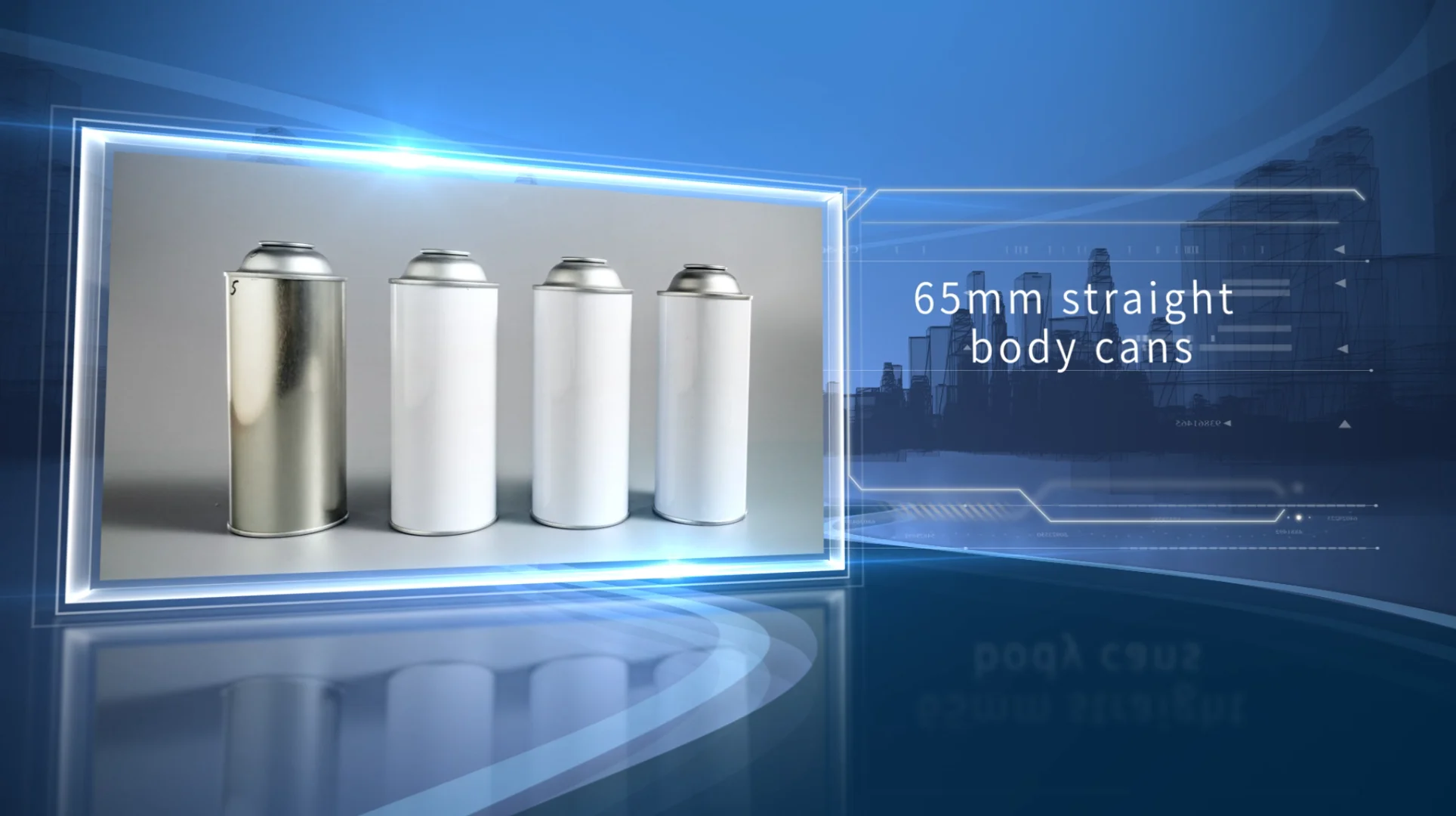
Body height decides where in each band you land. A 65 × 158 body and a 65 × 240 body get quoted as one product. They are not. The size and fill volume chart covers it.
Then the neck. The cup is sized to the neck, not the body, so a 65 mm body with a 52 mm neck takes a different cup than a straight 65 mm body. Mix both in one order and you double your valve minimum. Our necked-in versus straight-wall comparison explains the rest.
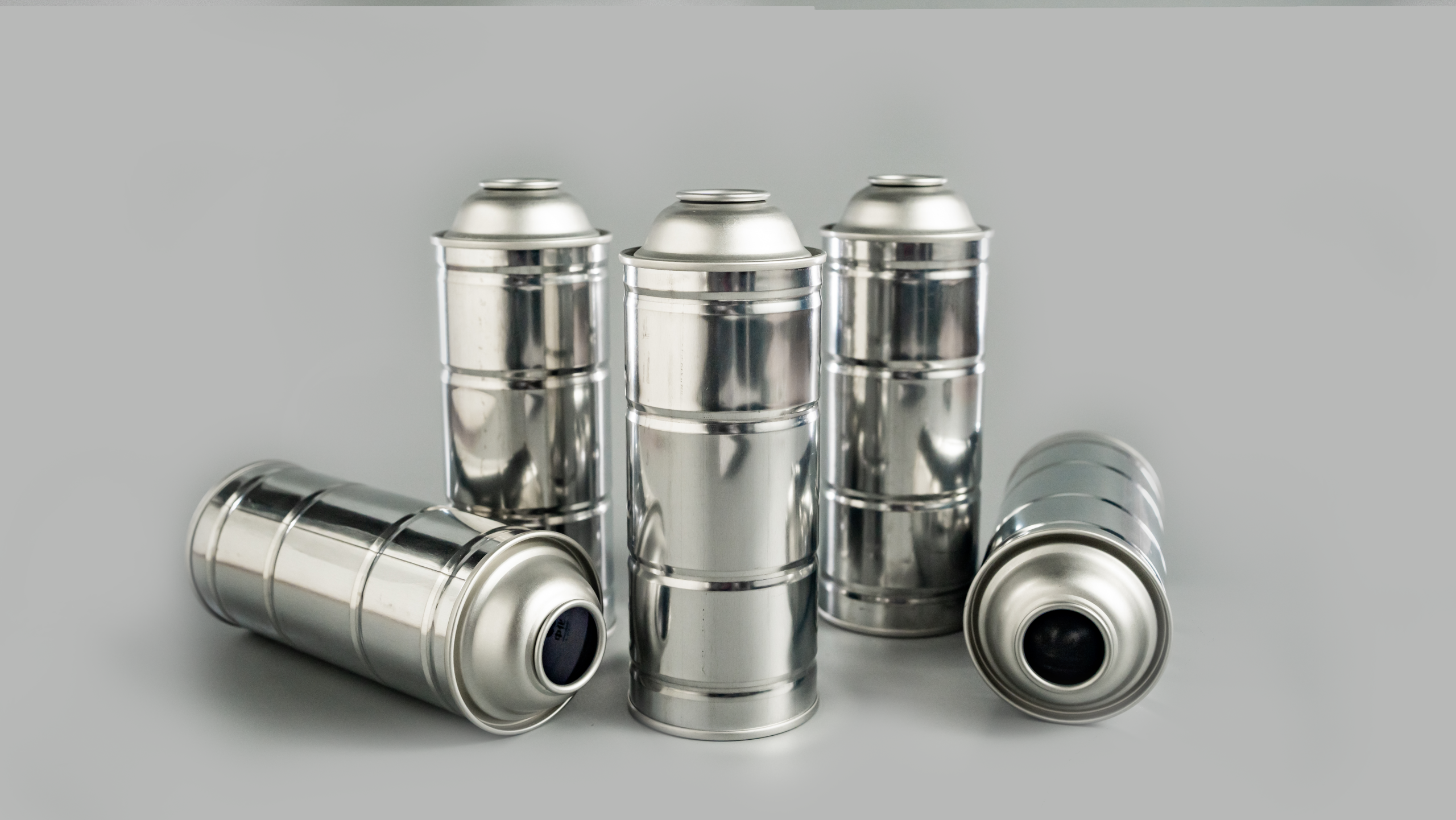
And the part no factory advertises: an empty can is mostly air. A 65 × 240 mm body takes 0.8 liters of volume but weighs 50 grams, so a 20-foot container fills before it hits a weight limit. You ship air.

Key Takeaways: What to Look for
Five of these six are documented, not negotiated. Our five core parameters for B2B buyers covers the same ground.
| What to Check | Why It Matters |
|---|---|
| Body gauge and tin coating weight in g/m² | A 0.02 mm gauge drop saves the supplier money and costs you burst margin. The mill certificate is the only proof. |
| Double-seam dimensions on a cut sample | Leaks start at the seam, not the body wall. Ask for the numbers, not a photo. |
| Lining against your solvent and propellant | The wrong lining passes at delivery and blisters in month six, after the pallets are gone. |
| Valve cup to neck fit | One cup mismatch doubles your valve SKU, your valve minimum and your assembly error rate. |
| Print proof pulled on production tinplate | Paper proofs pass. Eight colors on coated tinplate at line speed is a different test. |
| Landed cost, not unit price | Freight on empty cans, duty and port fees decide the real comparison between domestic and imported; see the five hidden cost factors. |
Pro Tip: ask for four documents before approving the first batch. The mill certificate, coating weight in g/m², double-seam dimensions off a cut sample, and the lining datasheet. A supplier who cannot produce all four is not necessarily bad, but their quote is not comparable.
FAQs
Who actually manufactures tinplate aerosol cans in the USA, and who just distributes them?
Sonoco, Crown, Mauser and DS Containers make bodies in US plants. Trivium and Exal also manufacture. Berlin and Pipeline distribute, buying from plants or importers. Spray Products fills rather than makes. Ask which plant the body comes from, and judge the answer: an aerosol can supplier who cannot name one is a warehouse.
What is a realistic MOQ for custom printed aerosol cans in the US market?
100,000 to 250,000 pieces from a distributor, higher from a plant. Below 100,000 you are buying stock decoration. Our floor for custom printed aerosol cans is 200,000. Start a 20,000-unit order on stock cans and revisit print once the product sells.
Necked-in or straight-wall, which can type fits my valve cup and cap?
The cup follows the neck, not the body. Necked-in gives a smaller opening, smaller cup and slimmer actuator, which personal care and air care want. Straight-wall gives a wider opening and easier filling. Match the cup first, then the profile.
What do US buyers require in terms of DOT/UN rating, ISO 9001 and FDA-compliant linings?
Non-refillable aerosol containers fall under DOT rules at 49 CFR 173.306, so ask for pressure test documentation on the finished can. ISO 9001 is the baseline plant certificate; the GB/T 13042, EN 15007 and UN comparison explains which pressure documentation travels with the can. The claim is FDA-compliant lining, not FDA-approved can, because the can is packaging.
How much do tariffs, freight and port fees add to imported aerosol cans in 2026?
Three line items sit between FOB and landed: ocean freight on a container that fills by volume before weight, Section 301 duty on Chinese-origin tinplate under HTS 7310.21, any current Chapter 99 steel measures, and port fees. Rates changed repeatedly through 2025–2026, so get a written landed-cost breakdown and a broker estimate for your booking date. On 200,000 cans that is a real percentage. On 20,000 it dominates.
Can I get a pre-production sample and a full-color print proof before mass production?
Yes, and refuse to run without both. Budget two to three weeks. You want a physical can built on the valve cup you will use, pressure tested, plus a proof pulled on production tinplate. Paper proofs pass colors that fail on coated tinplate.
Tinplate or aluminum, which is better for my formula and my budget?
Tinplate costs less per can, takes a wider lining range and prints well, which suits solvent-based automotive formulas. Aluminum is one piece, lighter and better at shaped profiles, so personal care uses it. If the shape is the product, pay for aluminum. If the fill is, the tinplate math wins.
Conclusion
Route by project type, not brand. Under 50,000 units next month: call an aerosol can supplier, accept the margin. National brand with a filler booked: the domestic plants are built for you. No line: a contract filler. A printed 45–70 mm can at 200,000 to 500,000 units is the gap we work in.
The test is the same on every route. Cut a can open, measure the seam, read the mill certificate — and remember that defect rates decide line ROI, not the unit price. Your customer never sees the purchase order, only whether it sprays clean on the tenth press and looks right on the shelf in month eight.
Start Your Can Program
We quote against your drawing, not a spec sheet. What comes with it:
- 45–70 mm bodies, both types, from one factory
- Cone, dome, ends and valve fitments on one order
- In-house eight-color printing, proof before the press runs
- 400 million cans a year, 31 export markets, since 2007